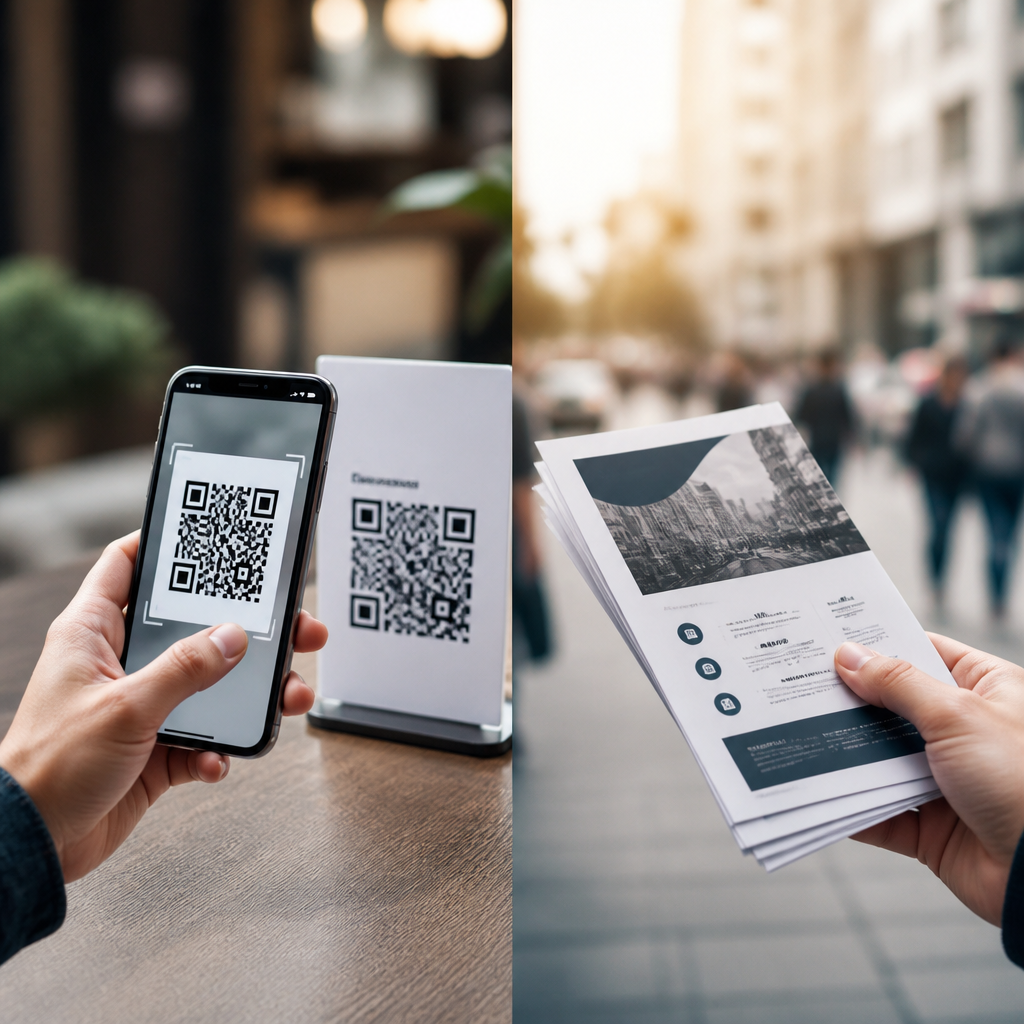
QR codes and traditional marketing tactics are often treated as opposites, but in practice the strongest marketing strategy usually combines the speed of digital response with the reach and familiarity of established channels. A QR code, short for Quick Response code, is a two-dimensional barcode that a smartphone camera can scan to open a webpage, app, video, form, coupon, payment screen, or downloadable file. Traditional marketing tactics include print ads, direct mail, flyers, billboards, in-store signage, product packaging, radio, television, and event collateral. The real question is not whether one category is universally better, but which method creates more measurable action, lower friction, and stronger customer intent in specific situations.
This matters because marketers are under pressure to prove return on spend, connect offline attention to online behavior, and shorten the path between awareness and conversion. I have worked on campaigns where a poster with a clear QR code outperformed a vanity URL by several multiples simply because people could act instantly instead of remembering a web address later. I have also seen glossy brochures fail because they gave prospects information but no easy next step. At the same time, many brands overestimate QR codes and ignore the role of message quality, creative placement, and audience readiness. A code does not fix weak positioning. It removes friction when the offer is relevant and the context is right.
For marketers building a hub around why QR codes work in marketing, the key idea is simple: QR codes turn passive exposure into active engagement. They bridge offline media and digital experiences, support tracking, personalize journeys, and make campaigns easier to optimize. Traditional tactics still matter because they create visibility, trust, and repeated exposure, especially in local markets and high-consideration purchases. The best comparison, then, is functional. Which channel captures attention? Which one drives immediate response? Which one can be measured accurately? Which one works best for awareness, lead generation, purchases, retention, or customer support? Answering those questions reveals where QR codes outperform older tactics and where traditional methods remain essential.
What QR Codes Do Better Than Traditional Tactics
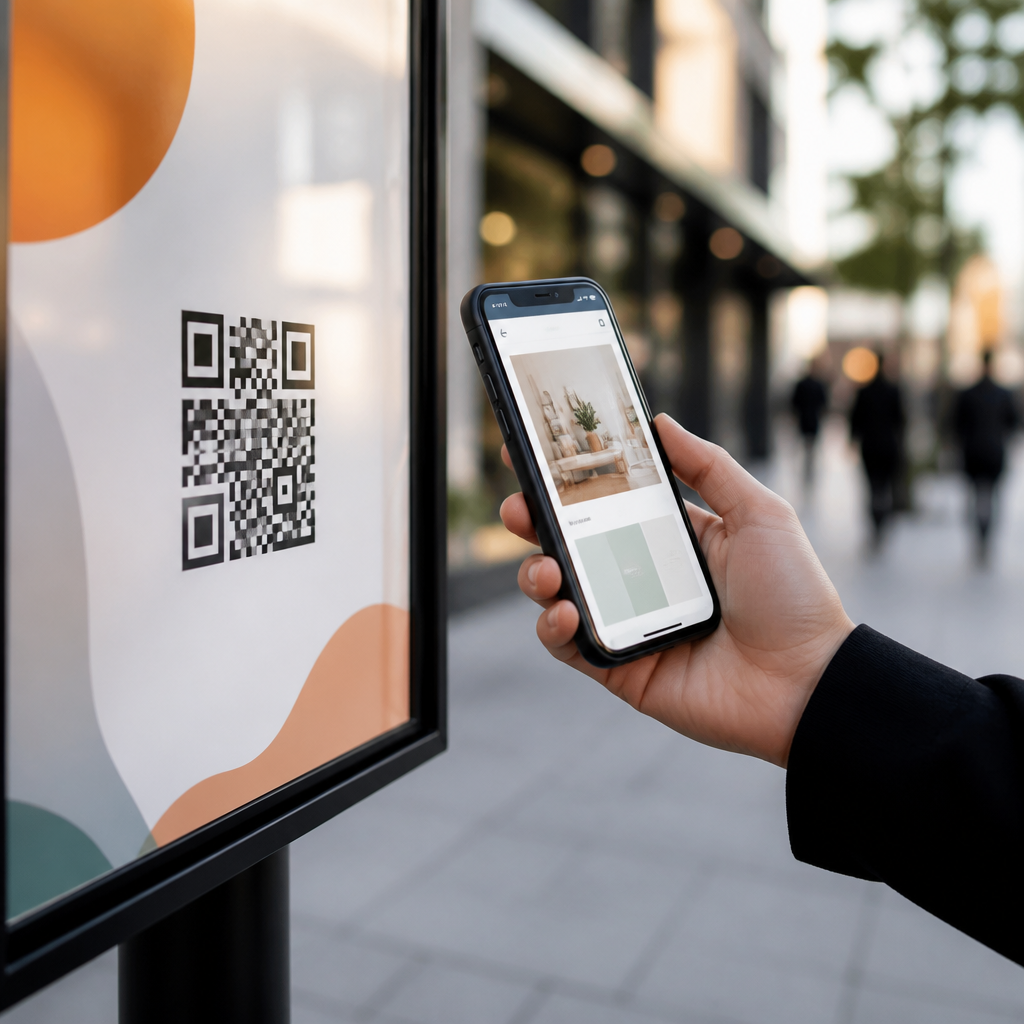
QR codes outperform many traditional tactics because they reduce the number of steps between seeing a message and taking action. A flyer that lists a URL asks people to remember, type, and navigate. A QR code asks them to scan once. That reduction in effort matters. In conversion optimization, every extra step lowers completion rates. When a restaurant adds a QR code to a window poster for reservations, walk-by traffic can become bookable demand immediately. When a real estate sign includes a code linking to a mobile listing page with photos, price history, and a contact form, interest moves from curiosity to qualified lead in seconds.
Another advantage is measurability. Dynamic QR codes can track scans by time, location, device, and campaign asset, then redirect users without changing the printed code. That gives marketers a practical way to attribute offline activity. With direct mail, for example, scan data can show which postcard version, offer, or neighborhood generated the highest response. Named platforms such as Bitly, Beaconstac, QR Code Generator Pro, and HubSpot can connect scans to analytics, lead capture, and CRM records. Traditional print without a scannable bridge often relies on weaker proxies such as coupon redemption, self-reported source data, or overall sales lift, which are useful but less precise.
QR codes also support richer content than static print can carry. A package insert can link to setup instructions, warranty registration, product comparison pages, and cross-sell recommendations. Event badges can connect attendees to schedules, speaker bios, and networking forms. Retail shelf talkers can open ingredient details, reviews, or loyalty rewards. This flexibility is why QR codes work in marketing: they make offline surfaces interactive without requiring extra staff, extra printed pages, or memorized URLs. Traditional tactics can attract attention well, but QR codes often win at completing the action the marketer actually wants.
Where Traditional Marketing Still Has an Edge
Traditional marketing tactics still outperform QR codes in a few important ways. First, they are better at broad awareness in environments where people are not ready to scan. A highway billboard may build recognition, but drivers should not be scanning codes in motion. Radio can create frequency during commutes when visual response is impossible. Television can generate emotional impact through storytelling at scale. In these cases, the traditional format is doing a job that QR codes cannot replace safely or effectively.
Second, some audiences respond better to familiar channels. Older demographics may scan less often, though that gap has narrowed as smartphone camera scanning became native on iPhone and Android devices. In regulated sectors such as healthcare, insurance, or financial services, printed disclosures and carefully structured direct mail still carry trust signals that matter. For expensive services, the tactile credibility of a high-quality brochure, sample kit, or in-person event leave-behind can support decision-making in a way a code alone cannot. Physical presence often communicates legitimacy, permanence, and investment.
Third, traditional tactics can be more resilient in low-connectivity environments. Trade shows with poor cellular service, rural locations, and underground transit systems can weaken QR performance unless the landing experience is lightweight and fast. Print also remains useful for repeat visibility. A fridge magnet with a phone number, a catalog on a coffee table, or a postcard pinned to a noticeboard can influence behavior long after first exposure. The conclusion is not that traditional channels work better overall. It is that they still create awareness, memory, and trust conditions that make QR-driven response more effective later.
Why QR Codes Work in Marketing Across the Funnel
QR codes are effective because they map cleanly to every stage of the customer journey. At the awareness stage, they turn posters, packaging, and out-of-home media into gateways for brand stories, explainer videos, or localized landing pages. At consideration, they can open product comparisons, customer reviews, menus, case studies, and calculators. At conversion, they lead directly to coupon codes, payment pages, booking forms, app downloads, or cart-ready product pages. After purchase, they support onboarding, support content, referral programs, reorder pages, and review requests.
In practical campaign work, this funnel coverage is where QR codes produce outsized value. A fitness studio can place one code on street signage for a free class trial, another on front desk material for membership pricing, and another on follow-up cards linking to referral rewards. A consumer packaged goods brand can use packaging QR codes for recipes, loyalty enrollment, and replenishment reminders. Because each code can represent a different user intent, the business learns what people want at each touchpoint and can optimize messaging accordingly.
The performance gains come from relevance and immediacy. People scan when the payoff is obvious: save money, get information, avoid waiting, or unlock something useful. The strongest campaigns state that payoff directly next to the code. “Scan to see today’s menu” works better than “Learn more.” “Scan for 10% off your first order” works better than placing a code with no instruction. That is a core reason QR codes work in marketing: they convert vague interest into specific action when value, context, and next step are aligned.
Best Uses by Channel and Campaign Goal
Different marketing goals favor different combinations of QR codes and traditional tactics. The table below shows where each approach tends to perform best in real campaigns.
| Goal | Traditional tactic strength | QR code strength | Practical example |
|---|---|---|---|
| Brand awareness | Broad reach through billboards, radio, print, and events | Adds optional deeper engagement after attention is captured | Transit poster drives awareness; QR links to campaign video and store locator |
| Lead generation | Direct mail and trade show materials create initial interest | Captures contact data quickly through mobile forms | Postcard QR opens valuation form for homeowners |
| Sales conversion | Packaging, point-of-sale displays, and print inserts influence purchase | Connects users to checkout, coupons, or product details instantly | Shelf sign QR opens limited-time offer and mobile checkout |
| Customer retention | Receipts, inserts, and loyalty cards keep brand visible | Launches rewards portal, support page, or reorder flow | Takeout box QR links to reorder page and points balance |
| Service and support | Printed manuals and labels provide baseline instructions | Delivers live setup videos, FAQs, and chat support | Appliance sticker QR opens troubleshooting guide |
This comparison makes one pattern clear. Traditional tactics are usually strongest at reach and presence. QR codes are strongest at response and measurement. When marketers expect a code to create attention without strong creative, results disappoint. When they use it to extend attention into action, results often improve.
What Makes a QR Code Campaign Succeed
Successful QR marketing depends on execution details more than novelty. The landing page must match the message on the physical asset, load quickly on mobile, and ask for only the information needed at that stage. Design matters too. The code should be large enough to scan easily, typically with strong contrast, sufficient white space known as the quiet zone, and placement where people can stop safely. Error correction helps when printing on curved surfaces or textured materials, but highly stylized codes should always be tested across devices before launch.
The call to action is equally important. People need a reason to scan now. Discounts, exclusive content, instant booking, waitlist access, how-to guidance, and loyalty points are proven motivators. Context improves performance as well. A QR code on restaurant table tents works because guests are already deciding what to order. A code on product packaging works because the buyer already has the item in hand. A code on an event banner works when attendees want schedules or directions. Relevance lowers resistance more effectively than design tricks.
Measurement should be planned from the start. Use UTM parameters, event tracking in Google Analytics 4, redirect rules, and CRM tagging so scans can be connected to outcomes such as purchases, sign-ups, bookings, or support deflection. Dynamic codes are generally better than static codes for campaign management because destinations can be updated without reprinting. Marketers should also monitor bounce rate, page speed, form completion, and conversion rate after the scan. A high scan count with low completion usually indicates weak landing-page experience, not a failure of QR itself.
Common Mistakes and Realistic Limitations
QR codes are not magic, and several common mistakes cause underperformance. The first is sending users to a generic homepage. If the printed message promises a coupon, menu, demo, or guide, the landing page must deliver that exact asset immediately. The second mistake is poor placement. Codes printed too small, too high, on reflective surfaces, or in places where people cannot stop comfortably will be ignored. The third is forgetting mobile usability. Long forms, intrusive pop-ups, and slow pages waste the intent that the scan created.
There are also structural limitations. QR codes depend on smartphone access, camera familiarity, and adequate connectivity. They are less useful in situations where people need hands-free interaction or where compliance rules require information to be fully visible without scanning. Fraud and trust issues also matter. Because malicious actors can place fake stickers over legitimate codes, brands should use recognizable domains, branded landing pages, and clear messaging about where the scan leads. In high-risk settings, short descriptive URLs near the code can add reassurance.
Traditional marketing has limitations too. It is often harder to attribute, slower to optimize, and more expensive to update once printed or booked. That is why the most realistic assessment is balanced: QR codes are superior when immediate action, measurable response, and dynamic content matter most. Traditional tactics are superior when mass visibility, environmental fit, and tactile trust matter most. The winning strategy is not choosing one side permanently. It is assigning each tool to the job it does best.
QR codes work better than traditional marketing tactics when the goal is to turn offline attention into measurable digital action with as little friction as possible. They make print, packaging, signage, direct mail, and event materials interactive. They also give marketers something older channels have often lacked: reliable response data tied to a specific asset, offer, and audience segment. Traditional tactics still matter because they build familiarity, credibility, and reach, especially in formats where scanning is impractical or unsafe. The strongest campaigns use traditional channels to earn attention and QR codes to capture intent.
For a marketing team building around this topic, the main lesson is straightforward. QR codes succeed because they connect message, moment, and action. They are not effective simply because they are modern. They are effective when they lead to a fast mobile experience, present a clear value exchange, and are placed where the audience already wants the next step. That is why they perform so well on packaging, menus, direct mail, retail displays, event signage, and service materials. In each case, the code answers an immediate need instead of asking people to remember a brand later.
If you are deciding between QR codes and traditional marketing tactics, start by matching the channel to the objective. Use traditional media to create reach and repeated exposure. Use QR codes to convert that exposure into trackable engagement, leads, sales, and retention. Audit your current offline assets, identify places where customers hesitate or need more information, and add QR pathways with dedicated landing pages. Done well, that single change can make your existing marketing work harder and reveal exactly what your audience does next.
Frequently Asked Questions
Are QR codes more effective than traditional marketing tactics?
QR codes are not automatically more effective than traditional marketing tactics, because each approach serves a different purpose in the customer journey. QR codes excel at creating immediate action. A person can scan a code and instantly land on a product page, signup form, coupon, menu, video, payment screen, or event registration page. That speed reduces friction and makes QR codes especially useful when the goal is direct response, tracking, or measurable engagement. Traditional marketing, on the other hand, often does a better job building broad awareness, familiarity, and trust over time. Print ads, direct mail, flyers, billboards, in-store signage, radio, and other established channels can put a brand in front of a larger or more local audience, even when people are not ready to act immediately.
In practice, the better question is not which one wins, but how they work together. A billboard or postcard can grab attention, while a QR code turns that attention into a trackable next step. A magazine ad can explain the value of an offer, and a QR code can carry readers straight to a landing page without making them type a long URL. The strongest campaigns usually combine the visibility and credibility of traditional media with the convenience and measurable performance of digital response tools. If the goal is awareness alone, traditional tactics may appear stronger. If the goal is immediate conversion or easy attribution, QR codes often have the advantage.
When should a business use QR codes instead of print ads, mailers, or other traditional channels?
A business should use QR codes when it wants to make the next step effortless, measurable, and mobile-friendly. They are particularly valuable when customers need instant access to something dynamic, such as a limited-time promotion, a restaurant menu, a product demo, an appointment booking page, a digital business card, or a downloadable resource. QR codes are also useful when a business wants to reduce the gap between interest and action. Instead of asking someone to remember a website later or manually enter a long link, the code gets them to the destination in seconds.
That said, QR codes are not usually a full replacement for traditional channels. They still need placement in a format people actually see. A direct mail piece, poster, brochure, product package, storefront window, or trade show sign can provide the visibility, while the QR code provides the conversion path. Traditional marketing also remains important when the audience may be less comfortable scanning codes, when internet access is inconsistent, or when the message itself needs to stand alone without requiring a phone. The best decision depends on audience behavior, campaign goals, and context. If your main challenge is getting attention, traditional tactics may lead. If your challenge is turning interest into action, QR codes can be the better tool.
What are the biggest advantages of combining QR codes with traditional marketing?
Combining QR codes with traditional marketing gives businesses the best of both worlds: offline reach and online action. Traditional tactics such as flyers, brochures, billboards, catalogs, packaging, and in-store displays are good at creating exposure in physical spaces. Adding a QR code transforms those materials from passive branding assets into interactive conversion tools. Someone who sees a poster can immediately scan for event details. A customer who receives a mailer can scan for a coupon or personalized offer. A shopper in a store can scan packaging to watch a demo, compare options, read reviews, or join a loyalty program.
Another major advantage is measurability. Traditional campaigns have historically been harder to track with precision, especially compared with digital channels. QR codes help close that gap by allowing marketers to measure scans, time of engagement, landing page visits, conversions, and even performance by location or campaign variation. That means businesses can test which print formats, headlines, offers, and placements drive better response. The combination also improves user experience. Instead of forcing people to take an extra step later, you give them a simple bridge from physical marketing to digital interaction. For brands focused on ROI, optimization, and customer convenience, this integrated approach is often more effective than relying on either tactic alone.
Do QR codes work for all audiences, or are traditional tactics still better for some groups?
QR codes work well for many audiences, but they are not universally ideal in every situation. Smartphone adoption and comfort with scanning have grown significantly, making QR codes far more mainstream than they were years ago. Many consumers now expect to use their phones to access menus, payment options, product information, event details, and special offers. For younger, mobile-first audiences in particular, QR codes often feel fast, familiar, and convenient. They can also be highly effective in environments where people are already using their phones, such as retail stores, events, transit areas, restaurants, and trade shows.
However, traditional marketing still matters because not every audience behaves the same way. Some demographic groups may prefer direct mail, printed instructions, or a phone number they can call. In certain industries, credibility and readability may matter more than interactivity, especially if the message targets older consumers or less tech-dependent buyers. Accessibility also matters. If the print size is too small, the code is poorly placed, or the landing page is not mobile-friendly, the user experience suffers. Businesses should avoid assuming that one format fits everyone. The most effective strategy is to understand the audience, provide multiple response options, and make sure the core message is clear whether or not someone decides to scan.
How can businesses measure whether QR codes or traditional marketing are producing better results?
Businesses can measure performance by starting with clear campaign goals and comparing channels against the outcomes that matter most. If the objective is awareness, they may look at impressions, reach, recall, foot traffic, or brand lift. If the objective is response, they may track scans, landing page visits, form completions, purchases, coupon redemptions, bookings, or calls. QR codes are especially useful because they make offline marketing more trackable. A unique QR code can be assigned to a specific flyer, postcard, poster, store location, product package, or ad variation, making it easier to see exactly where engagement is coming from.
To compare QR codes with traditional tactics fairly, businesses should avoid treating them as separate worlds. Instead, they should evaluate how the traditional asset performs with and without a QR-enabled call to action. For example, does a mailer with a QR code drive more conversions than one with only a website URL? Does in-store signage with a scannable offer increase coupon use compared with signage alone? Using campaign-specific landing pages, UTM parameters, redemption codes, CRM tracking, and analytics dashboards can provide a more complete picture. The best-performing strategy is usually the one that not only reaches the audience, but also moves them efficiently from attention to action at a sustainable cost.