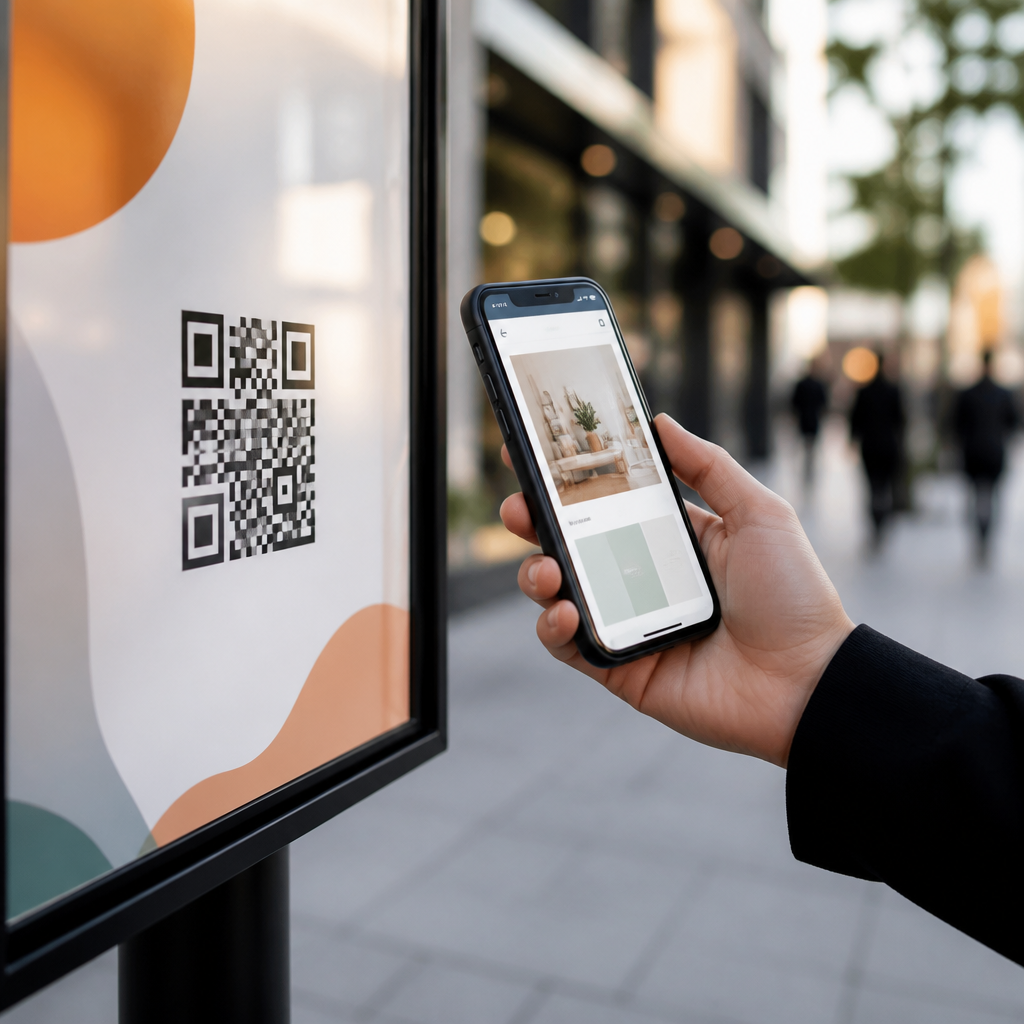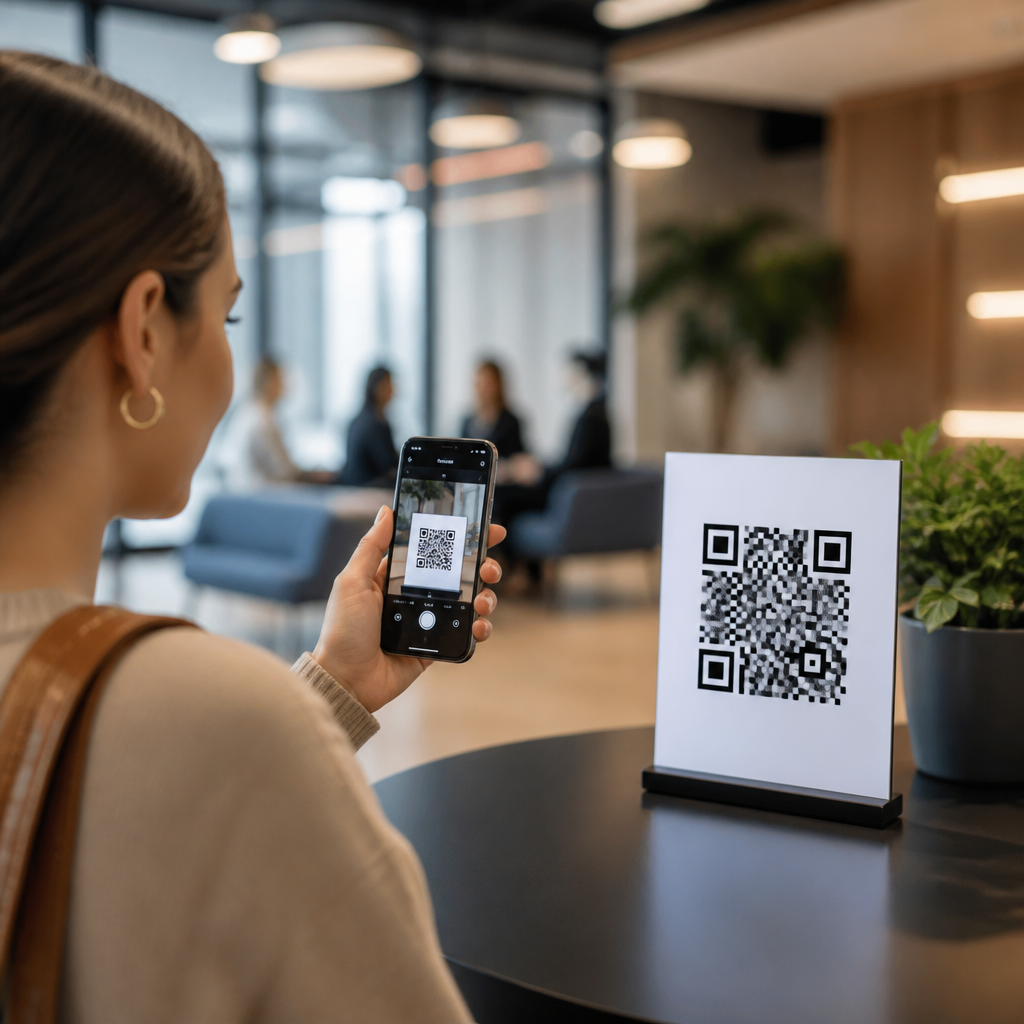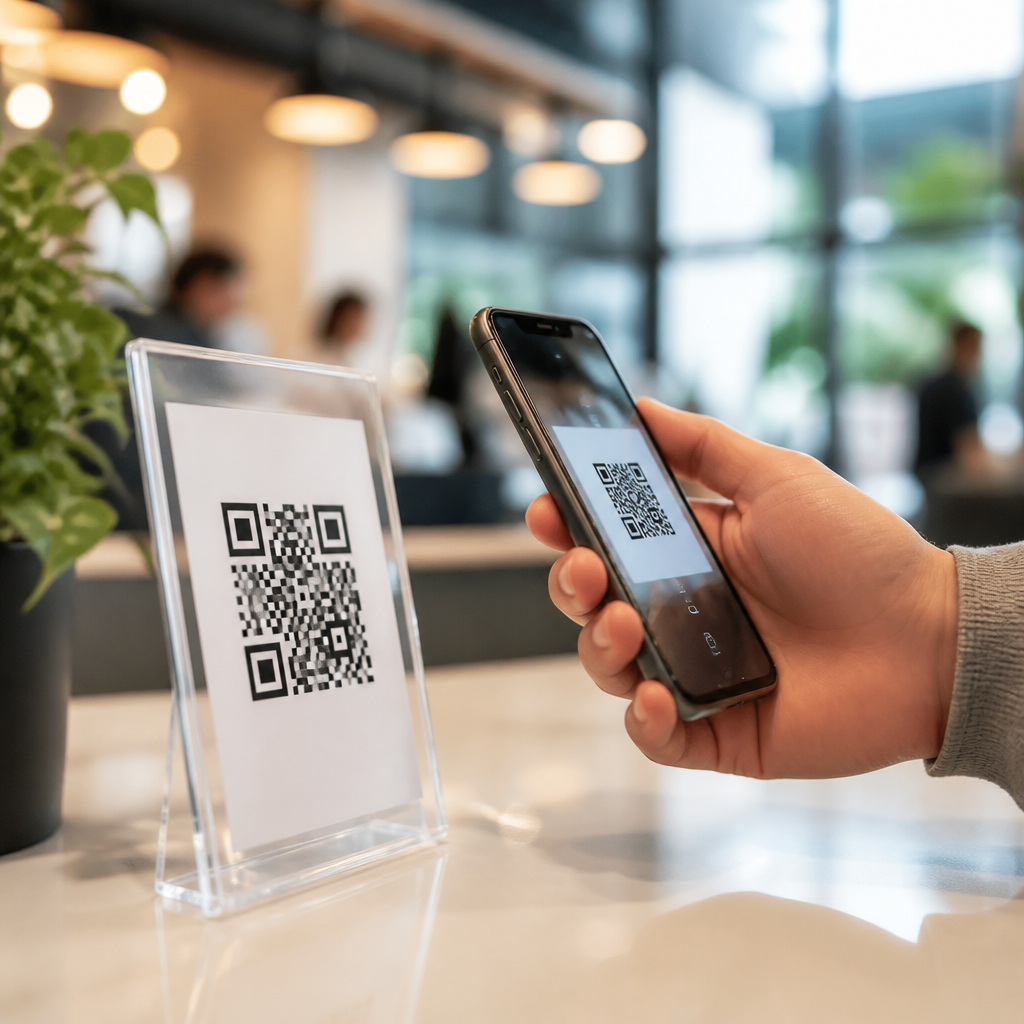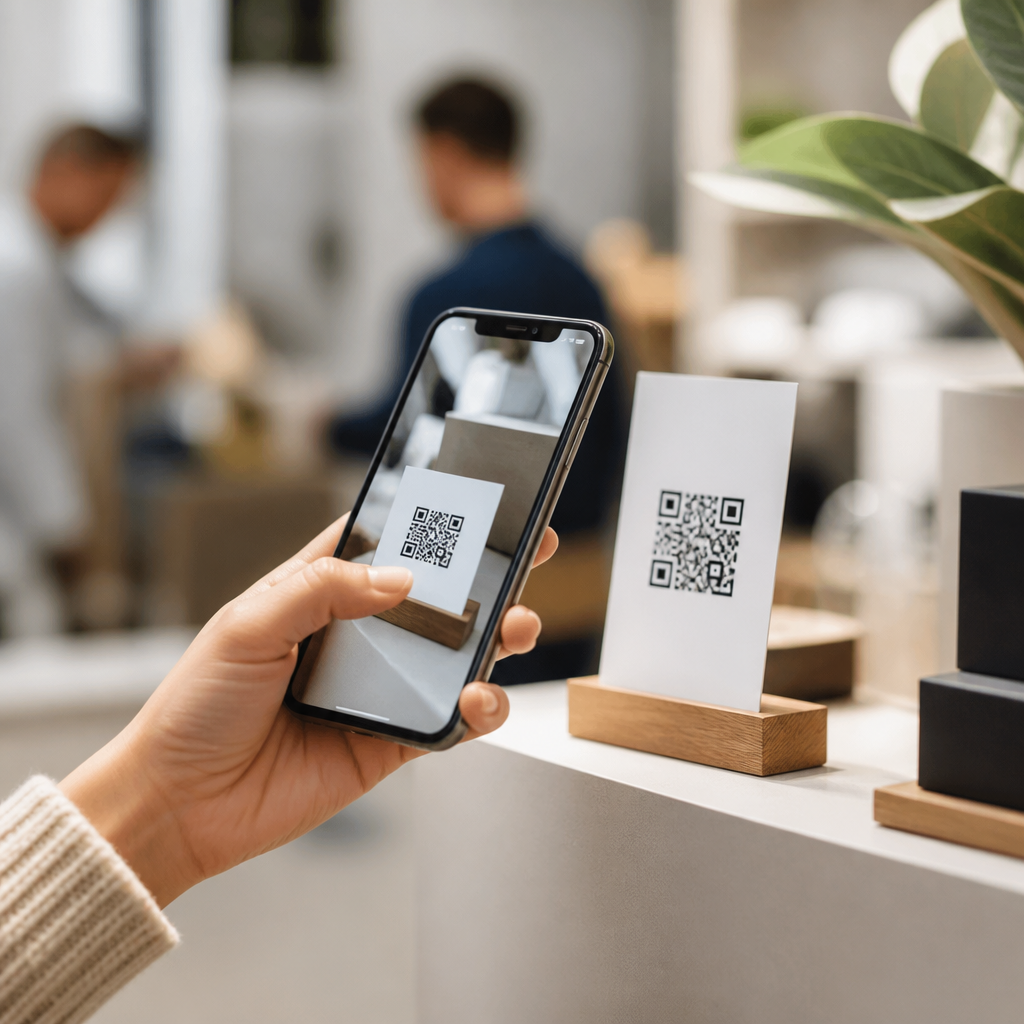
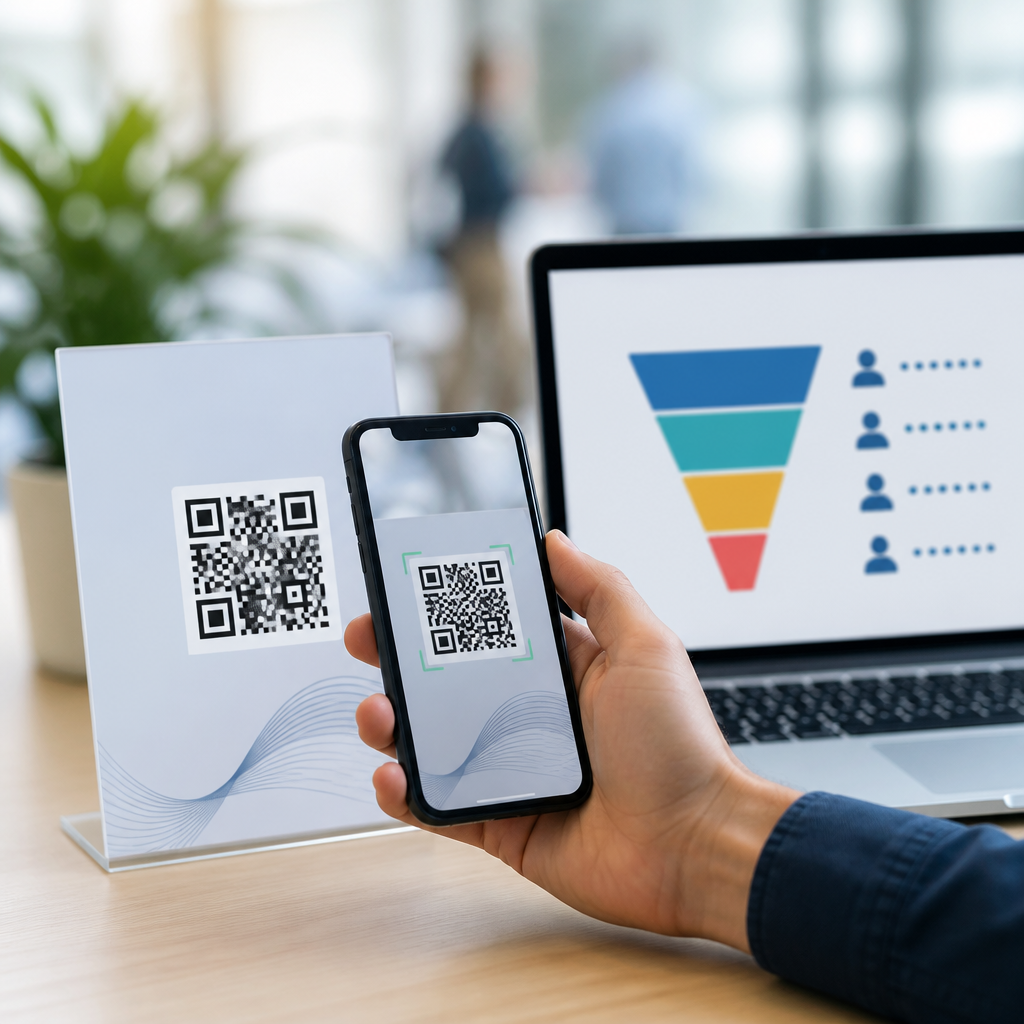
QR codes reduce friction in marketing funnels by collapsing the distance between interest and action into a single scan. In marketing, friction means any extra step that slows a prospect down: typing a URL, searching for a product, filling out a long form, downloading an app, or waiting for a page to load. A marketing funnel is the path from awareness to consideration, conversion, and retention. When that path contains unnecessary effort, response rates fall. I have seen this repeatedly in campaign audits: a strong offer underperforms not because the message is weak, but because the handoff from offline attention to digital action is clumsy. QR codes matter because they remove that handoff problem. They connect physical touchpoints such as packaging, direct mail, signage, events, and in-store displays to measurable digital destinations in seconds. That simple bridge explains why QR codes work in marketing and why they have become a practical tool for modern funnel design.
A QR code, or Quick Response code, is a two-dimensional barcode that stores information, usually a URL, in a machine-readable pattern. Smartphone cameras and built-in scanning software made adoption mainstream because users no longer needed a separate app. Once scanned, the code can open a landing page, launch a payment flow, download a coupon, start a text message, connect to Wi-Fi, save contact details, or trigger app deep linking. Marketers use dynamic QR codes most often because the destination can be changed after printing, scans can be tracked, and campaign-level reporting becomes possible. Static QR codes still have value for permanent information, but they are limited for testing and optimization. Understanding that distinction is essential if the goal is not merely to place a code on an asset, but to use it as a managed conversion point inside a larger customer journey.
The strategic value is broader than convenience. QR codes improve attribution, support omnichannel campaigns, and meet consumers where attention naturally occurs. A shopper standing in an aisle can scan to compare models, see product demos, verify authenticity, or join a loyalty program without hunting through a browser. An event attendee can scan a booth sign to book a demo while interest is highest. A restaurant guest can scan a table tent to redeem a limited-time offer before leaving. Each example shows the same principle: reduce cognitive load, preserve intent, and make the next step obvious. For a sub-pillar on QR codes in marketing strategy, this hub covers the central question comprehensively: why QR codes work in marketing, where they fit in the funnel, what makes campaigns succeed, and how to measure them responsibly.
Why QR codes work in marketing funnels
QR codes work because they turn passive exposure into active response with minimal effort. In behavioral terms, they lower activation energy. A prospect does not need to remember a brand name, type a long address, or search through results pages. They point a camera, tap once, and arrive at the intended destination. That matters because every extra click, field, or decision reduces completion rates. The Baymard Institute has long documented that checkout and form friction depress conversions; the same principle applies earlier in the funnel. If a direct mail piece asks someone to manually visit a site, many interested people will postpone and forget. If that same mailer includes a clear code tied to a relevant landing page, the response window opens immediately.
They also work because they align with mobile-first behavior. Most consumers encounter marketing while holding a phone or standing near one. Retail aisles, trade show floors, transit stations, product packaging, menus, receipts, and print ads are all environments where mobile continuation is natural. QR codes fit this context better than short links alone because they eliminate typing and reduce errors. In practice, I have found the strongest performance where the code answers an immediate question: “What is this product?”, “Is there a discount?”, “Can I book now?”, or “How do I learn more?” Codes fail when they ask users to scan without a compelling reason. They succeed when the value exchange is immediate, specific, and visible before the scan.
Another reason QR codes perform is measurement. Dynamic platforms such as Bitly, QR Code Generator Pro, Beaconstac, and Flowcode let marketers track scans by time, device, and location while preserving the flexibility to update destinations. That makes offline media more accountable. A poster can be linked to a UTM-tagged page in Google Analytics 4. A package insert can route to a personalized onboarding sequence in HubSpot or Klaviyo. A storefront window can split traffic between variants for testing. This measurability turns a printed square into a controlled acquisition channel rather than a decorative add-on.
How QR codes support each stage of the funnel
At the awareness stage, QR codes capture curiosity generated by physical media. A billboard, flyer, product label, point-of-sale display, or podcast backdrop cannot explain everything in limited space. The code extends the message into richer content: a product video, interactive guide, or store locator. In consideration, codes shorten research. Prospects can compare options, read specifications, access calculators, or schedule consultations directly from packaging or signage. In conversion, the code can open a checkout page, coupon, cart, reservation, or lead form. After purchase, it supports retention with onboarding, warranty registration, refill reminders, loyalty enrollment, review requests, and support resources.
The practical advantage is continuity. Too many funnels break between channels. A consumer sees a print ad but lands on a generic homepage. A conference attendee likes a booth conversation but loses the brochure later. A product buyer wants setup help but cannot find the right page. QR codes preserve context by sending each audience to the exact next step designed for that moment. That may be a campaign-specific landing page, prefilled form, personalized offer, or localized inventory page. The less context the user must reconstruct, the higher the probability of progress.
| Funnel stage | Typical QR destination | Main friction removed | Example |
|---|---|---|---|
| Awareness | Brand story or video | Searching for the brand later | Transit poster links to a 30-second product demo |
| Consideration | Comparison page or FAQ | Hunting for product details | Retail shelf talker opens model comparison guide |
| Conversion | Checkout, coupon, booking, form | Manual navigation to purchase path | Direct mail piece opens a preloaded discount page |
| Retention | Onboarding, loyalty, support | Finding post-purchase resources | Packaging insert starts warranty registration |
This funnel mapping is why QR codes should be treated as strategic connectors, not isolated tactics. The destination, intent, and conversion event should be defined before the code is designed. When marketers skip that planning, scans may look healthy but business outcomes remain weak. When mapping is deliberate, a code becomes a reliable bridge between attention and measurable action.
Channels where QR codes deliver the most value
Packaging is one of the highest-value placements because it reaches customers at the exact moment of product interaction. Brands use packaging QR codes for ingredient transparency, how-to instructions, replenishment offers, product registration, and community enrollment. Consumer packaged goods companies often add codes that lead to recipes, sustainability details, or authenticity checks. In beauty and electronics, tutorial videos and setup guides reduce support burden while improving satisfaction. In regulated categories, codes can deliver detailed disclosures without overloading the label itself.
Direct mail is another strong use case. Traditional mail often suffers from delayed response because recipients intend to visit a site later and never do. A code tied to a clean landing page, with a visible incentive and campaign-specific message match, closes that gap. Real estate agents use codes on postcards to open listing tours. Healthcare providers use them for appointment scheduling. B2B firms place codes on dimensional mailers that route prospects to case studies or calendar booking pages. When paired with personalized URLs and CRM tracking, direct mail becomes significantly more measurable.
Retail and out-of-home placements benefit because they convert physical presence into digital engagement. Store windows can capture traffic after hours. Shelf displays can answer objections at the point of decision. Restaurant tables can present rotating offers without reprinting menus. Event badges, booth graphics, and presentation slides can direct attendees to lead capture forms or product sheets instantly. Even print publications remain useful when the code complements the editorial context. The common factor is relevance: the destination must solve the question the environment creates.
What makes a QR code campaign convert
High-performing campaigns share a small set of execution principles. First, the offer must be explicit. “Scan to learn more” is usually too weak; “Scan for 15% off today,” “Scan to watch the 45-second setup video,” or “Scan to compare plans” gives a concrete reason. Second, the landing experience must be mobile optimized, fast, and tightly matched to the source. A code on a product shelf should not open a generic homepage. It should open the exact product page, with price, availability, proof points, and a clear action. Third, design and placement matter. The code needs sufficient contrast, quiet zone, and physical size for the scanning distance. A tiny code on a moving bus ad will fail regardless of creative quality.
Fourth, dynamic management and tracking are essential. Use UTM parameters, campaign naming conventions, and event tracking in analytics platforms. In Google Analytics 4, define key events such as form submission, add-to-cart, purchase, or account creation so scans can be evaluated by outcome, not volume alone. In CRM systems, pass source data when possible so downstream pipeline and revenue can be attributed. Fifth, test variations. Marketers can compare CTA wording, incentives, destinations, and placements across similar assets. In my experience, the difference between an average QR campaign and a strong one is rarely the code itself; it is the precision of the offer and the landing path.
There are also practical limitations. Some audiences still hesitate to scan unknown codes because of phishing concerns. Poor connectivity can interrupt the experience. In low-light or reflective environments, scannability may drop. Accessibility matters as well: include a short fallback URL and avoid making the code the only path to essential information. Good funnel design accounts for these constraints rather than pretending the format is universal.
How to measure success and improve over time
Measure QR codes with the same discipline used for paid search or email. Start with the right primary metric for the funnel stage. For awareness, that might be scan rate relative to estimated impressions. For consideration, engaged sessions, time on page, or comparison tool usage may matter. For conversion, focus on lead rate, booking rate, purchase rate, average order value, and cost per acquisition. For retention, track activation, repeat purchase, loyalty sign-up, or support deflection. Scan count alone is not a success metric; it is an input signal.
Optimization should follow a simple cycle: map intent, create a purpose-built destination, instrument the campaign, review performance, and refine. If scans are low, test placement, visibility, and CTA clarity. If scans are high but conversions are low, the landing page or offer is usually the issue. If conversions happen but retention is weak, improve the post-scan experience with onboarding and follow-up. Heatmaps, session recordings, CRM stage reports, and cohort analysis can all add context. Over time, these feedback loops reveal where QR codes remove the most friction in your specific funnel and where another channel may be better.
QR codes reduce friction in marketing funnels because they remove unnecessary steps between attention and action, especially when physical and digital channels need to work together. They succeed by lowering effort, preserving context, supporting mobile behavior, and making offline touchpoints measurable. Used well, they strengthen every stage of the journey, from awareness to retention, across packaging, direct mail, retail, events, and print. Used poorly, they become decoration. The difference is strategy: clear intent, strong incentives, relevant destinations, sound measurement, and continuous testing. If you are building a stronger QR code marketing strategy, audit every place a customer has to pause, search, or type, then replace that friction with a direct scan path that answers the next question immediately.
Frequently Asked Questions
1. How do QR codes reduce friction in a marketing funnel?
QR codes reduce friction by removing the small but costly steps that often interrupt momentum between interest and action. In a traditional funnel, a prospect might see an ad, remember a brand name, type in a URL, search for a product, navigate a landing page, and only then decide whether to convert. Every extra action creates an opportunity for hesitation, distraction, or drop-off. A QR code compresses that process into a single scan, which dramatically shortens the path from awareness to consideration or conversion.
That matters because friction in marketing is rarely about one major obstacle. More often, it is the accumulation of minor inconveniences. Typing a long web address, switching devices, searching for the right product page, or entering contact details manually may seem simple, but each step introduces delay. QR codes help eliminate that delay by taking users directly to the intended destination, whether that is a product page, appointment scheduler, registration form, coupon, payment screen, or app download.
In practical terms, QR codes work best when they create immediate relevance. For example, a code on packaging can lead directly to product instructions or replenishment ordering. A code on a poster can open a landing page tied to the exact promotion being advertised. A code in a retail environment can connect in-store interest with digital conversion while intent is still high. The key advantage is speed. By collapsing the distance between curiosity and response, QR codes help preserve attention at the exact moment it is most valuable.
2. Where in the marketing funnel are QR codes most effective?
QR codes can support every stage of the marketing funnel, but they are especially powerful at transition points where prospects are likely to abandon the journey if too much effort is required. At the awareness stage, QR codes can turn offline attention into measurable digital engagement. Someone who sees a flyer, direct mail piece, product display, event booth, or storefront sign can move instantly from noticing a message to interacting with a campaign. That makes the first step feel seamless rather than demanding.
In the consideration stage, QR codes can deliver deeper information without asking the user to hunt for it. Instead of expecting a prospect to search for reviews, compare options, or locate technical details, a scan can take them straight to demo videos, FAQs, case studies, customer testimonials, or product comparison pages. This is where QR codes help maintain momentum. Rather than letting interest cool while the customer looks for answers, they provide answers immediately.
At the conversion stage, QR codes can be even more impactful. They can direct users to pre-filled lead forms, checkout pages, booking systems, discount offers, or digital payment experiences. Shortening the path here often has a direct effect on response rates because high-intent users are not forced to work through unnecessary steps. In retention and post-purchase stages, QR codes can support onboarding, support content, loyalty sign-ups, referral offers, reorders, and feedback collection. That means they are not just acquisition tools. When used strategically, they can reduce friction across the full customer lifecycle.
3. What types of marketing campaigns benefit most from using QR codes?
QR codes tend to perform best in campaigns where attention is captured in one place and action needs to happen quickly before that attention disappears. This makes them especially effective in offline-to-online marketing. Print ads, product packaging, direct mail, brochures, event signage, out-of-home placements, menus, in-store displays, and sales collateral all benefit because they often create interest without offering an easy way to respond instantly. A QR code fills that gap by giving the audience an immediate action path.
They are also highly effective in time-sensitive and intent-driven campaigns. For example, limited-time promotions, event registrations, product launches, restaurant offers, local service bookings, and retail coupon campaigns can all gain from reducing the number of steps between seeing the offer and acting on it. If a consumer has to remember the brand and come back later, conversion odds drop. If they can scan immediately, the campaign has a much better chance of capturing demand in the moment.
B2B campaigns can benefit as well. Trade show displays, sales sheets, presentation decks, office signage, and conference materials often generate qualified interest, but follow-through can be inconsistent if the next step requires extra effort. A QR code can lead directly to a meeting scheduler, product demo request, gated resource, or case study page. In all of these examples, the strongest use case is not simply “adding a QR code.” It is aligning the scan with a clear, context-specific next action that matches the audience’s level of intent.
4. What makes a QR code campaign convert better instead of just generating scans?
A successful QR code campaign is not judged by scans alone. The real measure is what happens after the scan. Many campaigns generate curiosity clicks but underperform because the destination does not match the user’s expectations or requires too much additional effort. To improve conversion, the landing experience must be tightly aligned with the message, context, and promise surrounding the code. If a sign promotes a discount, the scan should open directly to the offer. If packaging invites reordering, the code should land on the exact reorder page, not a generic homepage.
Mobile experience is another major factor. Since QR code traffic usually comes from smartphones, the landing page must load quickly, display cleanly on mobile, and present one obvious next step. Long forms, cluttered layouts, weak calls to action, pop-ups, or confusing navigation reintroduce the very friction the QR code was supposed to remove. In other words, the code can solve the access problem, but the page still has to solve the conversion problem.
Strong campaigns also use clear calls to action around the code itself. People are more likely to scan when they understand what they will get and why it is worth their time. “Scan to book a demo,” “Scan for 15% off,” or “Scan to see pricing” performs better than a code presented with no explanation. Tracking matters too. Using campaign-specific URLs, analytics tags, and unique codes by channel or placement helps marketers identify which assets drive meaningful outcomes. The best-performing QR code campaigns combine low-friction access, message clarity, mobile optimization, and precise measurement.
5. Are there any mistakes marketers should avoid when using QR codes in funnels?
Yes, and the biggest mistake is treating the QR code as a tactic instead of part of the user journey. A QR code by itself does not reduce friction unless it connects the user to a fast, relevant, and well-designed next step. One common error is sending all scans to a homepage. That forces the visitor to figure out where to go next, which recreates the same friction the code was meant to eliminate. Destination pages should be specific, intentional, and tied to the context in which the code appears.
Another mistake is poor usability. QR codes that are too small, placed in low-visibility areas, printed with weak contrast, or positioned where scanning is awkward will underperform no matter how strong the offer is. The user should be able to scan quickly and confidently. It is also important to avoid overloading the landing page with too many options. When a user arrives from a scan, they should see one primary action supported by concise, relevant information.
Marketers should also avoid neglecting trust and clarity. If users do not know where a scan will take them, they may hesitate. A simple explanation beside the code improves confidence and scan rates. Finally, many brands fail to measure results beyond top-of-funnel engagement. Tracking scans is useful, but it is not enough. You should measure downstream actions such as form completions, purchases, bookings, app installs, or repeat orders. The real value of QR codes in marketing funnels is not novelty. It is their ability to remove unnecessary effort at critical decision points and turn attention into action more efficiently.