
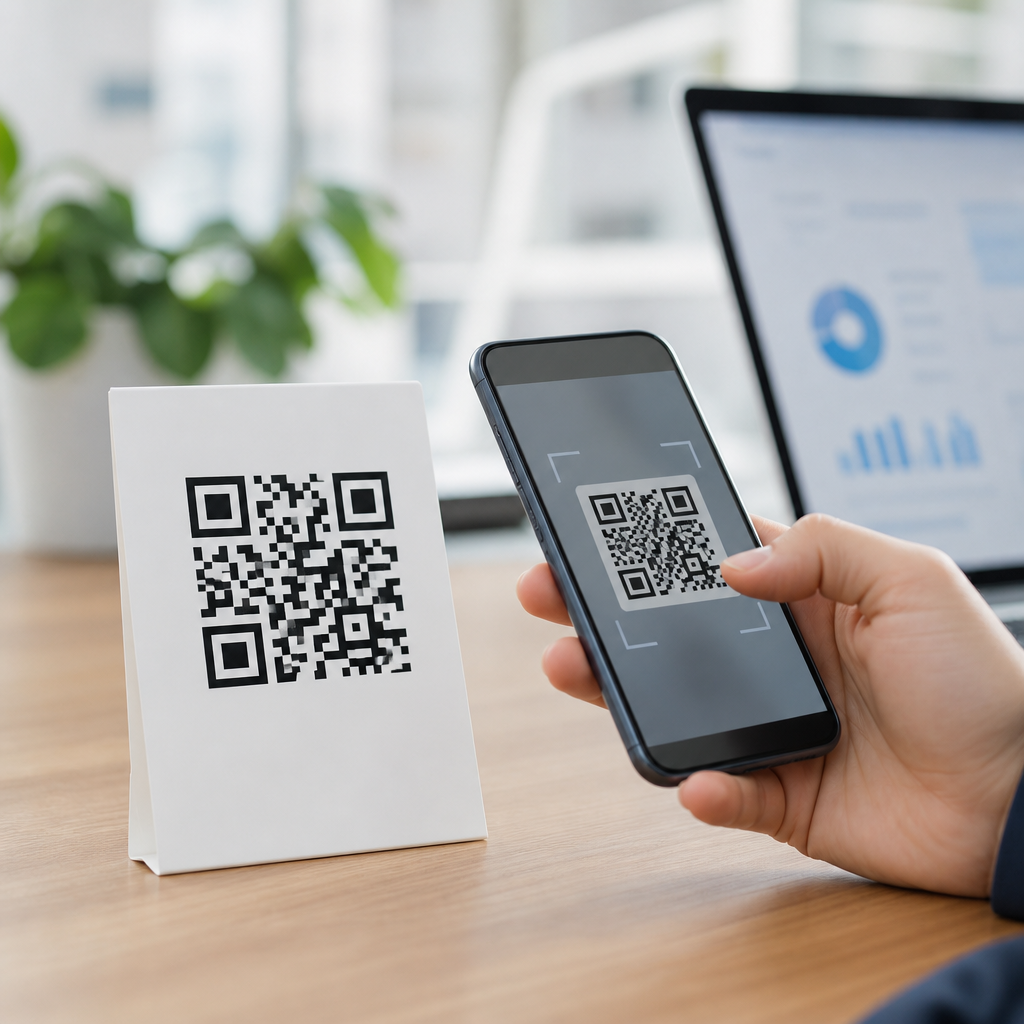
Best QR Code Services to Offer Businesses starts with a simple reality: most companies do not need a QR code image, they need a measurable path from an offline touchpoint to an online action. Selling QR code services means packaging strategy, design, deployment, analytics, and optimization into offers businesses can understand and buy. In practice, that can include dynamic QR codes, landing pages, menu systems, review generation, event check-in, payment links, lead capture, product authentication, training resources, and campaign reporting. I have built QR programs for local retailers, field service firms, restaurants, and trade show teams, and the same pattern appears every time. The code itself is cheap; the business outcome is valuable. That distinction matters because it changes pricing, sales conversations, and service delivery.
A QR code, or quick response code, is a scannable matrix barcode that opens a digital destination such as a website, PDF, app, vCard, video, Wi-Fi credential, form, or payment page. Static codes point to fixed data and cannot be edited after printing. Dynamic codes use a short redirect URL, so the destination can be changed later and scan activity can be measured. For businesses, dynamic capability is usually the correct starting point because campaigns change, menus update, and marketing teams need attribution. Selling QR code services therefore sits at the intersection of digital marketing, print production, customer experience, and operations.
This topic matters because QR behavior is now normal, not novel. Smartphones scan natively through camera apps, consumers expect contactless access, and managers want offline channels tied to accountable metrics. A restaurant owner wants fewer menu reprints. A real estate agent wants brochure scans tracked by property. A manufacturer wants packaging linked to instructions and warranty registration. A consultant who understands these needs can create recurring revenue with setup fees, monthly management, design retainers, and analytics reviews. This hub article explains the best QR code services to offer businesses, what each service solves, how to position it, where the margins are, and how to structure a practical offer catalog that supports long-term client relationships.
Why businesses buy QR code services instead of just generating codes
Businesses rarely struggle to find a free QR generator. They struggle to choose the right use case, deploy codes in the right places, test them across devices, connect them to conversion goals, and maintain them after launch. That is where a service provider earns trust. A free tool can output an image, but it does not audit scan distance, contrast ratio, destination load speed, first-party analytics, or UTM governance. It does not create a fallback if a landing page breaks or train staff on where codes should appear in store, on packaging, or in direct mail.
When I scope QR projects, I frame the service around operational friction and measurable outcomes. For example, a clinic may need patient forms completed before arrival. A dynamic QR code linked to a mobile-optimized intake form can reduce front desk bottlenecks and shorten appointment delays. A home services company may need more review volume. A post-job QR card can take customers directly to a Google review page, while a second route offers private feedback first. The business buys time savings, more leads, higher completion rates, and cleaner reporting. The QR code is simply the delivery mechanism.
The strongest offers also recognize risk. Poor implementation can damage results: tiny codes fail at distance, low contrast reduces scanability, dense printing on curved packaging distorts readability, and linking to non-mobile pages kills conversions. Reputable providers include testing protocols, redirect management, analytics configuration, and replacement workflows. That professional layer separates a commodity graphic from a business service.
Core QR code services every provider should package first
The best starting offers are services that solve common problems across many industries. Dynamic QR code setup is the foundation. It includes creating branded redirect links, assigning destinations, setting naming conventions, exporting print-ready files in SVG, PNG, and PDF, and organizing codes by client, location, and campaign. This is easy to explain and naturally leads to recurring management.
Landing page creation is the second core service. Many clients initially want to send scans to a homepage, but that usually wastes intent. A dedicated landing page aligned to the scan context performs better. A QR code on a flyer should not dump someone onto a general site menu; it should open the exact offer, product, booking page, or form promised in the print piece. Offering lightweight mobile landing pages using tools such as Webflow, WordPress, Unbounce, or Leadpages creates upsell potential and measurable lift.
Analytics and reporting form the third essential service. Businesses need scan volume, device type, time of day, geography, destination clicks, and downstream conversions. Depending on stack, this can involve Google Analytics 4, Google Tag Manager, UTM parameters, Looker Studio dashboards, and platform-native QR analytics. Monthly reports turn one-time code generation into recurring advisory work. They also uncover underperforming placements that can be redesigned or relocated.
| Service | Business problem solved | Typical buyer | Revenue model |
|---|---|---|---|
| Dynamic QR setup | Need editable, trackable codes | Any small or mid-sized business | Setup fee plus monthly hosting |
| Mobile landing pages | Scans go to generic pages and fail to convert | Marketers, owners, franchise managers | Build fee plus optimization retainer |
| Review generation QR | Low review volume after service completion | Home services, clinics, salons | Per location fee or monthly program |
| Digital menus and catalogs | Frequent reprints and outdated materials | Restaurants, wholesalers, retailers | Setup plus content update retainer |
| Event and check-in QR | Slow registration and poor attendance data | Event teams, associations, venues | Project fee |
| Packaging and product support QR | Customers need instructions, warranty, authenticity | Manufacturers, ecommerce brands | Campaign fee plus analytics |
Review generation, digital menu systems, and lead capture forms are the next three services I recommend packaging. They are easy to demonstrate, highly visual, and tied directly to outcomes executives care about. A restaurant can see fewer menu reprints and faster updates. A roofing company can measure estimates requested from yard sign scans. A retail chain can compare scans across locations. Starting with these practical offers builds case studies quickly.
Industry-specific QR services that command higher fees
After core services are in place, industry-specific solutions create stronger margins because they require process knowledge, not just software access. Restaurants are the obvious example, but the opportunity extends much further. For hospitality, QR services can include digital menus, room service ordering, guest feedback, local attraction guides, Wi-Fi access, and loyalty enrollment. The value is not only convenience; it is update speed and operational consistency across locations.
In real estate, agents and brokerages use property-specific QR codes on signs, brochures, and window displays. The destination can open a listing page, video walkthrough, financing form, or scheduler. Dynamic codes let agents redirect the same sign rider from one property to the next, preserving print assets while keeping analytics segmented. Scans can be tagged by address and campaign source, making offline promotion measurable.
Healthcare and clinics require more care, especially around privacy and compliance boundaries. Safe QR services here typically focus on appointment check-in, directions, intake preparation, educational materials, and review collection, not exposing protected information through the code itself. Clear governance matters. QR destinations should use secure forms and approved platforms, and teams should avoid embedding patient data in static codes.
Manufacturing and field service have some of the most underused QR opportunities. I have seen companies place codes on equipment labels that open maintenance videos, parts diagrams, safety sheets, and support tickets. This reduces training time and support calls while improving technician consistency. For packaged goods, QR codes can connect customers to authentication checks, assembly instructions, recipe ideas, refill subscriptions, or post-purchase registration. These use cases support larger contracts because they touch product, service, and customer success functions at once.
How to price selling QR code services profitably
Pricing improves when you stop charging for the image and start charging for the system. Businesses understand setup fees, monthly software management, content updates, and reporting because those map to work they can see. I usually structure QR offers in four layers: strategy, implementation, management, and optimization. Strategy covers discovery, use-case mapping, and tracking plan design. Implementation covers code creation, destination build, print specs, and testing. Management covers hosting, redirects, edits, and inventory. Optimization covers monthly reporting and conversion improvements.
A simple local business package might include ten dynamic codes, one landing page, UTM tagging, review QR setup, print file exports, and a monthly analytics summary. A multi-location package may include location-level code libraries, dashboard reporting, role-based access, staff training, and SLA-backed edits. Enterprises often care about governance: naming standards, expiration controls, API access, and integration with CRM or ticketing systems.
There are three dependable pricing models. First, project pricing works well for event activations, product launches, and packaging campaigns with clear scope. Second, monthly retainers fit businesses needing updates, reporting, and multiple campaigns. Third, per-location pricing suits franchises, clinics, restaurant groups, and regional retail. Margin improves when you standardize templates and onboarding. Tools like Bitly, QR Code Generator PRO, Beaconstac, Flowcode, Scanova, Canva, and Adobe Express can support delivery, but your process, reporting, and strategic guidance are what clients continue paying for.
Do not ignore print and production consulting in your pricing. File type selection, quiet zone preservation, minimum size guidance, material testing, and placement recommendations prevent expensive errors. A code that scans perfectly on screen can fail on reflective acrylic, dark corrugate, or curved labels. That expertise deserves a line item.
Operational standards, tools, and sales process that make the service scalable
Scalable QR service delivery depends on standards. Every code should have a documented owner, purpose, destination, campaign tag, launch date, and review schedule. Naming conventions matter because unmanaged libraries become unusable quickly. I recommend a structure combining client, location, use case, and date, such as client-city-reviewcard-2026-07. Redirect logs and archive procedures are equally important, especially when codes remain in the field long after a campaign changes.
Testing should be formal, not casual. Scan codes on iPhone and Android, under bright and dim light, from intended distances, and on final materials, not just proofs. Check load speed with PageSpeed Insights and mobile usability in Chrome. Confirm redirects retain UTM parameters. Verify forms submit correctly and thank-you pages fire conversions in GA4. If a client uses HubSpot, Salesforce, or Zapier, ensure captured leads route where sales teams actually work.
Selling QR code services also requires a disciplined sales process. Discovery should uncover where customers encounter the brand physically, what action the business wants next, and how success will be measured. Good questions include: Which printed assets already exist? Who updates the destination content? How often do offers change? What systems own leads, reviews, payments, or registrations? The answers determine whether you are selling a code library, a conversion program, or an operational workflow.
For positioning, avoid technical jargon in the first conversation. Say, “We turn signs, packaging, menus, and handouts into measurable response channels.” Then show one industry example and one dashboard screenshot. Decision-makers buy clarity. Once they see a path from scan to revenue, retention, feedback, or support savings, the service becomes easy to justify. Build this hub into your broader QR Code Monetization & Business Opportunities content by linking to deeper pages on dynamic versus static codes, review QR campaigns, QR code pricing, restaurant implementations, real estate flyers, packaging strategy, and analytics setup.
Conclusion
The best QR code services to offer businesses are the ones tied directly to outcomes: more leads, faster check-in, fewer print revisions, more reviews, better support, and clearer attribution from offline channels. Selling QR code services successfully means offering more than code generation. It means planning destinations, using dynamic redirects, enforcing print and testing standards, tracking conversions, and managing updates over time. Core offers such as dynamic QR setup, landing pages, analytics, review generation, menus, lead capture, and event check-in create a strong foundation. Industry-specific programs in real estate, healthcare, hospitality, manufacturing, and field service raise value further because they solve operational problems competitors often miss.
If you want this subtopic to produce consistent revenue, build your offer catalog like a system. Standardize onboarding, document naming conventions, package reporting, and create case studies by industry. Start with one high-need use case, prove the business result, then expand into additional placements and recurring optimization. That is how QR code work stops being a low-cost add-on and becomes a durable service line. Audit the physical touchpoints your target clients already use, choose three packages to launch first, and turn every scan into a measurable business action.
Frequently Asked Questions
What are the best QR code services to offer businesses?
The best QR code services to offer businesses are the ones that solve a specific business problem, not just the ones that generate a scannable image. In most cases, high-value services include dynamic QR codes, campaign-specific landing pages, digital menu systems, review generation funnels, event check-in systems, payment link QR codes, lead capture forms, product authentication experiences, and performance analytics dashboards. These services work because they turn a basic scan into a measurable business action such as a sale, a form submission, a review, a reservation, or a repeat visit.
For example, a restaurant may benefit most from menu QR codes tied to updateable pages and promotional offers, while a retail store may get more value from product information, loyalty signups, or payment-enabled QR codes. A local service business may need review request QR codes on invoices, vehicles, and business cards, while an event organizer may need ticket validation and check-in flows. The strongest service providers package these solutions around outcomes, such as increasing reviews, capturing more leads, improving customer convenience, or tracking offline marketing ROI. That positioning makes the offer easier for businesses to understand and far more valuable than simply selling a static code.
Why are dynamic QR codes better for business use than static QR codes?
Dynamic QR codes are usually the better business choice because they allow the destination to be changed without reprinting the code. That single feature creates major advantages in flexibility, cost savings, and campaign management. If a business places a QR code on packaging, signage, menus, brochures, direct mail, table tents, or window decals, a static code locks the destination forever. A dynamic code allows the business to update the URL, switch promotions, fix broken links, route users by device or location, and adapt the campaign over time while keeping the same printed asset in circulation.
Dynamic QR codes also make analytics possible, which is one of the biggest reasons businesses should invest in QR code services in the first place. With a dynamic setup, scans can often be tracked by time, location, device type, and campaign source. That means a business can compare how a flyer performs against a poster, how one location performs against another, or whether a trade show code generated enough leads to justify the expense. Static QR codes may be fine for very basic one-time uses, but they are limited for serious marketing, operations, and customer experience projects. For businesses that want measurability, optimization, and long-term control, dynamic QR codes are usually the more professional and scalable option.
How can QR code services help businesses generate leads and sales?
QR code services can help businesses generate leads and sales by reducing friction between an offline touchpoint and an online conversion step. Instead of asking someone to remember a website, type a long URL, search for a product, or manually fill in information later, a QR code creates an immediate path to action. That action might be booking an appointment, claiming an offer, requesting a quote, joining a loyalty program, viewing a product demonstration, downloading a brochure, starting a payment, or submitting a contact form. When the landing experience is built correctly, the scan becomes a direct response mechanism.
The key is not the QR code alone but the full conversion system around it. A high-performing QR code service includes message strategy, design placement, audience targeting, mobile-optimized landing pages, clear calls to action, tracking, and ongoing optimization. For example, a real estate firm might place QR codes on yard signs that lead to property pages with inquiry forms. A home services company might use vehicle wrap QR codes tied to a discount offer and quote request form. A retailer might use in-store shelf tags that lead to product bundles, reviews, or checkout pages. By connecting physical environments to measurable digital actions, QR code services help businesses capture intent in the moment when interest is highest.
What should be included in a professional QR code service package for businesses?
A professional QR code service package should include much more than code creation. At a minimum, it should cover discovery, strategy, QR code setup, destination page or workflow development, branding, testing, deployment guidance, analytics, and maintenance. Discovery helps identify the business goal, target audience, scan environment, and desired conversion action. Strategy determines where the code will be used, what type of QR code is appropriate, and how success will be measured. Setup includes selecting dynamic functionality, campaign naming, tagging, and redirect structure. The destination experience may involve a landing page, payment link, review funnel, menu interface, check-in form, or lead capture flow.
Strong packages also include practical implementation details that many businesses overlook. That means guidance on print sizing, contrast, placement, scan distance, call-to-action wording, and device testing across different lighting and real-world conditions. On the backend, businesses benefit from dashboards or reports showing scan volume, engagement trends, and conversion performance. Ongoing support is important too, especially when promotions change, links need updating, or campaigns need optimization. The most effective providers present their packages as business solutions with clear deliverables and outcomes, such as “review generation system,” “event check-in solution,” or “menu and ordering QR experience,” rather than generic QR code production.
How do businesses measure the success of a QR code campaign?
Businesses measure QR code campaign success by tracking what happens after the scan, not just the number of scans alone. Scan volume is a useful starting metric because it shows whether the placement, offer, and call to action are attracting attention. However, the real value comes from downstream metrics such as form submissions, purchases, bookings, payments completed, reviews generated, event check-ins, coupon redemptions, or time spent on the landing page. A campaign with fewer scans but stronger conversion quality may be far more valuable than one with high scan counts and little business impact.
To evaluate performance properly, businesses should connect QR campaigns to clear objectives and attribution methods from the beginning. That may include using UTM parameters, dedicated landing pages, CRM integrations, call tracking, coupon codes, or location-specific campaign variants. For example, a business can compare the response rate of QR codes placed on packaging versus storefront signage, or measure which trade show generated the most qualified leads. Reviewing device data, time-of-day patterns, and conversion drop-off points can also reveal opportunities for optimization. The best QR code services support this process with reporting and recommendations, helping businesses refine creative, placement, offers, and landing experiences over time so each campaign becomes more efficient and profitable.