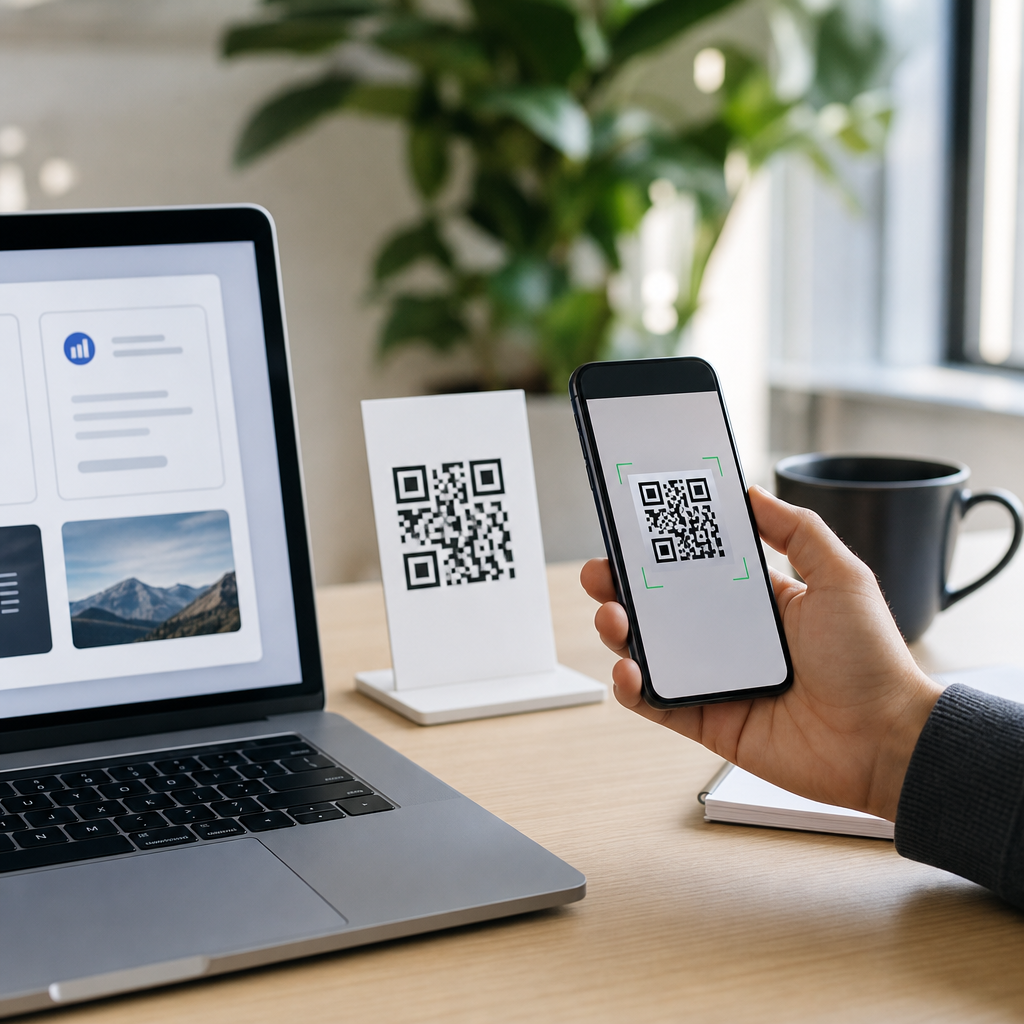
A dynamic QR code is a scannable code whose destination can be changed after printing, which makes it one of the most practical tools for modern marketing, operations, and customer communication. Unlike a static QR code, which permanently stores the final URL or text inside the pattern itself, a dynamic QR code usually stores a short redirect link that points to editable content managed through a dashboard. That small technical difference changes everything: you can update a landing page, swap a PDF, correct a mistake, add tracking, or run A/B tests without reprinting the code on packaging, signs, menus, mailers, or product inserts.
Businesses use dynamic QR codes because physical materials are expensive to replace and campaigns rarely stay fixed for long. I have built QR campaigns for retail displays, trade show booths, restaurant menus, direct mail, and equipment labels, and the same lesson appears every time: flexibility matters more after launch than before launch. A code printed on ten thousand brochures becomes a liability if the linked page expires, the offer changes, or analytics are missing. Dynamic QR codes solve that problem by separating the printed symbol from the content destination.
To create a dynamic QR code well, you need more than a generator and a URL. You need to understand how redirects work, what file types are supported, how scan tracking is recorded, what design changes affect readability, and how to test a code under real-world conditions. This guide explains the full process step by step, from choosing a platform and setting campaign goals to generating, customizing, testing, printing, and monitoring a code after it goes live. It also serves as a hub for the broader process of QR code creation, because the fundamentals behind dynamic codes apply to menus, business cards, forms, Wi-Fi access, app downloads, and omnichannel campaigns.
If your goal is to create a QR code that can be edited later, measured accurately, and scanned reliably across devices, the process is straightforward when done in the right order. The core steps are simple: pick a trusted dynamic QR code generator, create the destination content, generate the code, customize it carefully, test it thoroughly, publish it at the correct size and contrast, then review scan data and update the destination as needed. Each step matters because a dynamic QR code is not just a graphic. It is a small infrastructure layer connecting print, mobile devices, analytics, and user intent.
What a Dynamic QR Code Is and When You Should Use One
A dynamic QR code is best understood as a pointer rather than a container. In most setups, the QR pattern resolves to a short URL controlled by a QR platform such as Bitly, QR Code Generator Pro, Beaconstac, Flowcode, Scanova, QR TIGER, or Uniqode. That short URL then redirects the scanner to the final destination, which may be a website, PDF, video, app store listing, payment page, vCard, or multi-link landing page. Because the redirect target can be changed in the dashboard, the printed code remains usable even when the campaign changes.
You should use a dynamic QR code whenever the linked content might change, when you need scan analytics, or when the code will be printed on anything expensive or hard to replace. Common examples include restaurant menus that change seasonally, product packaging that points to updated documentation, event signage that redirects from registration to agenda pages, and direct mail campaigns that need source attribution by geography or audience segment. Static codes are fine for fixed information such as a personal Wi-Fi password or a permanent contact card, but dynamic codes are usually the safer business choice.
Another major advantage is data. Most dynamic QR platforms report metrics such as total scans, unique scans, time of scan, approximate location based on IP, device type, and operating system. Some integrate with Google Analytics using UTM parameters, while others offer native dashboards or webhook connections to CRM and automation tools. That visibility turns a printed code into a measurable acquisition channel, which is especially useful when comparing store posters, packaging inserts, trade show handouts, and out-of-home placements.
Step-by-Step: How to Create a Dynamic QR Code
Start by defining the exact purpose of the code. A surprising number of QR failures happen before anyone opens a generator because the destination is unclear. Ask what action the user should take after scanning: read a menu, download a guide, claim an offer, call support, watch a demo, or complete a form. Then decide what content type fits that action. A mobile landing page often performs better than linking directly to a desktop-oriented homepage. If the page is not fast, responsive, and focused, the QR code will not rescue it.
Next, choose a reputable dynamic QR code generator. Look for editable destinations, scan analytics, custom branding, bulk creation if needed, downloadable vector formats such as SVG, EPS, or PDF, and solid uptime. Review whether the platform displays its own branding during redirects, whether it allows a custom domain, and what happens if your subscription lapses. This matters because some services limit active dynamic codes on lower tiers, and enterprise teams often require domain control for brand trust and governance.
Once the platform is selected, create the destination asset first. If you are sending traffic to a webpage, publish the page before generating the code so you can test the full path. If you are using a PDF, optimize the file size so it opens quickly on mobile data. If you are linking to app stores, use a smart link that routes iPhone users to the App Store and Android users to Google Play. Good QR execution starts with the destination experience, not the symbol.
Now generate the dynamic QR code inside the platform. Select the content type, enter the destination URL or upload the asset, then confirm that the platform marks the code as dynamic or editable. Name the campaign clearly using a convention such as channel-location-date-offer. I recommend naming codes this way because dashboards become chaotic quickly when campaigns scale. Organized labels make later edits and reporting far easier.
Customize the design carefully. You can usually change the frame, colors, eyes, pattern style, and embedded logo, but readability must come first. Keep high contrast between foreground and background, preserve the quiet zone around the code, and avoid inverting colors unless you have tested extensively. A black code on a white background remains the most reliable format. Branded codes can work well, but heavy styling, gradients, glossy finishes, or oversized logos often reduce scan success, especially in dim light or on older phone cameras.
Then test the code across real conditions. Scan it with iPhone and Android devices, with default camera apps and common third-party scanners, at different distances, under indoor and outdoor lighting, and on both screen and print mockups. Test whether the redirect loads quickly and whether the destination page renders well on small screens. If the code will appear on packaging or posters, print sample versions at actual size. I have seen codes that worked perfectly on desktop proofs fail on corrugated boxes because the print texture softened the edges.
After testing, download the correct file type for production. Use SVG, EPS, or PDF for print because vector files scale cleanly without pixelation. PNG can be acceptable for digital use, but print vendors usually prefer vector artwork. Provide clear placement instructions, including minimum size, required margin, background contrast, and any call-to-action text such as “Scan to view setup guide” or “Scan for today’s menu.” People scan more often when the benefit is explicit.
| Step | What to Do | Why It Matters |
|---|---|---|
| 1. Set the goal | Define the user action and choose the right destination format | Improves conversion after the scan |
| 2. Pick a platform | Choose a generator with editable links, analytics, and vector exports | Prevents lock-in and supports measurement |
| 3. Build the destination | Publish the landing page, file, or smart link first | Allows end-to-end testing before launch |
| 4. Generate the code | Create the dynamic code and label the campaign clearly | Keeps reporting and updates organized |
| 5. Customize carefully | Apply branding without hurting contrast or quiet zone | Balances design and scan reliability |
| 6. Test in context | Scan on multiple devices and print sample sizes | Finds real-world failures before rollout |
| 7. Launch and monitor | Publish the code, track scans, and update the destination as needed | Extends campaign life and improves results |
Design, Sizing, and Print Rules That Protect Scan Performance
The most common question after “how do I create a dynamic QR code” is “why is my QR code not scanning consistently.” In most cases, the issue is not the generator. It is design execution. Every QR code needs a quiet zone, the empty margin around the code that helps a scanner distinguish the pattern from surrounding graphics. Remove that margin and scan reliability drops sharply. ISO/IEC 18004, the main QR Code specification, underpins this principle, and good generators preserve it by default.
Size also matters. A practical rule for print is to start around 2 x 2 centimeters for close-range use, then scale up based on expected scanning distance. A common field rule is roughly one centimeter of code size for every ten centimeters of scanning distance, though environment and camera quality affect results. On posters viewed from several feet away, a much larger code is necessary. On packaging, curved surfaces can distort modules, so flat placement is always preferable.
Color choices should support contrast first and branding second. Dark foreground on a light background works best. Light codes on dark backgrounds can scan, but they are less forgiving. Metallic inks, reflective laminates, embossing, and translucent surfaces are all risky because they interfere with edge detection. If you need brand colors, verify the contrast ratio visually and through real scans. Do not rely on appearance alone. A code that looks sharp to a designer may still fail for a camera sensor.
Tracking, Editing, and Managing Dynamic QR Codes After Launch
The biggest advantage of a dynamic QR code appears after deployment. Once the code is live, you can edit the destination without changing the printed graphic. That allows practical corrections and strategic optimization. If a product page moves, update the redirect. If one offer underperforms, switch to another. If an event ends, redirect scans to a replay page, feedback form, or waitlist. This is why dynamic QR codes are standard for long-lived assets such as packaging, equipment tags, manuals, and storefront signage.
Analytics should guide those updates. Review total scans, unique scans, repeat behavior, device mix, and time trends. If scans spike at certain hours, adjust staffing or ad scheduling. If one placement underperforms, examine visibility, CTA wording, and destination relevance. In retail, I have seen a simple CTA change from “Scan here” to “Scan for ingredients and offers” raise engagement because it made the value specific. The best QR campaigns treat the code as a measurable funnel, not a decorative square.
For cleaner attribution, add UTM parameters to the destination URL or use platform-level campaign tags. This lets you separate traffic from packaging versus shelf talkers, or compare one trade show booth location against another. Teams using Google Analytics 4 can create dedicated reports for qr / offline traffic, while CRM-connected systems can tie scans to lead forms, coupon redemptions, or support interactions. The more deliberate your tracking structure, the more useful the data becomes.
Common Mistakes to Avoid When Creating a Dynamic QR Code
The first mistake is linking to a bad destination. A code that opens a slow, unoptimized page creates friction immediately. The second is overdesigning the symbol. Rounded modules, gradients, and logos can work, but excessive styling reduces reliability. The third is ignoring print context. Codes placed too high, too low, behind glare, on folds, or near busy patterns perform poorly. The fourth is relying on one device test. A code should be tested broadly before production.
Another frequent problem is choosing a platform without understanding its retention rules. Some low-cost tools disable dynamic redirects when billing stops, while others keep existing codes active but block edits and analytics. For a business-critical code, confirm ownership terms, export options, and support standards in advance. Also consider using a custom short domain when brand trust and long-term control matter. Users are more likely to scan when the redirect appears legitimate and familiar.
Finally, do not omit the call to action. QR codes attract attention, but they still need instruction and motivation. Tell users what happens next and why it benefits them. “Scan to see installation video,” “Scan for warranty registration,” and “Scan to reorder in 30 seconds” all outperform generic language because they answer the user’s immediate question before the camera opens.
Best Use Cases for a Dynamic QR Code Hub Strategy
Because this page sits within a broader QR code creation and tools topic, it helps to see where dynamic creation connects to related use cases. A dynamic URL code is the default hub format because it can power restaurant menus, PDF downloads, event registrations, coupon pages, product tutorials, review requests, feedback forms, digital business cards, and app install flows. The creation steps remain similar, but the destination experience changes by use case.
For example, a restaurant needs menu updates and daypart changes, so a dynamic menu code is ideal. A manufacturer may place dynamic QR codes on packaging to route customers to setup videos, safety sheets, or region-specific manuals. A real estate agent can print a code on signage and redirect it from an active listing to a contact page when the property sells. A conference organizer can keep the same badge or banner code while changing the destination from registration to live agenda to post-event survey. That adaptability is the real return on investment.
Creating a dynamic QR code is ultimately about control, measurement, and longevity. You generate one scannable asset, but you keep the power to improve what happens after the scan. Start with a clear goal, choose a dependable platform, build a mobile-friendly destination, customize with restraint, test in real conditions, and monitor performance after launch. Do that consistently and your QR code becomes a durable bridge between physical touchpoints and digital action.
If you are building out your QR code creation workflow, use this guide as the starting point for every campaign. Apply the same process whether you are launching packaging, menus, print ads, business cards, or support documentation, and refine each code with data instead of guesswork. Create your first dynamic QR code with a clear destination and a measurable purpose, then keep improving it after the ink dries.
Frequently Asked Questions
What is a dynamic QR code, and how is it different from a static QR code?
A dynamic QR code is a QR code that does not permanently store the final destination inside the code pattern itself. Instead, it typically contains a short redirect URL that sends the scanner to a destination managed through a QR code platform or dashboard. Because the destination is controlled through that dashboard, you can change where the code leads even after the QR code has been printed on packaging, posters, menus, signage, business cards, or product inserts.
That is the main difference from a static QR code. A static QR code directly encodes the final URL, text, phone number, or other data into the image. Once a static code is created, that content is fixed. If you need to update the page, correct a mistake, switch campaigns, or replace an outdated link, you usually need to generate and distribute a brand-new code.
In practical terms, dynamic QR codes are more flexible for marketing, operations, customer support, and multi-location communication. They are especially useful when printed materials have a long lifespan or when campaigns evolve over time. Many dynamic QR code tools also include scan tracking, device data, location insights, time-based analytics, password protection, expiration settings, and A/B testing features. That combination of editability and measurement is why dynamic QR codes are often the preferred choice for businesses that want long-term usability and better performance visibility.
How do you create a dynamic QR code step by step?
Creating a dynamic QR code is usually a straightforward process. First, choose a QR code generator or platform that specifically supports dynamic QR codes. Not all generators offer this feature, so it is important to confirm that the service allows editable destinations and dashboard-based management. Once you create an account, select the type of content you want the code to point to, such as a website URL, landing page, PDF, app download page, form, coupon, video, or social profile.
Next, enter the initial destination or upload the content you want people to access. The platform will then generate a short redirect link behind the scenes and convert it into a QR code image. At this stage, you can usually customize the design by adjusting colors, adding a logo, changing the frame, or adding a call to action such as “Scan to Learn More” or “Scan for Menu.” Customization can improve brand recognition, but it should be done carefully so the code remains easy to scan.
Before publishing, test the QR code with multiple devices and scanning apps. Make sure it opens quickly, routes to the correct destination, and works on both iPhone and Android devices. Also verify that the landing page is mobile-friendly, because most scans happen on smartphones. Once testing is complete, download the QR code in a suitable format. PNG may work for digital use, while SVG, EPS, or PDF formats are often better for print because they maintain quality at larger sizes.
After distribution, you can return to the dashboard at any time to update the destination without changing the printed code. For example, you can redirect users from a seasonal promotion to a new campaign, replace a broken page, update a file, or route visitors to different pages based on business needs. This editable control is what makes the creation process so valuable in the first place.
Why should you use a dynamic QR code instead of a static one?
The biggest advantage of a dynamic QR code is flexibility. If your destination changes, your printed QR code does not have to. That can save time, money, and frustration, especially when codes appear on product packaging, direct mail, storefront displays, manuals, event signage, and other materials that are expensive or impractical to reprint. A single code can support a campaign over a long period while the underlying destination evolves as needed.
Dynamic QR codes also support better performance tracking. Many platforms show scan counts, scan times, approximate locations, devices used, and other engagement metrics. This information can help businesses evaluate campaign performance, compare channels, identify peak engagement times, and optimize future QR code placements. Static codes generally do not include that built-in level of reporting because they simply send users directly to fixed content.
Another major reason to use a dynamic QR code is operational control. If a landing page goes down, a promotion ends early, or the wrong page is linked, you can fix the issue from the dashboard instead of replacing the physical code. Some platforms also allow advanced features such as scan limits, expiration dates, geo-targeting, retargeting pixels, password-protected destinations, and editable content modules. For teams running active campaigns or managing customer-facing communications, those tools add meaningful business value beyond basic scanning functionality.
Static QR codes still have a place when the content will never change and analytics are not important. But if there is any chance that the destination, offer, file, or communication may need to be updated later, a dynamic QR code is usually the smarter and more scalable option.
Can you change the destination of a dynamic QR code after it has been printed?
Yes, that is the defining benefit of a dynamic QR code. Once the code is printed and distributed, you can log into the QR code management platform and change the destination associated with that code. The visible QR image stays the same, but the redirect behavior behind it is updated. That means people scanning the code will automatically be sent to the new destination without needing a replacement code.
This capability is especially useful in real-world business scenarios. A restaurant can update a menu link without reprinting table tents. A retailer can change a product page to reflect inventory, promotions, or seasonal offers. An event organizer can redirect attendees from a registration page to a live schedule or post-event survey. A manufacturer can update support documents, warranty information, or training videos while keeping the same code on product packaging.
There are, however, a few practical considerations. First, the QR code must remain active within the service you used to create it. If the subscription expires or the platform disables the code, the redirect may stop working. Second, it is wise to keep destination changes organized and documented, especially if multiple team members manage campaigns. Third, after making an update, test the code immediately to confirm that the new link works correctly on mobile devices. With proper management, printed dynamic QR codes can stay useful far longer than static alternatives.
What are the best practices for making sure a dynamic QR code works well and gets more scans?
Start with scannability. Use a reliable generator, maintain strong contrast between the code and the background, and avoid overly complicated styling that interferes with readability. Black on white is the safest combination, though branded colors can work if contrast remains high. Make the code large enough for the viewing distance and placement. A tiny code on a poster, billboard, or product label may be difficult to scan, especially in low light or when users are moving quickly.
Placement matters just as much as design. Put the QR code where people can comfortably access it and where they have enough time to scan. Avoid curved surfaces when possible, keep the code away from folds or edges, and do not place it too high, too low, or behind reflective coverings. For print pieces, include whitespace around the code so scanners can distinguish it from surrounding graphics. It is also smart to add a short instruction or call to action so people know what they will get by scanning, such as “Scan to view pricing,” “Scan to download the guide,” or “Scan for support.”
The destination experience is equally important. Make sure the landing page loads quickly, works well on mobile, and clearly matches the promise of the QR code. If the code is meant to provide a coupon, menu, registration form, or product details, users should reach that content immediately without confusion. A dynamic QR code can bring people to the page, but the page itself determines whether they engage, convert, or leave.
Finally, take advantage of the dynamic features. Monitor scan analytics, test different placements, update destinations when campaigns change, and refine your call to action based on performance. If one location receives more scans than another, adjust your rollout. If users scan but do not convert, improve the landing page. The real power of a dynamic QR code is not just that it can be edited after printing, but that it can be continuously improved based on real-world results.