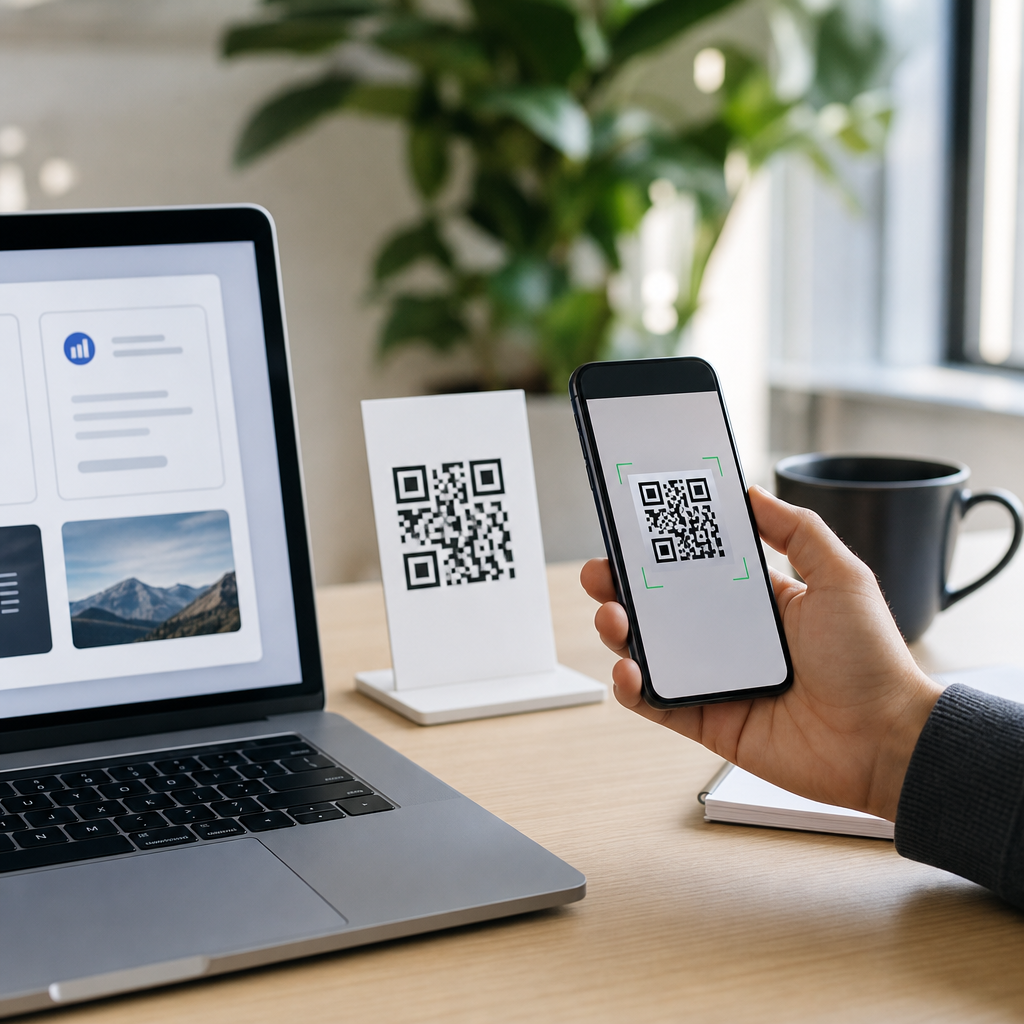

Bulk QR code generation has become a core marketing and operations capability for companies that need to launch, track, and update many scannable assets at once. A bulk QR code campaign uses software to create dozens, hundreds, or thousands of codes in a single workflow, usually from a spreadsheet or database, with each code tied to a unique destination, identifier, or tracking rule. Instead of designing one code at a time, teams can produce entire batches for product packaging, direct mail, event badges, retail signage, restaurant tables, warranty cards, training materials, and regional promotions. That efficiency matters because modern campaigns rarely live in one channel. They span print, packaging, in-store displays, field sales, and digital retargeting, so marketers need scale, consistency, and measurable outcomes.
In practice, I have seen bulk QR code generation solve two recurring problems. First, it removes bottlenecks when campaigns need localized links, unique coupon paths, or item-level tracking. Second, it reduces errors that happen when staff manually create codes and accidentally duplicate links, use the wrong landing pages, or lose naming conventions. For businesses building a repeatable QR strategy, this subtopic sits at the center of the broader QR Code Creation & Tools category because it connects design, data management, analytics, and governance. A useful bulk QR code system is not just a generator. It is a workflow that handles data import, dynamic redirects, testing, print readiness, permissions, and post-launch measurement.
Understanding bulk QR codes also requires a few key distinctions. Static QR codes point directly to fixed content and cannot be changed after printing. Dynamic QR codes use a short redirect URL behind the code, allowing the destination to be edited later and enabling scan analytics such as time, location, and device type, depending on the platform and privacy configuration. Bulk creation can support both, but most campaign teams prefer dynamic QR codes because they preserve printed materials when offers, pages, or inventory change. The business value is straightforward: faster production, fewer mistakes, stronger attribution, and better control over campaigns that must scale across locations, products, or audience segments.
Bulk QR codes matter now because offline-to-online journeys are measurable in ways they were not a decade ago. A poster can drive app installs, a shelf tag can launch product education, and a postcard can route customers to a personalized renewal page. When each asset has its own QR code, teams can compare performance by store, sales rep, geography, product line, or audience cohort. That turns a simple scan into operational insight. For any organization investing in QR Code Creation & Tools, bulk QR code generation is the hub capability that makes one-off experiments repeatable, governable, and profitable.
What Bulk QR Code Generation Means in Real Campaigns
Bulk QR code generation is the process of creating many QR codes from structured input, usually a CSV file, CRM export, product feed, or event registration list. Each row in the source data becomes a distinct code with its own destination URL, embedded text, serial number, vCard, PDF, Wi-Fi credential, or app deep link. In campaign use, the most common pattern is a spreadsheet with columns for destination URL, campaign name, asset ID, region, expiration rule, and design settings. The platform then generates a downloadable batch in PNG, SVG, EPS, or PDF formats for print and digital distribution.
This matters because scale changes the production model. A local café may only need one menu QR code, but a restaurant chain with 600 locations might need one code per store, each leading to the correct ordering page with the right parameters. A manufacturer may need one code for every SKU, another for every carton, and another for every instruction sheet. An event organizer may issue unique QR codes for attendee badges, exhibitor booths, session check-ins, and post-event surveys. In each case, the QR code is not the campaign by itself. It is the access point into a tracked customer journey.
Teams often ask whether batch creation is only for large enterprises. It is not. Mid-market companies gain just as much value because they usually have leaner teams and less tolerance for manual rework. A three-person marketing department can launch a segmented direct mail campaign far more safely with imported data and standardized templates than with hand-built codes. The same applies to franchise groups, nonprofits, school systems, healthcare networks, and field service companies. If multiple assets need different destinations, bulk generation quickly becomes the practical baseline.
Common Business Uses for Bulk QR Codes
Businesses use bulk QR codes anywhere physical assets need individualized digital actions. In retail, brands place unique codes on shelf talkers, endcaps, and packaging to measure which placements drive scans and purchases. In real estate, agencies create one code per listing sign so they can update property pages without replacing signs. In manufacturing, serialized codes connect technicians and customers to installation guides, safety sheets, maintenance videos, and warranty registration forms. In education and training, companies print codes on manuals and classroom materials, sending different roles to role-specific content.
Direct mail is one of the strongest examples because segmentation is easy to test. A lender can mail three audience segments with three landing page variants and assign a unique QR code to each audience and creative version. When scans arrive, the team can compare response rate, conversion rate, and downstream loan application quality. Hospitality brands use the same method for room collateral, local offers, and loyalty enrollment. Healthcare providers use location-specific codes on appointment reminders, vaccination outreach, and patient education posters, often routing each facility to the correct scheduling or information page.
Bulk QR codes are also powerful in internal operations. I have seen warehouse teams use batch-generated labels to connect bins, equipment, and process stations to standard operating procedures and issue-reporting forms. HR departments use them for onboarding packets, policy acknowledgments, and office navigation. Sales organizations assign codes to rep-specific leave-behinds so regional managers can see which territories generate scans. These use cases show why the topic deserves hub-level treatment: the same core mechanics support marketing, service, training, compliance, and analytics across the business.
How the Bulk QR Code Workflow Works
A reliable workflow starts with data preparation. The source file needs clean columns, consistent naming, and validated URLs. In production environments, I recommend an asset ID that stays constant even if the landing page changes later. That single identifier makes troubleshooting easier across design files, analytics, and CRM records. Most teams then choose whether the batch will use static or dynamic redirects, define UTM parameters, and set folder structures for output files. The generator creates the codes, but the real discipline is in naming, version control, and testing before anything goes to print.
Next comes output selection. PNG files are fine for web graphics and office documents, but print shops usually prefer vector formats such as SVG, EPS, or press-ready PDF because they scale without losing sharpness. Error correction level, quiet zone, contrast, and size must be checked against the intended scanning distance and surface. A code on product packaging behaves differently from one on a trade show banner. After generation, teams typically download a batch package containing the code files, a manifest spreadsheet, and sometimes a redirect management list.
Before launch, every serious campaign should run a quality assurance pass. That includes spot-checking random samples, testing edge cases, scanning on both iOS and Android, checking redirect speed, and confirming analytics are recording correctly. For variable-data print projects, preflight matters even more because one broken merge can affect hundreds of assets. Many teams skip this and pay for it later with reprints, customer confusion, and unusable attribution data.
| Workflow stage | What teams do | Why it matters |
|---|---|---|
| Data preparation | Clean URLs, assign IDs, add campaign parameters | Prevents duplicates and tracking errors |
| Code generation | Import CSV and create static or dynamic batch | Produces assets at scale with consistent settings |
| Design output | Export PNG, SVG, EPS, or PDF as needed | Ensures print and digital compatibility |
| QA testing | Scan samples across devices and surfaces | Reduces failed scans and wasted print spend |
| Launch and measure | Monitor scans, conversions, and destination performance | Shows which assets and audiences perform best |
Dynamic Versus Static Codes in Campaign Management
For most campaign teams, dynamic QR codes are the better choice because they separate the printed code from the live destination. If an offer changes, a page moves, inventory runs out, or legal copy needs revision, the redirect can be updated without reprinting the asset. That flexibility is essential in retail promotions, event schedules, franchise marketing, and product support. Dynamic codes also support scan analytics, A/B testing, and geo- or time-based routing in some platforms. These features convert a simple code into a managed campaign asset.
Static QR codes still have a place. They are useful when the content will never change, privacy rules prohibit redirect tracking, or the asset must work indefinitely without a subscription platform. For example, some organizations use static codes for public Wi-Fi credentials, plain text IDs, or archival documents. The tradeoff is permanence. If a static URL breaks, the printed code is effectively dead. In campaign settings, that risk is usually too high unless the destination is tightly controlled and long-lived.
The strongest approach is usually mixed. Use dynamic QR codes for customer-facing campaigns and static codes for fixed utility functions. Governance should make that choice explicit. I advise teams to document who can edit destinations, who owns the analytics, how long redirects remain active, and how retired campaigns are archived. Without that structure, a large batch of QR codes becomes difficult to maintain after the original launch team moves on.
Analytics, Attribution, and Performance Measurement
The business case for bulk QR codes improves dramatically when measurement is done well. At minimum, every campaign should capture scans by asset, time period, and destination. Better setups also pass UTM parameters into analytics platforms such as Google Analytics 4, Adobe Analytics, HubSpot, or Salesforce-connected landing pages. That allows teams to tie scans to sessions, leads, purchases, bookings, or support outcomes. For offline media, this is one of the cleanest ways to compare placements and creative variants without relying only on vanity URLs or broad campaign estimates.
There are limits. A scan is not a conversion, and location data may be approximate depending on the provider and user permissions. Apple and Android camera behavior, in-app browsers, and privacy controls can also affect attribution. Still, directional insights are highly valuable. If one mailer version drives twice the scan-to-form-completion rate of another, that is actionable. If one store’s packaging code gets heavy scans but low conversions, the issue may be inventory, page speed, or mismatched messaging. Good QR analytics do not answer everything, but they narrow the decision set quickly.
The most effective teams build naming conventions into the batch itself. A code ID should map back to campaign, channel, asset type, region, and version. That structure supports dashboarding and makes internal linking across reports much easier. It also supports future subtopics such as QR code analytics dashboards, QR code A/B testing, and QR code tracking parameters, all of which naturally connect from this hub page.
Design, Print, and Compliance Considerations
Bulk generation does not remove the need for good design. QR codes must preserve scan reliability first. High contrast, adequate quiet zones, sensible size, and undistorted geometry matter more than decorative styling. Branded frames, logos, and color customizations can work, but they should be tested with the final print method and substrate. Glossy packaging, curved bottles, dark backgrounds, and low-resolution office printers are common failure points. In production, I prefer to test the exact material and finish rather than rely on on-screen previews.
Print context also affects sizing decisions. A code on a business card might need to be at least 0.8 by 0.8 inches, while a poster scanned from several feet away should be much larger. The practical rule is to size for scanning distance and verify with real devices in realistic lighting. For regulated industries, compliance cannot be an afterthought. Healthcare, finance, and alcohol packaging may require disclosures, consent language, age gates, or retention policies around linked content. Destination pages must be mobile-optimized, accessible, and fast, because the scan experience fails if the landing page is slow or unusable.
Security matters too. Because users cannot visually inspect a QR destination before scanning, brands should use recognizable domains, HTTPS, and clear calls to action. Redirect governance, link expiration rules, and access controls reduce the chance of hijacked or outdated destinations. When businesses ask why one bulk QR platform costs more than another, security, permissions, audit logs, and API reliability are often the real reasons.
Choosing Tools and Building a Scalable QR Program
The right bulk QR code generator should support CSV import, dynamic redirect management, analytics export, design controls, folder organization, and role-based permissions. Enterprise teams may also need API access, SSO, custom domains, and integrations with CRM, marketing automation, DAM, or print-on-demand systems. Popular evaluation criteria include file output options, scan limits, redirect speed, uptime, and whether the platform can preserve short links if a subscription changes. Those details are easy to ignore during a pilot and painful to discover later.
A scalable program also needs process ownership. Marketing may own promotional codes, operations may own facility and asset labels, and IT or web teams may control domains and redirects. Document retention, naming standards, archive policies, and landing page ownership should be defined early. That governance is what turns a generator into a sustainable capability. As this hub expands, related articles should branch into platform comparisons, CSV formatting best practices, dynamic QR code management, enterprise governance, and print testing standards.
Businesses that use bulk QR codes well are not merely creating images. They are building a controlled bridge between physical touchpoints and measurable digital outcomes. Start by mapping where individualized scans would improve customer experience or attribution, then pilot a small batch with dynamic redirects, strict QA, and clear reporting. Once the workflow is proven, scale it across campaigns, locations, and product lines. That is how bulk QR code generation delivers real value: faster execution, cleaner data, and smarter decisions from every scan.
Frequently Asked Questions
What is a bulk QR code campaign, and how do businesses typically use it?
A bulk QR code campaign is a process where a business generates many QR codes at once instead of creating them one by one. Usually, the codes are produced from a spreadsheet, CRM export, inventory file, or another database that contains unique information for each item. That information might include a destination URL, product ID, campaign source, store location, serial number, discount code, or customer segment. The result is a large batch of scannable assets that can be deployed across marketing, packaging, logistics, events, and customer service workflows.
Businesses use bulk QR codes in several practical ways. Marketing teams place them on direct mail pieces so each region, audience segment, or individual recipient can be tracked separately. Retail brands add them to product packaging to connect customers to setup instructions, authenticity pages, warranty registration, or promotional landing pages. Event teams use them for badges, check-in systems, and session-specific engagement. Operations teams apply them to inventory labels, internal documentation, asset tracking, and field service processes. Because each code can carry its own unique identifier or routing logic, companies can run personalized, measurable campaigns at scale without slowing down production.
The biggest advantage is efficiency combined with control. Instead of manually producing and managing hundreds of codes, teams can launch entire campaigns in a single workflow, maintain naming consistency, reduce human error, and align every code with tracking rules from day one. That makes bulk QR code generation not just a convenience, but a core capability for organizations that need speed, measurable results, and the flexibility to manage many touchpoints at once.
Why do companies choose bulk QR code generation instead of making QR codes individually?
Companies choose bulk QR code generation because manual creation does not scale well. If a business needs only a few QR codes, making them one at a time may be manageable. But once a campaign expands to dozens, hundreds, or thousands of assets, individual creation becomes time-consuming, inconsistent, and error-prone. Bulk generation allows teams to upload structured data once and automatically create an entire set of QR codes tied to specific destinations, identifiers, or rules.
This matters in real campaigns where each code needs to be slightly different. A national retailer may want a separate code for every store location. A direct mail campaign may require a unique code for each customer segment or sales territory. A manufacturer may need unique QR codes for every SKU, batch, or serialized product. In those cases, the business is not simply producing a large quantity of identical graphics. It is building a controlled system of unique digital entry points that must remain organized and trackable.
Bulk workflows also improve campaign governance. Teams can apply standardized settings for design, error correction, URL structure, naming conventions, and analytics parameters across the entire batch. That consistency is important for brand presentation and for reporting accuracy. In addition, many platforms let businesses export codes in print-ready formats, assign metadata, and connect outputs to downstream systems, which is especially useful when coordinating with printers, packaging suppliers, field teams, or fulfillment partners.
Ultimately, businesses choose bulk QR code generation because it saves time, reduces operational friction, and supports better measurement. It turns what could be a repetitive design task into a scalable campaign process that is easier to launch, easier to monitor, and easier to adjust over time.
How do businesses track performance and results from bulk QR code campaigns?
Tracking is one of the strongest reasons businesses invest in bulk QR code campaigns. When each QR code is tied to a unique URL, ID, or redirect rule, companies can measure scans at a very detailed level. They can see which mailer version performed best, which product package generated the most engagement, which store location drove the most scans, or which event sign attracted the highest interaction. That level of granularity turns QR codes from a simple access tool into a reliable source of campaign intelligence.
Most businesses track performance by connecting each QR code to campaign metadata. This can include UTM parameters, region codes, product identifiers, audience segments, channel labels, or internal campaign names. Once the code is scanned, analytics platforms can capture data such as total scans, unique scans, device type, time of scan, and approximate location. If the QR destination leads to a form, purchase page, app download, coupon redemption, or support portal, businesses can also measure deeper conversion events beyond the initial scan.
Dynamic QR codes are especially valuable for tracking because they route users through a managed link before sending them to the final destination. That makes it possible to log interactions, change destinations later, and compare performance over time without reprinting the code itself. For example, a business might launch a product label with a QR code that initially points to a product education page, then later update the same code to point to a seasonal promotion or loyalty offer while preserving scan history.
To get the best results, companies usually define reporting goals before launch. They decide what success looks like, what identifiers need to be included in the source data, and how scans will be tied back to revenue, lead generation, customer support outcomes, or operational efficiency. With that planning in place, a bulk QR code campaign becomes much more than a print tactic. It becomes a measurable performance channel that can inform future marketing and operations decisions.
What are the main use cases for bulk QR codes in marketing and operations?
Bulk QR codes are highly versatile because they work anywhere a business needs many scannable touchpoints with unique destinations or data. In marketing, one of the most common use cases is direct mail. Companies can assign different QR codes to different audience segments, geographic regions, product offers, or sales representatives. That helps them personalize the destination experience and accurately measure which part of the campaign produced engagement or conversions. Bulk QR codes are also widely used in flyers, brochures, in-store signage, catalogs, and out-of-home advertising where teams want campaign variation without a slow manual setup process.
In product and packaging environments, businesses use bulk QR codes to connect physical items to digital content. A code on each product can lead to instructions, ingredient information, care guides, registration forms, authenticity checks, cross-sell recommendations, or localized landing pages. Manufacturers and distributors may also tie codes to batch numbers, serial numbers, or compliance documents. This is especially useful for industries where traceability, customer education, and post-purchase engagement matter.
Operationally, bulk QR codes support asset tracking, inventory management, maintenance workflows, employee access to documentation, and service verification. A field operations team, for example, may place unique QR codes on equipment so technicians can instantly access maintenance records, inspection logs, or replacement procedures. Event organizers use bulk codes for attendee badges, session access, sponsor activations, and lead capture. Healthcare, education, hospitality, and logistics organizations also rely on them to streamline check-ins, information delivery, and location-specific actions.
What makes these use cases powerful is the combination of scale and specificity. Businesses are not just generating more codes; they are creating a structured system where every physical touchpoint can trigger the right digital experience. That capability improves personalization, efficiency, and reporting across both customer-facing and internal processes.
What should businesses consider before launching a bulk QR code campaign?
Before launching a bulk QR code campaign, businesses should first define the campaign objective clearly. The best setup depends on what the company is trying to achieve. If the goal is lead generation, the QR destination should support form completion and attribution. If the goal is post-purchase support, the code may need to route users to product-specific instructions or help content. If the goal is tracking performance across locations or versions, the source file should include unique identifiers that make comparison possible. A strong campaign begins with strategy, not just code creation.
Data preparation is another major consideration. Since bulk QR code generation often starts with a spreadsheet or database, the input data must be clean, accurate, and consistently formatted. Errors in URLs, naming fields, product IDs, or campaign tags can multiply quickly when thousands of codes are generated at once. Businesses should validate destination links, confirm tracking parameters, and use a naming system that helps internal teams understand what each code represents. This step is essential for both quality control and reporting clarity.
Companies should also think about whether they need static or dynamic QR codes. Static codes are fixed once created, which can work for permanent destinations. Dynamic codes are more flexible because businesses can update the destination later without changing the printed code. For campaigns, packaging, and other long-term assets, dynamic QR codes are often the better choice because they support optimization, content updates, and scan analytics over time. In many cases, that flexibility reduces the risk of outdated links and improves campaign longevity.
Finally, businesses should review design, testing, and deployment details carefully. The QR codes need to be large enough to scan, printed with sufficient contrast, and placed in a context where users understand why they should scan. Testing across devices, surfaces, and lighting conditions is important before full production. Teams should also make sure the landing pages are mobile-friendly, fast-loading, and aligned with the promise of the call to action. When planning, data quality, user experience, and analytics are all handled upfront, a bulk QR code campaign is far more likely to perform well and support long-term business goals.