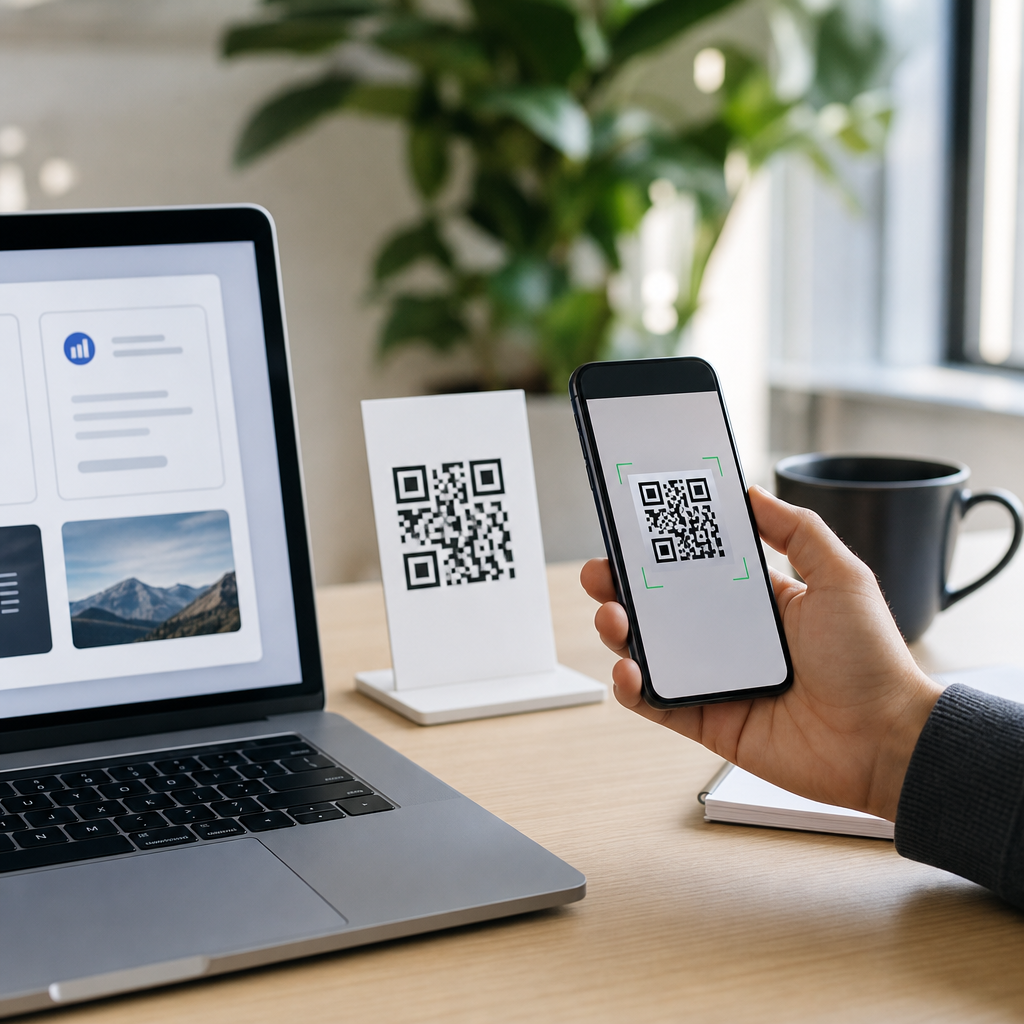

Free QR code tools look attractive because they promise instant code generation at no cost, yet the real price often appears later through limited control, weak analytics, branding restrictions, and long-term business risk. In the QR Code Creation & Tools space, the choice between free and paid QR code tools affects campaign performance, customer trust, and whether a code still works months after it is printed. A QR code is simply a machine-readable matrix that stores a destination such as a URL, file, menu, payment request, contact card, or app link. The practical distinction is not the square image itself but the platform behind it. Static codes point directly to fixed data and usually cannot be edited after printing. Dynamic codes route through a managed short link, which allows editing, scan tracking, device rules, and campaign control. That difference is where most hidden costs begin.
I have worked with teams that generated “free” restaurant menu codes, event check-in codes, and packaging codes, only to discover that the platform inserted branding, throttled scans, disabled redirects, or charged later to keep the code active. Those surprises are expensive because QR codes are commonly printed on signage, labels, mailers, packaging, and storefront materials. Reprinting can cost far more than the software subscription that was avoided. Free vs paid QR code tools is therefore not a minor software comparison; it is a decision about reliability, ownership, measurement, and brand safety. This hub article explains the hidden costs of free QR code tools, where free tools can still be useful, and how to choose the right level of investment for marketing, operations, and customer experience.
What “Free” Usually Means in QR Code Software
Free QR code tools are not all the same. Some are genuinely free static generators supported by other products or by open-source communities. Others use a freemium model that lets users create codes at no charge but limits editing, analytics, file formats, password protection, bulk creation, API access, or commercial usage. A third category offers a free trial that appears permanent until the campaign goes live and scan volume increases. In practice, “free” usually means one of four tradeoffs: the platform displays its own branding, the code is dynamic but controlled by the provider, features are capped, or support is minimal.
The most important question is whether the generated code is static or dynamic. With a static QR code, the encoded destination is embedded permanently in the image. If the destination URL changes, the code must be replaced. With a dynamic QR code, the image usually points to a short URL managed by the provider. That setup enables analytics and editing, but it also means the provider sits between your audience and your content. If the vendor changes plans, pauses inactive accounts, inserts ads, or shuts down, your code can fail even if the printed image is still visible.
Another hidden issue is commercial intent. Many free tools are designed for occasional personal use, not brand campaigns, franchise rollouts, regulated industries, or packaging that must remain scannable for years. If your QR code is going on a business card, wedding invitation, or one-time flyer, free may be acceptable. If it is being placed on a product label, a direct mail campaign, a museum placard, or a real estate sign that could remain in circulation indefinitely, lifecycle risk matters more than zero upfront cost.
Reliability, Ownership, and the Cost of Losing Control
The biggest hidden cost of free QR code tools is not money paid to the tool itself. It is the cost of losing control over a business asset that sits in public view. When a company prints a QR code on packaging or signage, that code becomes part of its customer journey. If the platform behind it disappears, changes terms, or limits access, the business cannot simply email customers a corrected link. Physical materials keep circulating, and every failed scan becomes a lost opportunity.
I have seen this happen most often with dynamic QR platforms that allow free creation but later require payment to keep redirects editable or active. A marketing team prints ten thousand brochures pointing to a campaign page. Midway through the campaign, the landing page changes, but the team discovers that editing the redirect now requires an upgrade. They either pay under pressure or accept a broken path. Neither outcome is truly free. The same pattern appears when platforms cap monthly scans. A local promotion might stay under the limit, but one social media post can push traffic beyond the free allowance and cause slow redirects, disabled codes, or incomplete reporting.
Ownership is another problem. Some tools do not make it clear whether the user owns the managed short URL, the analytics history, or the campaign configuration. If the account is closed, can you export the data? Can you move the redirect logic to your own domain? Can you bulk migrate hundreds of codes? Paid platforms usually answer these questions in documentation and contracts. Free tools often do not. For a business, uncertainty around ownership should be treated as a real operating cost.
Analytics Limits Can Distort Marketing Decisions
One reason businesses choose dynamic QR codes is measurement. They want to know how many scans occurred, when they happened, what devices were used, and which locations performed best. Free QR code tools often advertise analytics, but the reporting may be shallow, delayed, sampled, or impossible to integrate with the rest of the marketing stack. That limitation creates a hidden cost because weak data leads to weak decisions.
Useful QR code analytics should distinguish unique scans from total scans, show time trends, support UTM parameters for web analytics platforms such as Google Analytics 4, and ideally segment by location, operating system, or campaign asset. Without these basics, a business cannot compare a poster in one store with a mailer in another, or tie scans to downstream conversions. Many free tools stop at a basic scan count. That number can be misleading. A single person may scan several times, bots may trigger link previews, and repeated test scans by staff can inflate performance if filters are absent.
Paid tools often add event exports, API access, tag management compatibility, and retention policies that matter for serious reporting. For example, a retail chain can create separate dynamic codes for each store window, pass UTM parameters into GA4, and compare scan-to-purchase behavior by region. A free generator might create the image, but it will not provide the operational visibility needed to optimize the campaign. The hidden cost is not just missing data. It is spending money on print, design, and distribution without reliable proof of what worked.
Branding, Design Quality, and Scan Performance Tradeoffs
QR codes look simple, but design choices directly affect scan rates. Free tools often limit customization or encourage decorative styles that reduce readability. Inexperienced users may add heavy gradients, shrink the quiet zone, over-round modules, or place low-contrast logos in the center. The result is a code that looks branded on a desktop screen but fails under glare, distance, poor printing, or older smartphone cameras. A failed scan is friction at the exact moment you are asking for customer action.
Professional QR code tools usually give better control over error correction level, margin size, vector export, and testing across use cases. SVG, EPS, or PDF output matters for large-format print because raster PNG files can degrade when scaled. High error correction can help when a logo is placed in the code, but excessive styling can still hurt readability. ISO/IEC 18004 defines the QR Code symbology standard, and while users do not need to memorize the specification, the platform they choose should respect its practical constraints.
Branding restrictions create another hidden cost. Some free tools add their own logo, watermark, or redirect domain. That can weaken trust because users see an unfamiliar brand before reaching your content. In hospitality, healthcare, and financial services, trust signals matter. A customer scanning a payment code or intake form wants confidence that the destination is legitimate. If the redirect opens on a generic short-link domain packed with tracking parameters, abandonment can rise. Paid plans often allow custom domains and cleaner redirects, which improve both trust and deliverability.
Security, Privacy, and Compliance Are Not Optional
Security concerns around QR codes are well established because users cannot read the destination before scanning the way they can inspect a printed URL. That makes platform trust especially important. Free QR code tools may route traffic through shared infrastructure, collect scan data under broad privacy terms, or provide limited visibility into data storage and retention. For a casual personal use case, that may be acceptable. For a business handling customer records, location data, or regulated communications, it is not.
Privacy law adds complexity. Depending on jurisdiction and implementation, scan analytics can intersect with GDPR, CCPA, or internal governance requirements, particularly when codes lead to forms that collect personal information. A company should understand what the QR vendor logs, where data is processed, whether IP addresses are truncated, and how consent is handled when tracking is enabled. Paid enterprise-oriented platforms are more likely to provide data processing agreements, security documentation, access controls, and audit trails. Free tools rarely offer that depth.
There is also the security issue of destination management. If multiple staff members share a free account, credentials may be stored loosely or passed around by email. When someone leaves the organization, access is often not revoked cleanly. Paid tools with role-based permissions reduce this risk. In my experience, the hidden cost of weak security is not theoretical. It appears when a campaign redirect is changed accidentally, an old intern still has account access, or a vendor account is suspended with no support path during a live event.
Free vs Paid QR Code Tools: Where Each Fits Best
The right choice depends on the lifespan, visibility, and business importance of the code. A free tool can be perfectly adequate in limited scenarios, while paid QR code software becomes essential when a code is customer-facing, long-lived, or tied to revenue. The table below captures the practical difference.
| Use case | Free tool can work | Paid tool is better |
|---|---|---|
| Personal contact card | Yes, if static and rarely changed | Only if you want editing or analytics |
| Wedding or private event details | Yes, for short-term use | Helpful for RSVP tracking |
| Restaurant menu | Risky if menu URL may change | Better for edits without reprinting |
| Retail posters and flyers | Sometimes for small tests | Best for scan analytics and campaign control |
| Product packaging | Usually no | Yes, because longevity and ownership matter |
| Healthcare or finance forms | No, due to trust and compliance concerns | Yes, with security and governance features |
| Multi-location franchise rollouts | No, too hard to manage consistently | Yes, for bulk creation and permissions |
For simple static needs, free can still be a smart choice. Open-source libraries and reputable generators can create plain QR images reliably when the destination is permanent. The hidden costs rise sharply once editing, tracking, scale, or compliance enters the picture. That is why free vs paid QR code tools should be evaluated by total lifecycle cost, not by the monthly price line alone.
How to Evaluate a QR Code Platform Before You Commit
Before choosing a QR platform, ask operational questions that reveal long-term risk. Can you edit destinations after printing? Are scan limits enforced? Does the platform support a custom domain? Can you export analytics and code inventories? What image formats are available? Is there an API for bulk generation? Are there role-based permissions? What happens if you cancel the plan? Does the code continue to resolve, and under what conditions? These questions sound basic, yet many teams skip them because the first goal is simply to create a code quickly.
Testing should mirror real use. Print the code at intended size, on intended material, and scan it in bright light, low light, and from different phone models. Verify that the landing page is mobile optimized, fast, and clearly aligned with what the call to action promises. Measure the entire path, not just the image. A perfect code leading to a slow, confusing page is still a failed implementation.
It is also wise to separate creation from governance. If your organization uses many QR codes, maintain an inventory with owner, destination, placement, creation date, and retirement plan. I recommend assigning codes to campaigns the way teams assign URLs or paid ads, because orphaned codes are common. In every large rollout I have audited, some physical codes remained active with outdated content simply because nobody knew who owned them.
Conclusion: The Cheapest QR Code Is Rarely the Lowest-Cost Option
The hidden costs of free QR code tools come from lost control, weak analytics, branding limits, security gaps, and expensive rework when physical materials outlive the platform that created the code. Free vs paid QR code tools is really a decision about durability and business accountability. If your QR code is temporary, static, and personal, a free generator may be enough. If the code supports marketing, operations, payments, menus, packaging, or regulated communications, paying for reliability is usually the lower-cost move over time.
The best approach is simple: match the tool to the risk. Use free tools only when the destination is permanent and the consequence of failure is minor. Choose paid QR code software when you need editability, analytics, custom domains, security controls, team governance, or long-term ownership. Audit every provider before you print anything at scale. A few careful decisions upfront can prevent broken scans, wasted media spend, and damaged trust later. If you are building out your QR Code Creation & Tools stack, start by reviewing your current codes, classifying them by business impact, and upgrading the ones that cannot afford to fail.
Frequently Asked Questions
What are the most common hidden costs of free QR code tools?
The biggest hidden cost is usually not the upfront price, but the limitations that appear after the QR code has already been created, printed, or shared. Many free QR code tools offer basic generation at no charge, but restrict important features such as editability, scan tracking, file quality, custom branding, or campaign management. A business may think it is saving money at the start, only to discover later that changing a destination URL, accessing analytics, or removing the provider’s branding requires a paid upgrade. At that point, the QR code may already be on packaging, flyers, signage, menus, or product labels, which makes the switch far more expensive than choosing a reliable solution from the beginning.
There are also indirect costs that matter just as much. Free tools can create operational risk if the code depends on a third-party service that may shut down, change terms, add ads, or limit usage. If a code stops working after a campaign launches, the cost includes reprinting materials, lost scans, weaker customer trust, and missed conversions. In marketing terms, a “free” QR code can become expensive when it reduces campaign visibility, prevents performance measurement, or creates a poor user experience. The hidden cost is often the loss of control over an asset that may stay in the market for months or years.
Can a free QR code stop working after it has been printed?
Yes, and this is one of the most serious risks businesses overlook. Not every QR code is equally stable over time. A static QR code that directly stores a destination, such as a URL, may continue working as long as that destination remains active. However, many free tools encourage the use of dynamic QR codes, where scans are routed through the provider’s platform before sending users to the final destination. If that provider limits your account, disables inactive codes, places expiration rules on free plans, changes its service model, or shuts down entirely, the printed code can effectively break even though the image itself still exists.
This matters most for long-life use cases such as packaging, posters, restaurant materials, product inserts, event signage, manuals, and business cards. If a code becomes inactive after distribution, the business may need to reprint every physical asset tied to it. That is where the real cost appears. Before relying on any free QR code tool, it is important to understand whether the code is static or dynamic, who controls the redirect, whether there are scan limits or time limits, and what happens if the platform changes its policies. A QR code should be treated as a long-term business asset, not just a temporary graphic.
Why are analytics and tracking limitations such a major downside of free QR code generators?
Analytics are what turn a QR code from a simple access point into a measurable marketing tool. With strong tracking, a business can learn how many people scanned, when they scanned, where they scanned from, which campaigns performed best, and whether a printed placement actually drove traffic or sales. Many free QR code tools either provide no analytics at all or only the most basic scan counts. That makes it much harder to evaluate return on investment, compare placements, optimize calls to action, or justify future campaign spending.
The downside becomes more obvious in real campaigns. If a company runs QR codes across product packaging, in-store displays, direct mail, and event materials, limited reporting means it cannot clearly see what is working. Without detailed analytics, decisions become guesswork. Businesses may keep spending on underperforming channels while missing better opportunities elsewhere. In regulated industries or larger organizations, weak reporting can also create internal friction because teams need dependable data for marketing reviews, audits, and performance reporting. Free tools may seem sufficient for casual use, but for serious business applications, limited analytics can quietly reduce the value of every scan.
How do branding restrictions in free QR code tools affect customer trust and campaign performance?
Branding restrictions can have a bigger impact than many people expect. Free QR code tools often limit customization options such as brand colors, logo placement, custom frames, domain control, or high-resolution export formats. Some may even place their own branding around the QR experience or route users through a generic redirect domain that does not match your company identity. When customers scan a code and see an unfamiliar or low-trust destination, hesitation increases. That can lower engagement, especially when users are being asked to visit a landing page, submit contact information, claim an offer, or complete a purchase.
From a performance standpoint, consistent branding improves recognition and confidence. A QR code that visually aligns with the surrounding campaign and leads to a trusted destination feels intentional and professional. A plain code with no brand connection, poor print quality, or a suspicious-looking redirect can reduce scans or create doubt about safety. In industries where trust is critical, such as healthcare, finance, retail, and hospitality, this matters even more. Free tools may save money on design and setup, but if they weaken the customer’s confidence or reduce scan completion rates, they can cost far more in lost engagement than they save upfront.
When does it make more sense to pay for a QR code tool instead of using a free one?
Paying for a QR code tool makes sense when the code supports any activity where reliability, flexibility, measurement, or brand presentation matters. If a QR code will be printed at scale, used in a customer-facing campaign, tied to a product, included in long-term signage, or connected to lead generation and sales, a paid platform is often the safer choice. The value comes from features such as editable destinations, stronger analytics, better file exports, custom branding, access control, campaign organization, and dependable support. These are not luxury features for many businesses; they are what help protect the investment made in printing, distribution, and promotion.
A paid solution is also worthwhile when the cost of failure is high. If changing one broken QR code would require reprinting hundreds of menus, thousands of labels, or expensive signage, paying for a more stable platform is usually the better financial decision. The same applies when marketing teams need accurate reporting, agencies need to manage multiple clients, or businesses want to preserve trust with a fully branded scan experience. Free QR code tools can still be useful for temporary, personal, or low-risk projects, but once a QR code becomes part of a real business process, the smarter question is not whether the generator is free, but whether the code will still serve the business effectively months from now.