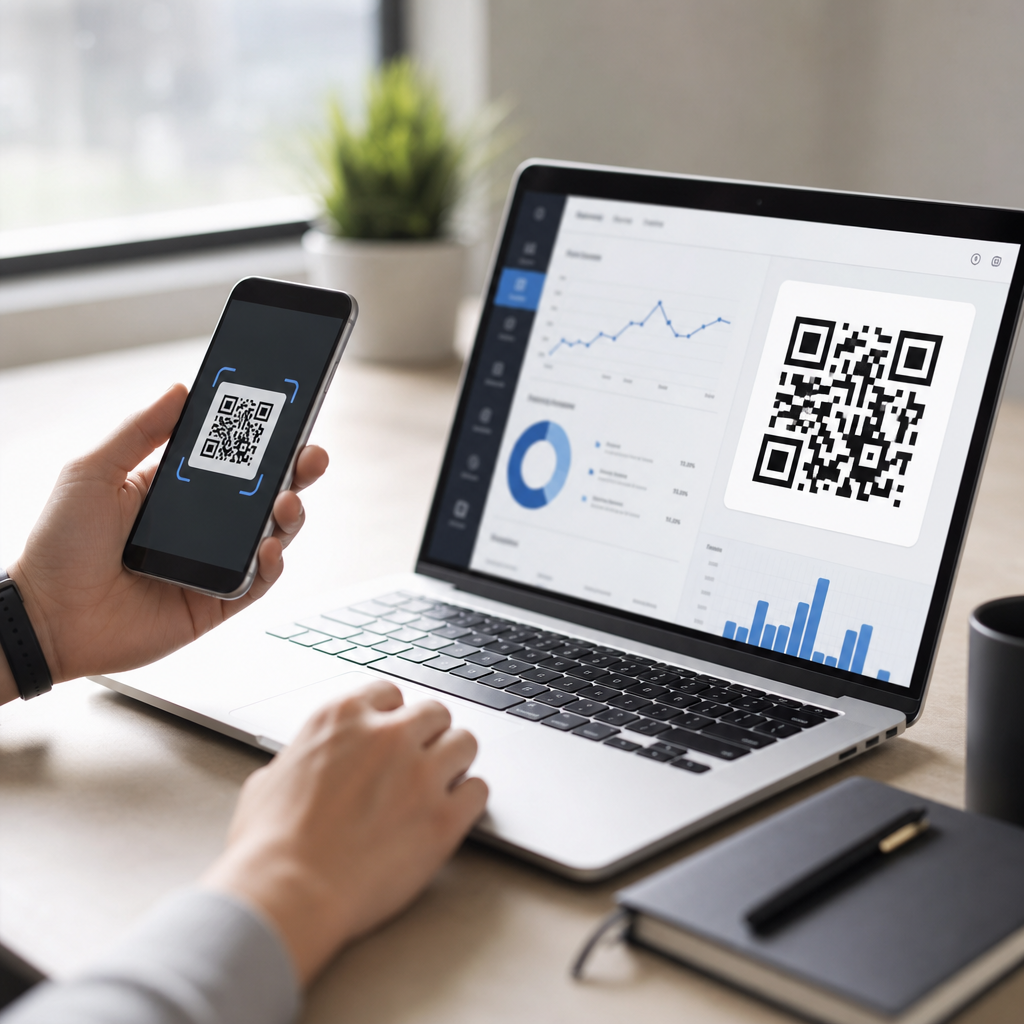
Dynamic QR code platforms give marketers a flexible way to launch, measure, and improve offline-to-online campaigns without reprinting every code. A dynamic QR code is a scannable code whose destination can be changed after publication, usually through a platform dashboard. Instead of encoding a final URL directly into the pattern, the code points to a short redirect managed by the provider. That one difference turns a static asset into a campaign tool: teams can update landing pages, track scans by time and location, apply UTM parameters, and manage creative versions across print, packaging, retail signage, events, direct mail, and out-of-home media.
For marketers, this matters because QR performance rarely stays fixed after launch. I have worked on campaigns where the original landing page underperformed, retail inventory changed by region, or legal copy had to be updated after materials were already in stores. With a static code, those changes create waste and delay. With a dynamic QR code platform, the printed asset survives while the destination evolves. That preserves media spend and shortens response time. It also creates a measurable bridge between physical touchpoints and digital analytics, which is essential when marketing leaders need attribution beyond impressions and foot traffic.
The best dynamic QR code platforms for marketers do more than generate codes. They provide governance, analytics, branding controls, integrations, and reliability at scale. Strong platforms support custom domains, editable destinations, scan-level reporting, bulk creation, team permissions, API access, folder structures, pixel or tag integrations, and export options for production teams. They also handle practical concerns that become important quickly: high-resolution downloads for packaging printers, error correction for damaged labels, redirect speed, data retention policies, and compliance with privacy rules such as GDPR and CCPA. Choosing well affects campaign agility, reporting confidence, and brand consistency.
This hub article explains what dynamic QR code platforms are, how to evaluate them, which providers stand out, and where each fits best. It also highlights tradeoffs, because there is no single best option for every marketer. A startup running event handouts, a consumer brand managing retail packaging, and an enterprise with franchise locations need different capabilities. Use this guide to understand the category, compare features, and identify the platform that matches your campaign complexity, reporting needs, and operational workflow.
What marketers should look for in a dynamic QR code platform
The first question most marketers ask is simple: what makes one dynamic QR platform better than another? The short answer is control plus measurement. A good platform lets you change destinations instantly, organize assets by campaign, and see scan behavior clearly enough to act on it. At minimum, marketers should expect editable URLs, scan counts, device and location reporting, and downloadable formats such as PNG, SVG, EPS, or PDF. If a provider cannot support both measurement and production-ready files, it is not a serious option for campaign use.
Beyond the basics, evaluate redirect and branding capabilities carefully. The redirect should be fast and stable, because every extra hop can reduce user trust and distort analytics. Custom domains are especially important. A branded short domain improves recognition, increases confidence at the moment of scan, and gives the marketing team more control if it ever migrates providers. I generally advise brands to avoid building critical campaigns entirely on a vendor-owned short URL unless the campaign is temporary and low risk. Ownership of the redirect layer is a strategic safeguard.
Analytics depth separates lightweight tools from true marketing platforms. Useful reporting includes unique versus total scans, repeat scans, timestamp, operating system, city or country, and sometimes scan source if campaigns are tagged properly. Better tools support UTM templates, Google Analytics 4 alignment, Meta Pixel or other retargeting integrations, and API access for warehouse or BI workflows. If your team reports on offline conversion performance, ask whether the platform can pass parameters cleanly into downstream analytics and whether raw export is available. Dashboard screenshots are not enough for mature attribution.
Workflow features also matter more than many buyers expect. Bulk generation is essential for variable campaigns, serialized packaging, direct mail, and multi-location rollouts. Role-based permissions help agencies and in-house teams separate creation from approval. Folder structures and naming conventions prevent the code library from becoming unusable after a few months. Some platforms add templates, expiration settings, password protection, A/B routing, or conditional redirects by device, language, or geography. Those can be valuable, but only if your team will actually use them. Paying for complexity that never becomes process is common and avoidable.
Best dynamic QR code platforms for marketers
The market includes simple generators, campaign-focused SaaS tools, and enterprise engagement platforms. Marketers usually encounter names such as QR Code Generator Pro by Bitly, Flowcode, Beaconstac, Uniqode, Scanova, BL.INK, and enterprise mobile engagement suites with QR functionality built in. While features overlap, the differences show up in analytics quality, governance, integrations, design controls, and account management. The right platform depends less on the code itself and more on what happens after the scan.
QR Code Generator Pro, now associated with Bitly, is a strong fit for teams that already value link management and branded short links. Its appeal is operational familiarity: marketers can create dynamic QR codes while aligning with a broader short-link strategy. That is useful when campaigns span email, social, print, and retail because one team can manage redirects and naming conventions centrally. For many mid-market teams, that simplicity is a practical advantage over more specialized systems with steeper learning curves.
Flowcode is widely used in creator marketing, events, local business promotion, and consumer-facing campaigns where design ease matters. The interface is approachable, and the product emphasizes customization and quick deployment. It is often a good match for smaller teams that need speed over deep enterprise administration. In my experience, Flowcode works well when a marketing manager needs to launch codes across posters, menus, brochures, and in-store displays without involving developers or operations staff for every change.
Beaconstac and Uniqode are often shortlisted by more advanced B2B and enterprise marketers because they combine dynamic QR generation with stronger analytics, integrations, and admin controls. These tools typically support bulk operations, API workflows, multiple code types, and security features that larger organizations care about. They are suitable for product packaging programs, multi-market campaigns, field marketing, and sales enablement systems where governance matters as much as creative flexibility. Scanova also competes in this space, offering dynamic management, branding options, and campaign analytics in a package many teams find easier to adopt than full enterprise suites.
| Platform | Best for | Notable strengths | Main limitation |
|---|---|---|---|
| QR Code Generator Pro | Teams using branded links across channels | Link management alignment, recognizable workflow, solid design exports | May lack niche enterprise workflow depth |
| Flowcode | Fast campaign launches and design-friendly use cases | Ease of use, customization, event and local marketing suitability | Less robust for complex governance needs |
| Beaconstac | Enterprise and data-driven campaigns | Analytics, integrations, bulk management, stronger admin controls | Higher complexity and cost |
| Uniqode | Multi-team organizations and scalable operations | Bulk creation, APIs, campaign structure, broad code support | Requires setup discipline to realize full value |
| Scanova | Mid-market teams needing balanced features | Branding, dynamic editing, accessible reporting | May need external tools for advanced attribution |
| BL.INK | Link-centric attribution programs with QR extensions | Strong redirect control, routing logic, enterprise link governance | QR experience may feel secondary to link management |
BL.INK deserves separate mention for marketers who think of QR codes as one expression of a larger redirection and attribution system. If your organization already manages deep links, campaign links, and regional routing at scale, a platform with strong link governance can be more valuable than a QR-specific interface. The tradeoff is that purely QR-focused design and template features may feel less central. Enterprise mobile engagement platforms can also fit, especially when QR scans trigger app journeys, authentication, or omnichannel workflows, but they are rarely cost-effective for teams focused only on print-to-web campaigns.
How to match a platform to your campaign type
Choosing the best dynamic QR code platform starts with campaign context, not feature checklists. For retail packaging, durability and long-term editability are top priorities because codes may stay in circulation for months or years. A beverage label, for example, might initially send users to a product story page, then later redirect to a seasonal promotion, loyalty program, or store locator. In that scenario, the platform should support persistent redirects, custom domains, historical analytics, and print-ready vector files. It should also make it easy to duplicate code styles across SKUs while preserving individual tracking.
For events and field marketing, speed and scan visibility matter most. Teams need to generate codes quickly for booth signage, badges, handouts, session slides, and follow-up content. Here, a platform like Flowcode or QR Code Generator Pro can be effective if it supports fast edits, mobile-friendly dashboards, and real-time reporting. At trade shows, I have seen scan volume spike during a keynote and then drop within hours. Being able to swap the destination from a generic landing page to a booking form or gated asset during the event can improve lead capture without reprinting a single sign.
B2B demand generation teams usually need better attribution and governance. A direct mail campaign tied to account-based marketing should use a platform that can create segmented destinations, append UTMs consistently, and export scan data for CRM matching. Beaconstac, Uniqode, or BL.INK-style governance can be more appropriate here than a basic generator. If regional sales teams or agency partners also create assets, permission settings become non-negotiable. Without them, reporting quality degrades because people build duplicate naming conventions and uncontrolled redirects that cannot be audited later.
Franchise and multi-location businesses need local flexibility inside central brand control. Restaurant chains, fitness brands, and healthcare networks often want one template but many destinations: a store menu, appointment page, or map listing that changes by location. The ideal platform supports bulk uploads, folder structures, and local manager permissions without giving everyone full account control. Hospitality brands also benefit from dynamic codes when promotions change frequently or when in-room collateral must point to different offers by property. In those environments, convenience is important, but governance is what prevents operational chaos.
Implementation best practices that improve results
Platform choice matters, but execution matters more. Start every dynamic QR campaign with a defined scan intent. Do you want a product education visit, coupon redemption, app install, menu view, lead form completion, review request, or payment action? The destination, creative context, and analytics setup should all reflect that single primary outcome. When teams skip this step, they send traffic to generic homepages, then conclude that QR codes underperform. The issue is usually not the code; it is the mismatch between scan motivation and landing-page relevance.
Design and placement directly influence scan rate. Keep sufficient contrast between foreground and background, maintain quiet space around the code, and test across multiple devices before production. High error correction helps when codes may be scratched or partially obscured, but excessive styling can make scanning unreliable. For print, use vector formats whenever possible and size the code based on scanning distance. A common rule is a 10:1 ratio: if a user scans from ten inches away, the code should be roughly one inch wide. Billboards and shelf talkers require different sizing logic, so field testing beats assumptions.
Build analytics before launch, not after. Apply a UTM naming structure that aligns with your existing campaign taxonomy in Google Analytics 4 or your reporting stack. Distinguish placements such as package-front, shelf-edge, event-banner, or postcard-back so scan data becomes actionable. If you use a custom domain, verify redirects, SSL, and canonical destination behavior. Some organizations also maintain a redirect inventory in a spreadsheet or DAM system to document owner, purpose, expiry date, and final URL. That sounds tedious, but it prevents forgotten codes from sending traffic to retired promotions months later.
Finally, treat dynamic QR as an optimization channel. Review scan data by location, creative, and time period, then adjust the destination or offer. A restaurant can redirect lunch-menu scans to catering offers after 2 p.m. A retailer can route store-window scans to nearest-in-stock pages by geography. A software company can change a conference booth QR from a demo page on day one to a meeting scheduler on day two after noticing high interest but low form completion. Dynamic platforms create these opportunities, but only teams with a testing habit capture the full value.
Limitations, costs, and what to avoid
Dynamic QR code platforms are powerful, but they are not perfect. The biggest structural risk is vendor dependency. If a subscription lapses or a provider changes terms, your redirects may stop working or become difficult to manage. That is why custom domains, exportable records, and contract clarity matter. Marketers should ask what happens to existing codes if the account is downgraded or canceled, whether redirects can be preserved, and how data can be exported. A platform is only as reliable as its long-term governance model.
Cost also varies widely. Entry-level plans may suit simple campaigns, but advanced analytics, bulk creation, API access, and multiple users usually sit on higher tiers. Enterprise pricing can be justified when QR is embedded in packaging, store operations, or distributed field programs, yet overbuying is common. Many teams pay for features such as geofenced routing or extensive white-label controls that they never deploy. The best buying process starts with required use cases, integration needs, and campaign volume, then maps those to platform capabilities instead of buying the broadest feature set available.
Avoid free generators for important marketing assets unless you fully understand the tradeoff. Some free tools place usage limits, insert vendor branding, restrict editing, or provide thin analytics. Others are perfectly fine for temporary internal use but risky for customer-facing campaigns that must persist. Also avoid platforms that make it hard to test redirects, lack transparent documentation, or do not provide high-resolution exports. If a code fails on packaging or a redirect breaks during a promotion, the savings from a cheaper plan disappear instantly.
The best dynamic QR code platforms for marketers balance flexibility, analytics, and operational control. If you need quick launches for events or local promotions, design-friendly tools can be enough. If you manage packaging, direct mail, multi-location campaigns, or enterprise attribution, prioritize custom domains, bulk workflows, integrations, and governance. Start with your campaign goals, choose a platform that fits the complexity you actually have, and build a measurement process around every scan. Then explore the rest of this QR Code Creation & Tools hub to compare generators, tracking methods, design practices, and platform-specific guides before you commit.
Frequently Asked Questions
What is a dynamic QR code, and why is it better for marketers than a static QR code?
A dynamic QR code is a QR code whose destination can be changed after the code has already been printed, shared, or placed in a campaign. Instead of embedding the final landing page URL directly in the QR pattern, the code points to a short redirect URL managed inside a QR code platform. That redirect can then be updated at any time from the dashboard. For marketers, this is a major advantage because it separates the physical code from the final campaign destination.
In practice, that means a single code on a product package, flyer, in-store display, direct mail piece, or event sign can continue working even as campaigns evolve. If a landing page changes, a promotion expires, inventory shifts, or a regional page needs to be swapped in, the marketer can update the destination without reprinting materials. This saves time, reduces waste, and protects campaign budgets.
Dynamic QR codes also typically come with analytics, which static QR codes do not provide on their own. Marketers can track scan volume, timing, device type, approximate location, and sometimes deeper attribution data depending on the platform and integrations. That turns the QR code from a simple shortcut into a measurable channel. For teams running omnichannel campaigns, that combination of flexibility, editability, and reporting is what makes dynamic QR code platforms especially valuable.
What features should marketers look for in the best dynamic QR code platforms?
The best dynamic QR code platforms for marketers usually combine three things: easy campaign management, reliable analytics, and strong governance. At the campaign level, marketers should look for the ability to edit destinations instantly, create bulk codes at scale, organize assets by folders or teams, and customize QR code appearance without harming scan performance. Features like branded frames, custom domains, editable short links, and downloadable file formats for print are especially useful for real-world campaigns.
Analytics are equally important. A strong platform should show scan counts over time, unique versus total scans, approximate geolocation, device and operating system data, and the time or date of scans. Some platforms go further with UTM parameter support, Google Analytics integration, conversion tracking, retargeting pixels, and API access. These features help marketers connect offline scans to online performance and understand whether QR-driven traffic is actually contributing to leads, sales, signups, or store visits.
Security and operational control matter more than many teams expect. The best platforms offer role-based permissions, audit logs, password protection when needed, and dependable infrastructure so codes resolve quickly and consistently. Marketers should also consider platform policies around code ownership, account limits, exportability, and what happens if a subscription changes or ends. A dynamic QR code is only as dependable as the platform behind it, so ease of use should be balanced with reliability, support quality, and long-term suitability for the organization.
How do dynamic QR code platforms help measure offline-to-online marketing campaigns?
Dynamic QR code platforms help marketers measure offline-to-online performance by turning every scan into a data point. When a person scans a code from a poster, package, brochure, point-of-sale sign, event badge, or direct mail piece, the platform can record that interaction before redirecting the user to the intended destination. This allows marketers to see how often each code is scanned, when engagement peaks, and which placements are generating interest.
That visibility is especially useful when comparing channels or creative variations. For example, a marketer can assign different dynamic QR codes to different store displays, cities, mail drops, or ad creatives to identify which placement drives the most traffic. Instead of guessing whether a printed campaign worked, the team can review actual scan behavior and optimize future campaigns using evidence. Some platforms also support A/B-style destination updates, so marketers can keep the same printed code live while changing the offer or landing page to improve conversion rates.
The strongest measurement setups combine QR platform analytics with broader marketing analytics. By attaching UTM parameters, integrating with analytics tools, or sending traffic to dedicated landing pages, marketers can connect scans to sessions, on-site behavior, form fills, purchases, and other downstream outcomes. This makes dynamic QR codes especially effective for attribution in environments where traditional offline tracking is limited. While they do not solve every attribution challenge, they give marketers a far clearer view of campaign impact than static print assets alone.
Are there any risks or limitations marketers should know before choosing a dynamic QR code platform?
Yes, and understanding them upfront can prevent expensive mistakes. The biggest limitation is that dynamic QR codes depend on the provider’s redirect infrastructure. If the platform has outages, performance issues, account restrictions, or policy changes, your live codes can be affected. Because the code does not point directly to your final URL, you are relying on a third-party system every time someone scans. That makes vendor reliability, support responsiveness, and platform reputation very important selection criteria.
Another consideration is subscription dependency. Many dynamic QR code platforms operate on recurring plans, and features such as editable destinations, analytics retention, team access, or advanced customization may be locked behind higher tiers. Marketers should read the pricing model carefully and confirm what happens to existing codes if the account is downgraded, paused, or canceled. A low entry price can look attractive until a campaign scales and more scans, users, or codes push the account into a much higher bracket.
There are also practical performance considerations. Highly styled QR codes may look appealing but can become harder to scan if branding choices compromise contrast, quiet zones, or error correction. In addition, privacy and compliance requirements matter when scan data is collected, especially for organizations operating in regulated industries or multiple regions. Before committing to a platform, marketers should assess data handling practices, custom domain options, API capabilities, export options, and the ability to maintain campaign continuity over time. The best choice is not just the platform with the most features, but the one that fits your operational, technical, and compliance needs.
How can marketers choose the best dynamic QR code platform for their specific campaigns and team needs?
The best way to choose a dynamic QR code platform is to start with the use case, not the feature list. A small team running occasional event campaigns may need a simple interface, a handful of editable codes, and basic scan analytics. A larger marketing organization may need bulk creation, user permissions, branded domains, API access, CRM or analytics integrations, and governance controls across many regions or business units. Defining the campaign volume, reporting needs, approval process, and expected growth will make the evaluation much clearer.
It is also smart to evaluate platforms against real campaign workflows. Test how quickly a landing page destination can be updated, how scan data is reported, what export formats are available for print teams, and whether the dashboard makes code management easy at scale. If offline attribution matters, confirm support for UTM tagging and downstream analytics integration. If brand consistency matters, review customization tools carefully and make sure the final codes still scan reliably across devices and lighting conditions.
Finally, look beyond the product demo. Review pricing transparency, customer support quality, documentation, uptime history, and data ownership policies. Ask whether the platform supports custom domains, what happens to live codes if billing changes, and whether there are limits on scans, redirects, users, or analytics history. For marketers, the best dynamic QR code platform is the one that combines dependable performance with enough flexibility to keep campaigns editable, measurable, and easy to optimize over time.