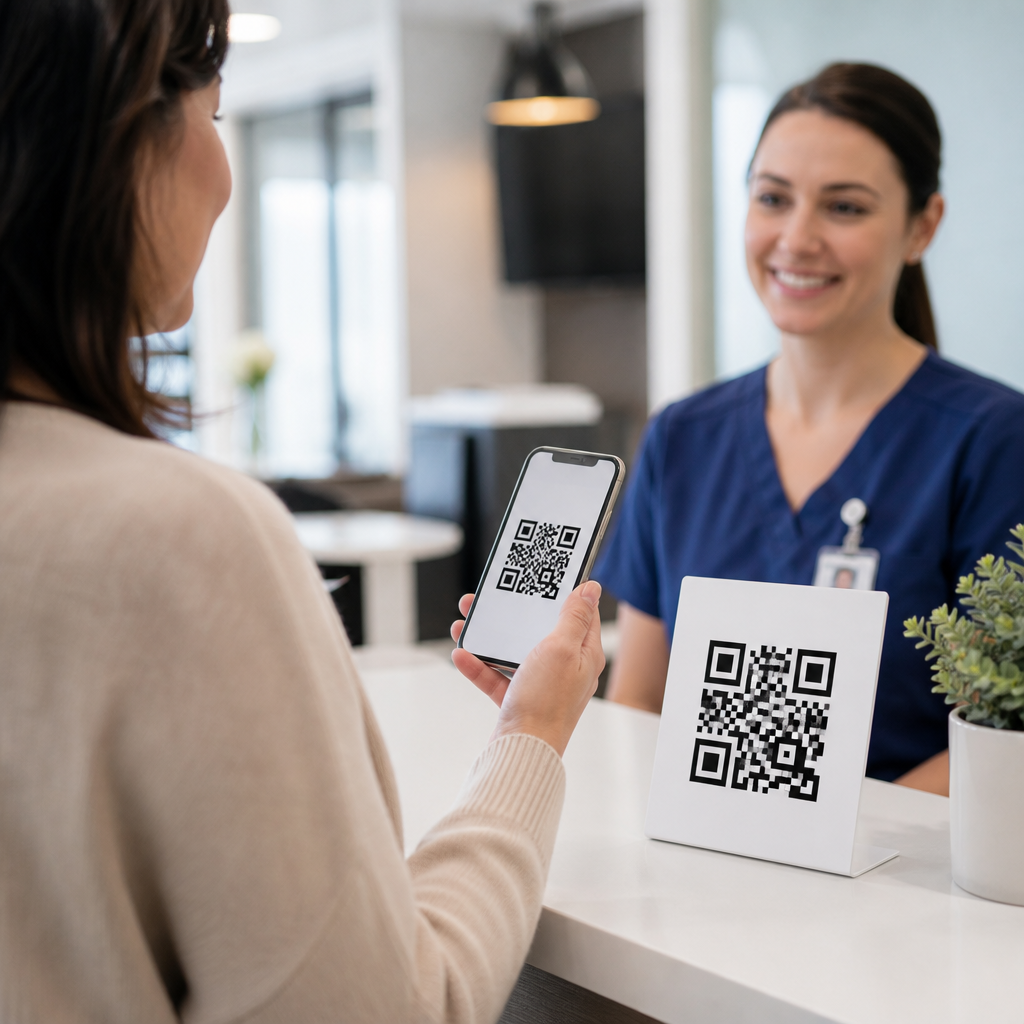
QR code marketing gives healthcare providers a low-friction way to connect printed materials, physical spaces, and patient devices while preserving convenience, traceability, and timely access to information. In healthcare, a QR code is a scannable matrix barcode that opens a digital destination such as a landing page, intake form, appointment scheduler, video, map, PDF, review page, or secure patient resource. A marketing playbook is the documented system behind those uses: goals, audiences, workflows, compliance checks, creative standards, measurement rules, and campaign ideas. When I have deployed QR programs for clinics and specialty groups, the difference between a code that gets ignored and one that drives appointments usually came down to context. Patients scan when the code answers an immediate need, appears in a trusted setting, and leads to a page that loads fast on a phone.
That matters because healthcare still depends heavily on offline touchpoints. Waiting room posters, discharge packets, lab handouts, direct mail, event booths, physician referral sheets, and exterior signage all create attention that can be extended digitally. QR code marketing for healthcare providers turns those moments into measurable actions without forcing people to type long URLs. It also supports a practical patient experience strategy. A pediatric clinic can send parents from vaccine reminder postcards to online consent instructions. An orthopedic practice can move postoperative patients from printed rehab guides to exercise videos. A dental office can connect in-chair brochures to financing information and treatment FAQs. In each case, the code is not the campaign by itself; it is the bridge between a real-world interaction and a mobile-first next step.
Healthcare organizations should care about this channel for three reasons: access, efficiency, and attribution. Access improves because smartphone cameras now read QR codes natively on iPhone and Android, removing the app barrier that limited adoption years ago. Efficiency improves because staff answer fewer repetitive questions when codes route patients to the right self-service content. Attribution improves because dynamic QR platforms can report scans by location, date, device type, and campaign, helping marketers compare front desk signage against mailers or community events. The strongest programs also align marketing with operations. If a cardiology group promotes online scheduling through QR codes but the destination page buries the booking button, conversion will suffer. If the handoff is smooth, small printed surfaces can become reliable patient acquisition and engagement assets.
This hub article explains how to build a QR code marketing playbook for healthcare providers from strategy through execution. It covers campaign types, compliant implementation, destination page design, analytics, and governance. It also serves as a central guide within QR code tutorials, guides, and resources, so teams can use it as the foundation for more detailed work on tracking setups, creative templates, review generation, event marketing, and patient education flows. The core principle is simple: every code should have a job, every scan should lead to a useful mobile experience, and every campaign should be measurable against a business outcome.
Build the playbook around patient intent and operational goals
The best healthcare QR campaigns start with intent mapping, not artwork. Ask what the patient or caregiver needs at the moment they see the code. Common intents include booking, registering, finding directions, paying a bill, understanding treatment, leaving feedback, joining a webinar, or downloading forms before an appointment. Then connect each intent to an operational goal such as increasing new patient volume, reducing no-shows, improving review velocity, shortening check-in time, or supporting post-visit adherence. This planning prevents the common mistake of sending every scan to the home page, which wastes attention and depresses conversion rates.
Segment by audience and setting. New prospects may see codes on outdoor banners, transit ads, urgent care flyers, school sponsorship materials, or physician referral cards. Established patients may encounter codes in waiting rooms, exam rooms, after-visit summaries, medication packaging, or discharge binders. Caregivers often need different content from patients themselves, especially in pediatrics, oncology, and senior care. One multisite clinic I worked with increased form completion by placing separate codes at reception for preregistration, insurance upload, and directions to telehealth troubleshooting. Distinct jobs produced cleaner analytics and fewer front desk bottlenecks.
Use dynamic QR codes for nearly every campaign. Static codes hardcode the destination and are difficult to fix once printed. Dynamic codes redirect through a managed link, letting teams change the landing page, append UTM parameters, pause campaigns, and collect scan data without reprinting materials. Platforms such as Bitly, QR Code Generator PRO, Uniqode, and Flowcode support dynamic routing and campaign organization. In regulated settings, choose tools with role-based access, auditability, and clear data handling terms. Dynamic codes also make long-lived assets practical. A hospital wayfinding poster can continue using the same printed code while routing to updated maps during construction changes.
Define success before launch. A code on a mammography awareness mailer might be judged by scheduled screenings, while a code on a discharge sheet might be measured by video views, reduced follow-up calls, or completed symptom checks. Good playbooks document one primary metric and several supporting metrics for each use case. That discipline stops teams from chasing scan volume alone. High scans with poor downstream completion often indicate weak intent match, poor placement, or a slow destination page rather than campaign success.
Choose healthcare QR code use cases that deliver measurable value
Several QR code marketing playbooks consistently perform well in healthcare because they match familiar patient tasks. Appointment acquisition is the clearest example. Codes on postcards, rack cards, local print ads, and event signage can open a service-line landing page with provider bios, accepted insurance, location details, and a prominent scheduling path. Review generation is another strong use case. A code on a checkout card or after-visit signage can direct satisfied patients to a review page for Google or a survey gateway. The key is timing: ask after a positive interaction, not during intake stress.
Patient education campaigns also generate durable value. Dermatology practices use QR codes on procedure handouts to link to aftercare videos. Physical therapy clinics place codes near exercise stations for form demonstrations. OB-GYN groups use them on prenatal class posters and discharge materials. In public health and community outreach, codes can link to vaccination calendars, school physical checklists, or screening eligibility tools. These campaigns work because they reduce friction at the exact point when information is needed and because printed instructions alone often fail when patients get home.
Operational support should not be overlooked as a marketing lever. A smoother experience drives retention and referrals. Codes can support digital check-in, parking guidance, facility maps, language-specific resources, and payment pages. They can also assist physician referral programs by linking to referral forms, specialist profiles, and fax alternatives. In specialty care, service-line education plus online scheduling often outperforms generic practice promotion because the patient’s need is clearer. An ENT practice, for example, may see stronger conversions from a sinus symptom guide tied to appointment booking than from a broad “visit our clinic” message.
| Use Case | Best Placement | Primary Goal | Key Metric |
|---|---|---|---|
| New patient scheduling | Mailers, print ads, community events | Acquire appointments | Booked visits |
| Digital check-in | Reception desk, appointment reminders | Reduce front desk friction | Completed preregistration |
| Review requests | Checkout signage, take-home cards | Increase reputation signals | Review submissions |
| Patient education | After-visit summaries, posters, handouts | Improve adherence | Video or page completions |
| Wayfinding | Parking areas, lobbies, elevators | Reduce confusion | Map opens |
| Referral support | Provider packets, liaison materials | Increase specialist referrals | Referral form starts |
Not every use case belongs in every setting. Emergency departments need fast, urgent pathways and minimal decision load. Primary care can support broader journeys such as annual wellness scheduling, preventive screenings, and portal enrollment. Behavioral health campaigns require especially careful wording, discreet placement, and strong privacy review. The right healthcare QR code marketing playbook respects the emotional state of the audience and the sensitivity of the context.
Design scans, destinations, and compliance for trust
A QR code earns a scan when it looks intentional and safe. Size matters: on printed pieces, roughly 0.8 inches square is a practical floor for close-range use, while posters and lobby signage need larger codes based on viewing distance. Contrast should be high, usually dark code on a light background, and quiet zones around the code must remain clear so cameras can detect the pattern. Add a direct call to action beside the code, not just a floating square. “Scan to schedule a same-week consult” outperforms “Scan me” because it states the benefit.
The landing experience matters even more than the code itself. Mobile-first pages should load quickly, present one obvious action, and match the promise of the printed message. If the poster says “Scan to download your colonoscopy prep guide,” the destination should open that guide or a simple choice of formats, not a navigation-heavy homepage. Use plain language, large tap targets, and visible contact options. For multilingual communities, route users to language-specific pages automatically or offer a clear selector. Healthcare marketers often overlook accessibility here; readable typography, descriptive headings, and transcripts for videos are essential.
Compliance is nonnegotiable. Marketing QR codes can easily drift into regulated territory if they point to forms collecting protected health information or expose patient-specific context. Review campaigns with compliance, privacy, and legal stakeholders before printing. Use HTTPS everywhere. If a destination collects health data, confirm your vendor relationships and security controls. Avoid placing personally identifiable information inside the QR code itself. Do not print codes that embed names, medical record numbers, or diagnosis details. For review requests, follow platform rules and avoid incentives that could violate policy or create distorted feedback.
Governance keeps the program credible over time. Establish naming conventions, version control, brand standards, approved CTA language, and a retirement process for outdated assets. I recommend a simple registry containing code owner, location, purpose, destination URL, launch date, and review date. This prevents forgotten codes from leading to dead pages months later. In healthcare, stale information is more than a branding problem; it can create patient confusion and operational risk. A playbook is effective only when it includes maintenance, not just launch tactics.
Measure performance and scale what works
Measurement for QR code marketing in healthcare should follow the patient journey from scan to completed outcome. Start with scan rate by placement and creative, then look at bounce rate, engagement time, form completion, call clicks, appointment bookings, review submissions, or content completion depending on the use case. Use UTM parameters and analytics platforms such as Google Analytics 4, Looker Studio dashboards, or CRM reporting to connect scan sources to downstream conversions. If scheduling occurs in a separate system, align campaign IDs across tools so attribution is not lost at handoff.
Benchmark by environment, not by a universal number. A code on a waiting room poster may produce many scans but fewer immediate bookings because patients are already on-site. A direct mail piece may generate lower raw volume but higher conversion because the audience is targeted. Compare like with like: same service line, similar audience, and consistent destination quality. I have seen clinics double conversion simply by moving a code from a generic trifold to a single-purpose appointment card with a stronger CTA and a shorter page. Small context changes often outperform major design overhauls.
Testing should be deliberate. Change one variable at a time: CTA, placement height, surrounding copy, destination headline, form length, or offer framing. In community outreach, test whether “Check your eligibility” beats “Book now” for preventive screenings. In elective care, compare provider-led messaging against symptom-led messaging. Measure assisted outcomes too. Some patients scan, read, and later call the office rather than booking online. Front desk scripts that ask, “Did you find us from the postcard or poster?” can supplement digital data where perfect attribution is not possible.
As programs mature, create linked resources for each major playbook area: healthcare QR code design standards, landing page optimization, HIPAA-aware vendor selection, QR codes for patient education, QR codes for reviews, event QR campaigns, and clinic analytics templates. This hub approach helps teams scale without reinventing workflows. For healthcare providers, the main benefit is not novelty. It is the ability to turn everyday physical touchpoints into useful, measurable digital interactions that improve access and support growth.
A strong QR code marketing playbook for healthcare providers starts with intent, respects context, and ends with a clear patient action. The most effective programs define one job per code, use dynamic management, send users to mobile-first destinations, and track outcomes beyond simple scan counts. They also treat privacy, accessibility, and operational alignment as core requirements rather than afterthoughts. When those pieces are in place, QR codes can support scheduling, education, reviews, navigation, payments, and referral growth with very little friction for patients or staff.
The practical takeaway is straightforward. Audit your current offline materials, identify the highest-friction patient moments, and assign a QR pathway to each one with a measurable goal. Start with two or three use cases, build governance early, and expand only after the destination pages and reporting are solid. Used this way, QR code marketing becomes a repeatable system, not a gimmick. If you are building out your broader library of QR code tutorials, guides, and resources, use this hub as the foundation and turn each playbook section into a documented campaign your team can launch, measure, and improve.
Frequently Asked Questions
1. How can healthcare providers use QR codes in marketing without creating friction for patients?
QR codes work best in healthcare marketing when they remove steps, not add them. Instead of asking patients to remember a web address, search for a service page, or call during business hours, a QR code can take them directly to the most relevant next step. That might be online appointment scheduling, a new patient registration form, a directions page for a clinic, a vaccine information resource, a physician bio, a pre-visit checklist, or a patient education video. The value comes from speed and clarity. Patients scan once and immediately arrive at a page that matches the context of where they found the code.
To keep the experience low-friction, providers should match each QR code to a single clear purpose. A code on a waiting room poster might lead to online bill pay or patient portal access, while a code on a direct mail piece about primary care should go to a dedicated landing page for booking a first appointment. The destination should also be mobile-friendly, fast-loading, and simple to navigate. If the user lands on a generic homepage and has to search again, the marketing experience loses much of its effectiveness.
Placement and wording matter just as much as the technology itself. A patient is more likely to scan when the code is paired with a short explanation such as “Scan to book your annual wellness visit” or “Scan for post-discharge care instructions.” This removes uncertainty and increases trust. In healthcare, where people are often making time-sensitive decisions, that clarity is especially important. A strong QR code marketing playbook documents where codes appear, who they target, what action they support, and how success will be measured so every use feels intentional rather than experimental.
2. What are the best places to use QR codes in a healthcare provider’s marketing strategy?
Healthcare providers can use QR codes across both patient-facing marketing and operational touchpoints, especially where physical materials and digital actions need to connect. Some of the most effective placements include direct mail campaigns, brochures, clinic posters, exam room handouts, event signage, business cards, prescription bag inserts, discharge paperwork, community health fair materials, and outdoor signage. In each case, the QR code should serve as a bridge from an offline encounter to a specific digital destination that supports access, education, or conversion.
For example, a specialty practice promoting a new service line can place a QR code on postcards that leads to a landing page with provider information, FAQs, insurance details, and a scheduling option. A hospital can use QR codes in elevators and lobbies to guide visitors to parking maps, wayfinding instructions, or department directories. Pediatric offices might add codes to after-visit summaries that open age-specific care instructions or vaccine schedules. Urgent care centers can use window signage with a QR code that links to current wait times, online check-in, or location-specific hours.
The best placements are usually the ones tied to a patient’s immediate intent. If someone is standing in your facility, the code should help them complete a timely task. If they are reading a printed campaign at home, the code should support research or scheduling. If they are attending a community outreach event, the code should make it easy to learn more, sign up, or follow up later. A well-built playbook identifies these moments, maps them to patient needs, and ensures each QR code is context-aware, easy to scan, and tied to a measurable business or patient engagement outcome.
3. How do healthcare organizations measure the success of QR code marketing campaigns?
Successful QR code marketing is measured by much more than total scans. Scan volume is useful, but it is only the first signal. Healthcare organizations should also track what happens after the scan: appointment requests, form completions, calls initiated, patient portal registrations, review submissions, event sign-ups, content downloads, and time spent on the landing page. The right metric depends on the purpose of the QR code. A code placed on a referral brochure may be judged by consultation requests, while a code on discharge instructions may be better evaluated by resource usage and patient follow-through.
To make those insights useful, each campaign should use dedicated destinations, unique tracking parameters, and clear calls to action. Dynamic QR codes are especially valuable because they allow teams to update the destination URL without reprinting materials, and they often provide analytics such as scan counts, dates, device types, and approximate locations. When connected to web analytics platforms, CRM systems, scheduling software, or campaign reporting dashboards, QR codes can give providers a more complete picture of how offline marketing contributes to online engagement and patient acquisition.
It is also important to evaluate performance in context. A QR code in a high-traffic hospital lobby may generate many scans but few conversions if the intent is informational. A code in a niche specialty campaign may produce fewer scans but a much higher appointment rate. The playbook should define campaign goals in advance, establish baseline expectations, and include a review process for testing variables such as placement, landing page copy, CTA language, and design. Over time, this helps healthcare marketers identify which audiences, locations, and use cases generate the strongest return while improving convenience for patients at the same time.
4. What should a healthcare provider include in a QR code marketing playbook?
A QR code marketing playbook should document the strategy behind every deployment so the organization can scale its efforts consistently and responsibly. At a minimum, it should define campaign goals, audience segments, priority service lines, approved use cases, destination types, ownership responsibilities, branding standards, and measurement methods. It should also explain when a QR code is the right tool and when another channel may be better. This prevents teams from using QR codes simply because they are available, rather than because they improve the patient journey.
Operational details are equally important. The playbook should specify how QR codes are generated, who approves them, how links are tested, how destination pages are built, and how updates are handled after materials are printed. It should outline design guidance, including minimum print size, placement recommendations, contrast requirements, surrounding white space, and call-to-action language. It should also include governance for campaign naming, tagging conventions, version control, and periodic audits to make sure codes still work and lead to current information. Broken links, outdated forms, or generic pages can quickly erode trust.
In a healthcare environment, the playbook should also address compliance, accessibility, and patient experience. That includes guidance on using secure destinations where appropriate, avoiding unnecessary data collection, ensuring mobile usability, and offering alternatives for people who do not scan codes. It can also include sample workflows for common use cases such as new patient acquisition, event promotion, review generation, patient education, and post-visit follow-up. When documented well, the playbook becomes a practical system that aligns marketing, operations, and patient communications around a consistent, measurable, and patient-friendly approach.
5. Are there any special considerations healthcare providers should keep in mind when using QR codes?
Yes, healthcare providers should approach QR code marketing with a higher standard of clarity, trust, and operational discipline than many other industries. Patients may be scanning during stressful, time-sensitive, or highly personal moments, so the destination must feel reliable and relevant immediately. Every QR code should be accompanied by clear explanatory text, a recognizable brand environment, and a destination that loads quickly on mobile devices. If people are unsure where the code leads or whether the page is legitimate, they may hesitate to scan, especially when health-related information is involved.
Providers should also think carefully about privacy, accessibility, and inclusivity. Not every interaction needs to collect personal data, and when a code leads to a form or secure resource, the experience should be appropriate to the sensitivity of the action. Pages should be designed for readability, accessible navigation, and straightforward completion on a phone. It is also wise to provide a backup path, such as a short URL or phone number, for patients who are unable or unwilling to scan. This helps ensure the campaign remains usable for a wider population, including older adults or people with limited digital confidence.
Finally, healthcare organizations should avoid treating QR codes as one-off tactics. Their real value comes from being part of a broader patient access and marketing system. That means reviewing performance regularly, updating destinations when services change, testing signage and copy in real-world settings, and training staff to understand the purpose of each code. When done thoughtfully, QR codes can support everything from community outreach to appointment conversion to patient education. The key is to make every scan useful, secure, and aligned with the patient’s immediate need.