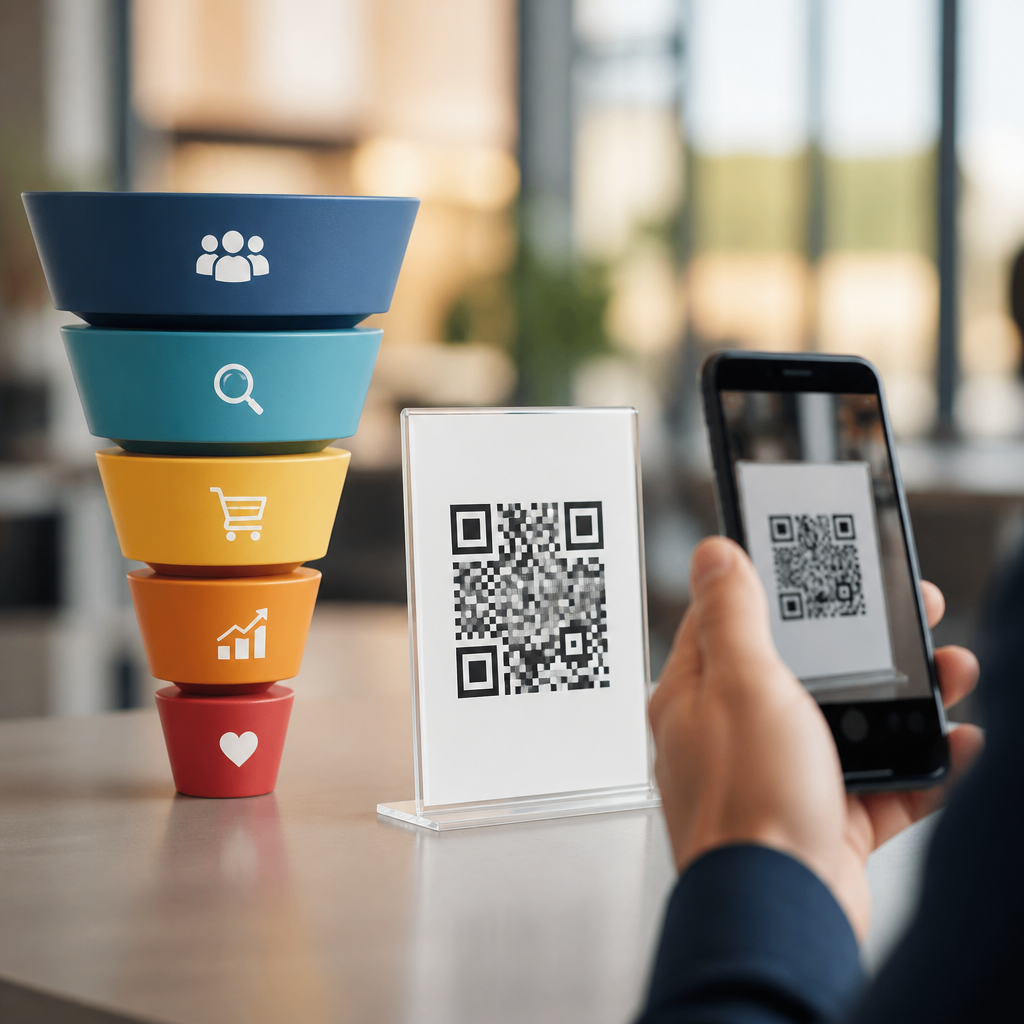
QR codes have moved from novelty to infrastructure because they connect physical attention to digital action in a single scan. In marketing, that matters at every stage of the funnel: awareness, consideration, conversion, retention, and advocacy. A full-funnel marketing strategy uses different channels and messages to move people from first impression to repeat purchase, and QR codes give marketers a measurable bridge between offline and online touchpoints. When I have built campaign systems that included retail packaging, direct mail, event signage, and paid media, the most effective QR programs were never treated as isolated tactics. They worked because the code, destination, offer, and analytics were aligned with a clear funnel objective.
A QR code, or quick response code, is a two-dimensional barcode that stores data such as a URL, vCard, coupon code, app deep link, or payment instruction. Smartphone cameras and native scanning tools now make access nearly frictionless, which is why marketers use QR codes to remove steps between interest and action. Instead of asking someone to remember a web address, search for a product, or type a coupon manually, a code can take them directly to a landing page, product configurator, video demo, form, or checkout flow. That reduction in friction is the core reason QR codes support marketing funnels so well.
The topic matters because modern customer journeys are fragmented. A buyer may discover a brand in a store aisle, compare options on a phone, read reviews at home, and purchase later from an email reminder. Traditional channel reporting often breaks at these handoffs, especially when a physical asset drives a digital session. QR codes restore visibility. With dynamic links, UTM parameters, first-party analytics, and CRM integration, marketers can attribute scans to specific placements, audiences, and creative variations. This makes QR codes useful not only for engagement but also for measurement, testing, and budget allocation across the funnel.
Integrating QR codes into marketing funnels means designing each code around user intent at a specific stage. Top-of-funnel campaigns need fast educational experiences and broad reach. Mid-funnel assets should answer questions, reduce uncertainty, and capture qualified leads. Bottom-funnel placements must streamline purchase or booking. After conversion, QR codes can support onboarding, loyalty enrollment, customer service, reviews, referrals, and reorder behavior. The strategic advantage is continuity: the same technology can guide prospects and customers through multiple moments without forcing them into disconnected journeys.
Why QR codes fit full-funnel marketing
QR codes support full-funnel marketing because they compress the distance between exposure and response. In practical terms, they turn passive media into interactive media. A poster becomes a lead source, a package becomes a product education channel, and a receipt becomes a retention tool. The mechanism is simple, but the strategic value is substantial: marketers can place actionable entry points anywhere attention exists. That is especially useful in omnichannel campaigns where consumers move between print, outdoor, retail, events, connected TV, and mobile.
Another reason QR codes fit the funnel is adaptability. A single dynamic QR code can be updated to point to different destinations as a campaign evolves, without reprinting the physical asset. I have used this in store displays where the initial scan sent users to a waitlist before launch, then to a product page on release day, and later to a review-generation page after inventory normalized. Static codes still have a role when permanence matters, but dynamic codes are usually the better choice for marketing because they preserve flexibility and improve measurement.
Scannability and trust are critical. Good QR code marketing uses high contrast, adequate quiet space, mobile-optimized destinations, and a clear call to action. “Scan to compare plans,” “Scan for ingredients,” and “Scan to get 10% off today” outperform generic prompts because they explain the value before the scan. Branded short links and secure landing pages also matter. People will not scan if the destination feels ambiguous or unsafe. In other words, funnel performance starts with user confidence as much as creative placement.
Top-of-funnel uses: awareness, discovery, and education
At the awareness stage, QR codes work best when they deliver immediate value with minimal commitment. Outdoor ads, transit posters, product samplers, event booths, and in-store endcaps can all use QR codes to bring a broad audience into a brand story. The destination might be a short video, interactive lookbook, product finder, campaign microsite, or localized store page. The purpose is not to force a sale instantly; it is to convert attention into identifiable interest.
A common example is packaging for consumer packaged goods. A beverage brand can place a QR code on a limited-edition bottle that leads to a behind-the-scenes origin story, playlist, or sweepstakes entry. That scan introduces the brand’s personality and captures intent without demanding a purchase beyond the one already made. In B2B settings, trade show signage often uses QR codes to offer industry reports or benchmark calculators. Visitors scan because the content is useful in context, and the brand gains a measurable top-of-funnel touchpoint.
Awareness-stage QR destinations should load quickly, communicate relevance in the first screen, and avoid heavy forms. If lead capture is needed, use progressive profiling later. At this stage, metrics such as scans, unique visitors, engaged sessions, video completion rate, and click-through to deeper content are more meaningful than immediate revenue. Marketers who judge top-of-funnel QR codes only by direct conversions often underinvest in placements that are excellent at initiating qualified journeys.
Mid-funnel uses: consideration, qualification, and lead capture
In the consideration stage, QR codes should answer the practical questions that block action. Prospects want proof, comparisons, specifications, pricing clarity, and evidence that a solution fits their needs. This is where QR codes on brochures, catalog pages, direct mail pieces, product shelves, and sales collateral become powerful. They can send users to FAQ pages, case studies, comparison charts, testimonials, live demos, or appointment booking forms that deepen evaluation.
I have seen direct mail perform particularly well when paired with QR codes and a dedicated landing page. For example, a home services company can send neighborhood mailers with a QR code that opens a page showing local reviews, before-and-after photos, service-area availability, and an instant estimate tool. That works because it mirrors how people actually decide: they want localized proof and a low-effort next step. A generic homepage would waste intent; a tailored landing page advances the funnel.
Qualification improves when scan data is tied to CRM records. If a prospect scans a code from a webinar handout and then downloads a pricing guide, that sequence reveals stronger buying intent than a casual homepage visit. Platforms such as HubSpot, Salesforce, Marketo, and Klaviyo can capture source details, while Google Analytics 4 can show engagement patterns when UTMs are structured consistently. Use naming conventions that identify asset type, campaign, location, and audience segment. Without disciplined taxonomy, QR analytics become noisy and hard to act on.
| Funnel stage | Best QR placement | Recommended destination | Primary KPI |
|---|---|---|---|
| Awareness | Posters, packaging, event signage | Video, microsite, product finder | Unique scans |
| Consideration | Brochures, direct mail, shelf talkers | FAQ, comparison page, case study | Engaged sessions |
| Conversion | Menus, product tags, checkout displays | Checkout, booking form, coupon page | Conversion rate |
| Retention | Receipts, packaging inserts, manuals | Onboarding, loyalty signup, support hub | Repeat purchase rate |
| Advocacy | Thank-you cards, post-purchase emails | Review page, referral program | Referral or review volume |
Bottom-funnel uses: conversion and transaction support
At the conversion stage, the best QR code strategy is to remove every unnecessary step between desire and transaction. Restaurants use table tents and menus to open ordering flows. Retailers place shelf-edge QR codes that reveal inventory, color options, financing, or buy-online-pickup-in-store paths. Service businesses use vehicle wraps, storefront decals, and proposal documents to route prospects directly into scheduling or payment. In each case, the code succeeds when it converts immediate intent rather than diverting users into broad site navigation.
Checkout optimization is especially important on mobile. A scan that lands on a desktop-style product page with cluttered menus, pop-ups, and slow scripts will leak conversions. The destination should be purpose-built for mobile, with autofill, wallet payments, clear shipping information, and concise trust signals. If the offer is time-sensitive, the page should restate the incentive above the fold. When I audit underperforming QR campaigns, the issue is often not the code itself but the mismatch between high-intent traffic and a generic destination experience.
Coupons and promotions are another strong bottom-funnel use, but they require discipline. Use unique or segmented codes when possible so that redemption can be attributed accurately by store, campaign, or audience. Dynamic QR codes can also route users differently based on device, geography, or time of day. For example, a cinema ad might send users to an app deep link if the app is installed, to a mobile ticketing page if not, and to a nearby theater selector after showtime data updates. That level of routing increases conversion because the experience respects context.
Post-purchase uses: retention, loyalty, service, and advocacy
Many brands stop at acquisition, but QR codes are just as valuable after the sale. Post-purchase moments are ideal because the customer already has the product, receipt, package, or confirmation in hand. A QR code on packaging can open setup instructions, warranty registration, care guides, how-to videos, or accessory recommendations. This reduces support friction and improves activation, especially for products that require assembly, installation, or routine maintenance.
Loyalty and retention programs also benefit from QR integration. A retailer can print a QR code on receipts that enrolls customers in rewards with one tap, passing transaction metadata into the sign-up flow where privacy rules allow. A subscription brand can add a box insert that sends customers to reorder options, usage tips, or a personalized dashboard. Hospitality brands often place QR codes in rooms for service requests, dining menus, and local recommendations, creating convenience while collecting first-party behavioral data.
Advocacy is the final stage. After a positive experience, customers are more likely to leave a review, share a referral link, or post user-generated content if the path is simple. A code on a thank-you card can direct buyers to a review page, while another in follow-up email or packaging can open a referral offer. The key is timing. Ask for a review after value has been realized, not immediately at purchase. For many categories, that means after delivery, setup, or first successful use.
Implementation, analytics, and governance for scalable QR funnels
Successful QR code funnel integration depends on operational discipline. Start with a map of funnel stages, audience segments, placements, destination types, and success metrics. Then decide where static codes are sufficient and where dynamic management is essential. Dynamic platforms such as Bitly, QR Code Generator PRO, Flowcode, and Beaconstac support editable destinations, scan analytics, and campaign organization. Pair these with analytics tools, consent management, and CRM workflows so scan data informs real follow-up rather than sitting in a dashboard.
Technical standards matter. Use error correction appropriate to the environment, test scannability across iOS and Android devices, and size codes based on viewing distance. A common rule is a 10:1 distance-to-size ratio, meaning a code viewed from 10 feet away should be about 1 foot wide. Keep contrast high, avoid visual clutter around the code, and never place it where glare, curvature, or poor lighting will interfere. Include a text fallback URL for accessibility and edge cases where scanning fails.
Governance is often overlooked. Teams need naming standards for UTMs, retention rules for old destinations, and approval processes for redirects so published codes do not break. Privacy and compliance should be addressed early, especially if scans lead to forms, geolocation, or personalized content. The most mature programs treat QR codes as managed digital assets, not disposable graphics. If you are building a hub for integrating QR codes into marketing funnels, organize related resources around landing page design, campaign tracking, packaging strategy, direct mail, retail signage, event activation, loyalty, and review generation. That structure helps teams scale consistent practice across channels.
QR codes support full-funnel marketing strategies because they connect real-world attention to digital experiences with speed, context, and measurable intent. Used well, they strengthen awareness campaigns, improve consideration journeys, remove friction from conversion, and extend customer value after purchase through onboarding, loyalty, service, and advocacy. The technology is simple, but the results depend on strategic alignment: each code needs a clear funnel role, a relevant destination, mobile-first execution, and reliable analytics.
The strongest programs do not ask whether QR codes work in general. They ask where a scan can solve a specific customer problem better than any alternative. That mindset leads to better placements, better landing pages, and better attribution. It also prevents common mistakes such as linking every code to the homepage, measuring only last-click revenue, or ignoring post-purchase use cases where customer lifetime value is created.
If you are building a QR code marketing strategy, start by auditing your funnel for moments where people move from offline to online or from curiosity to action. Prioritize one use case in each stage, launch with dynamic codes and disciplined tracking, and refine based on scan behavior and conversion data. Done properly, QR codes become more than a campaign add-on. They become a practical system for guiding customers through the entire marketing funnel.
Frequently Asked Questions
How do QR codes support every stage of a full-funnel marketing strategy?
QR codes are effective across the full funnel because they connect physical visibility with immediate digital action. At the awareness stage, a QR code on packaging, signage, direct mail, event displays, or print ads can turn passive exposure into measurable engagement by sending people to a landing page, video, product story, or campaign microsite. In consideration, QR codes help prospects evaluate options by linking to reviews, comparison guides, testimonials, explainer content, or interactive product demos. At conversion, they reduce friction by taking users directly to a purchase page, booking form, coupon, checkout flow, or personalized offer. In retention, QR codes can lead existing customers to onboarding resources, account tools, support content, loyalty programs, and reorder pages. In advocacy, they can encourage reviews, referrals, user-generated content, and social sharing. What makes this especially powerful is that one scan creates a trackable handoff from offline attention to online behavior, giving marketers clearer insight into what is moving people from first impression to repeat action.
Why are QR codes especially valuable for connecting offline and online marketing channels?
QR codes solve one of the biggest challenges in modern marketing: making offline interactions measurable and actionable. Traditional physical media such as flyers, brochures, packaging, in-store displays, billboards, and mailers can generate attention, but they do not always provide a simple next step. A QR code adds that next step instantly. Instead of asking someone to remember a URL, search for a brand later, or manually type in a complicated web address, the user scans and arrives exactly where the marketer wants them to go. That improves convenience for the audience and increases attribution for the business. It also allows teams to unify campaigns across channels by using tailored destinations, UTM parameters, dynamic redirects, and audience-specific landing pages. As a result, marketers can compare performance across locations, creative versions, customer segments, and funnel stages. In practical terms, QR codes function as infrastructure for omnichannel marketing because they turn physical impressions into digital sessions that can be analyzed, optimized, and connected to broader campaign outcomes.
What types of content should QR codes link to at different funnel stages?
The destination behind a QR code should match the intent of the audience at that specific funnel stage. For awareness, the best content is often lightweight and engaging, such as brand videos, campaign pages, educational articles, or interactive introductions that quickly communicate value. For consideration, users need proof and clarity, so QR codes should link to product detail pages, side-by-side comparisons, case studies, FAQs, buying guides, or social proof such as testimonials and reviews. For conversion, the destination should be as direct and low-friction as possible, including checkout pages, limited-time offers, lead capture forms, appointment scheduling, in-store redemption pages, or mobile payment flows. For retention, strong destinations include setup instructions, usage tips, customer portals, loyalty dashboards, replenishment options, and support resources. For advocacy, marketers can route users to referral programs, review requests, community spaces, or social sharing experiences. The key is strategic alignment: a QR code should not simply send traffic somewhere; it should move the user to the next logical action in the customer journey.
How can marketers measure the performance of QR codes in full-funnel campaigns?
QR code performance can be measured with much more precision than many marketers realize. At a basic level, scan volume shows how many people took action from a physical asset. But the deeper value comes from connecting those scans to downstream behavior. By using campaign-specific URLs, analytics tags, dynamic QR codes, and dedicated landing pages, marketers can track where scans came from, when they happened, which creative triggered them, and what users did after arriving. That includes metrics such as bounce rate, time on page, product views, form completions, purchases, repeat visits, and referral actions. In a full-funnel framework, success metrics should vary by objective. Awareness campaigns may focus on scans and engagement rate. Consideration campaigns may prioritize content consumption, demo requests, or email signups. Conversion efforts should be judged by checkout completion, lead generation, or offer redemption. Retention and advocacy campaigns should look at repeat purchase rate, support engagement, loyalty participation, reviews, and referrals. When QR code data is integrated with broader analytics and CRM systems, it becomes possible to see how offline touchpoints influence customer progression over time.
What are the best practices for using QR codes effectively in marketing campaigns?
The most successful QR code campaigns are intentional, easy to use, and clearly tied to user motivation. First, every QR code should have a specific purpose within the funnel rather than acting as a generic link. Second, the call to action should tell people exactly what they will get from scanning, such as “See product demo,” “Claim your offer,” “Read customer reviews,” or “Join the loyalty program.” Third, the landing experience must be mobile-friendly, fast, and relevant to the promise made in the physical creative. Fourth, marketers should place QR codes where scanning is convenient, with enough size, contrast, and whitespace to ensure reliability. Fifth, dynamic QR codes are often the smarter option because they allow updates to destinations without reprinting materials and support more flexible tracking. It is also important to segment campaigns by audience, channel, or geography so performance can be optimized with real data rather than assumptions. Finally, marketers should test everything: CTA wording, destination content, page layout, offer structure, and placement context. QR codes work best when they are treated not as novelty graphics, but as high-intent conversion bridges built into the larger campaign system.