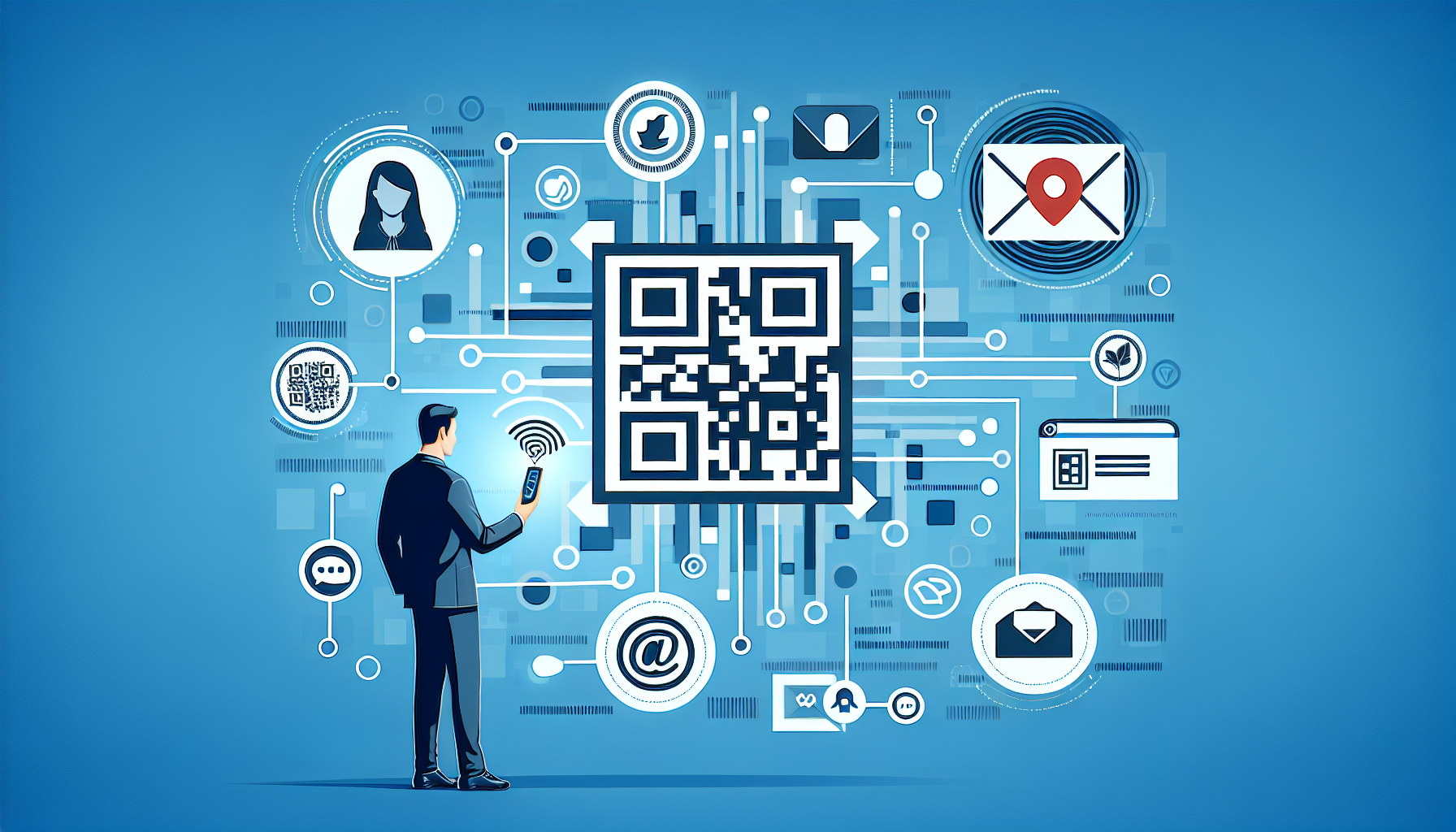
QR codes have evolved from simple scannable links into measurable entry points for sophisticated retargeting campaigns, giving marketers a practical way to reconnect with people who first engage offline. Retargeting with QR codes means using a QR scan as the starting event in a broader advertising or lifecycle marketing workflow, so someone who scans a code on packaging, direct mail, signage, receipts, menus, or product inserts can later receive relevant ads, emails, or on-site personalization. In practice, the QR code itself does not magically identify a person; the retargeting happens after the scan sends the user to a digital destination where consented tracking, audience creation, and campaign logic can be applied. That distinction matters because many teams overestimate what a QR code can capture and underestimate the importance of landing page design, analytics setup, privacy disclosures, and channel integration.
I have implemented QR-driven campaigns for retail promotions, event follow-up, and direct mail attribution, and the same pattern appears every time: the code creates intent, but the system behind it creates value. A well-built campaign can reveal which print asset drove the visit, what message triggered action, and whether the visitor progressed into a remarketing audience on platforms such as Google Ads, Meta, LinkedIn, or a customer data platform. This matters because offline media is expensive, customer journeys are fragmented, and businesses need a reliable bridge between physical exposure and digital conversion. When QR code retargeting is configured correctly, it improves attribution, sharpens audience segmentation, and increases conversion efficiency without guessing which offline touchpoint worked.
What QR code retargeting is and how it actually works
QR code retargeting is the process of using a scan to drive a user to a trackable digital environment, then qualifying that visitor for future marketing based on behavior, source, and consent. The core workflow is straightforward. A dynamic QR code points to a URL containing campaign parameters such as UTM tags, source labels, creative identifiers, or location codes. The user scans with a phone camera and lands on a webpage, app deep link, lead form, coupon page, product detail page, or event registration page. Once there, analytics tags and advertising pixels can record the visit, page view, button click, form completion, video watch, or purchase. Those events populate retargeting audiences that can later be used for ads or triggered messaging.
For example, a restaurant group can place unique QR codes on table tents promoting a loyalty offer. Diners scan, visit a landing page, and sign up. Visitors who did not complete the form can be retargeted with social ads featuring the same incentive, while those who enrolled can be excluded and instead sent onboarding email. A real estate team can print neighborhood-specific QR codes on property brochures, then build audiences by geography and property type interest. An industrial manufacturer can place a code on trade show booth signage linking to a technical spec sheet; visitors who viewed pricing or downloaded a PDF can be added to a higher-intent audience for LinkedIn retargeting. In each case, the scan launches the journey, but the audience is built from what happens after arrival.
The most important operational choice is using dynamic rather than static QR codes. Static codes hardcode a destination and are difficult to update, while dynamic codes route through a managed short URL or redirect service that can be edited, tagged, and measured after printing. Dynamic codes also make it easier to assign one code per asset, placement, store, mail drop, or campaign version, which is essential for attribution. Without that granularity, retargeting data becomes too blended to guide decisions.
Building the technical foundation for measurable campaigns
Successful retargeting with QR codes depends on clean infrastructure. Start with a QR management platform that supports dynamic redirects, scan analytics, custom domains, and bulk creation. Teams often use tools such as Bitly, QR Code Generator Pro, Flowcode, Beaconstac, or enterprise link management software. The destination URL should include standardized UTM parameters for source, medium, campaign, content, and term where relevant. I strongly recommend a naming convention document before launch. If one team labels a direct mail campaign as qr_mail_spring and another uses springmailer_qr, reporting becomes inconsistent and audience rules become error-prone.
The landing page must load quickly on mobile, because nearly all QR scans happen on phones. Compress images, reduce JavaScript bloat, and place the primary value proposition above the fold. Install analytics and tag management from the beginning. Google Tag Manager, Google Analytics 4, Meta Pixel, LinkedIn Insight Tag, Pinterest Tag, or TikTok Pixel can all be used depending on your media mix. Server-side tagging can improve resilience as browser restrictions increase, but it is not a shortcut around consent requirements. If the page offers downloads or form submissions, configure event tracking so audiences can be segmented by meaningful behavior, not just visits.
Audience logic should reflect intent. Someone who scanned a code on product packaging and viewed support documentation should not receive the same ads as someone who scanned a store window code and browsed a promotional offer. Use separate landing pages, event parameters, or hidden fields to preserve source detail. If your CRM or customer data platform supports it, pass campaign metadata into lead records so sales and retention teams know exactly which offline asset initiated the interaction. This is especially useful in B2B, where the scan may precede a long buying cycle.
| Component | Best practice | Why it matters |
|---|---|---|
| QR code type | Use dynamic codes with editable redirects | Allows updates, asset-level tracking, and cleaner attribution |
| URL structure | Apply consistent UTM and creative parameters | Makes audience creation and reporting reliable across channels |
| Landing page | Build mobile-first pages with one clear action | Improves conversion rate after the scan |
| Tagging | Deploy analytics and ad pixels through tag management | Enables retargeting audiences based on behavior |
| Consent | Honor cookie, privacy, and regional compliance rules | Protects data quality and reduces legal risk |
| CRM integration | Capture source metadata in forms and lead records | Connects offline scans to pipeline and revenue outcomes |
Retargeting strategies by channel and business model
Different channels require different expectations. For consumer campaigns, Meta and Google remain the most common retargeting destinations because they support large-scale audience matching from website visits and conversion events. A cosmetics brand might place QR codes on in-store displays for a shade finder quiz. Visitors who complete the quiz but abandon the basket can later see carousel ads featuring the exact product category they explored. A home services company can place codes on door hangers that link to a seasonal estimate page; visitors can then be retargeted with search, display, and video creative tailored to the service type and ZIP code.
For B2B, LinkedIn is often more valuable than broad consumer platforms because job title and company context matter. I have seen trade show QR scans perform best when the landing page offers a concise asset such as a buyer’s guide or calculator, followed by a retargeting sequence promoting a demo, case study, and consultation. The sales cycle is slower, so frequency should be lower and messaging should map to funnel stage. Use exclusion lists aggressively. If someone becomes an opportunity in the CRM, remove them from introductory ads and move them into sales enablement or customer proof messaging.
Retail and hospitality businesses benefit from location-aware QR deployment. A café chain can use one code on receipts, another on storefront decals, and another on loyalty cards. Each route can feed separate audiences based on visit context. Receipt scanners may respond well to bounce-back offers within seven days, while storefront scanners may need broader brand education before a discount. Event marketers can use session-specific QR codes to determine which topics create the strongest post-event engagement, then retarget attendees with webinar replays or related product content.
Email and SMS should not be ignored. If the QR landing page includes a form or gated asset, first-party data can support lifecycle messaging that often outperforms paid retargeting on cost efficiency. The best programs combine both: paid media for anonymous visitors who consent to tracking, and owned channels for identified leads or customers who submit information. That blend is increasingly important as third-party signals become less durable.
Measurement, attribution, privacy, and common mistakes
To evaluate retargeting with QR codes, track more than scan volume. Useful metrics include unique scans, landing page view rate, bounce rate, engaged session rate, form completion rate, add-to-cart rate, cost per retargeted visitor, assisted conversions, and downstream revenue by source code. In direct mail, compare holdout groups where possible. In retail, compare stores or placements using unique codes. In events, map scans to booth traffic and post-event meetings. The goal is to understand which physical touchpoints create the highest-quality digital audiences, not simply the most scans.
Attribution requires realism. A QR scan is often one touch among many, and mobile privacy controls can limit deterministic tracking. That does not make QR useless; it means you should combine platform reporting, analytics, CRM outcomes, and, where available, modeled attribution. If you rely solely on last-click reporting, upper-funnel QR placements will appear weaker than they are. I recommend creating a campaign scorecard that combines scan metrics, audience growth, conversion rate, and influenced pipeline or sales.
Privacy and consent are nonnegotiable. A QR code in public space does not grant permission to track beyond applicable legal standards. If your landing page sets cookies or shares data with ad platforms, disclose that clearly and honor regional requirements such as GDPR, CCPA, and platform-specific consent modes. Avoid claims that imply the QR code itself identifies a person. It identifies an interaction with a destination. Identity emerges only when the user authenticates, submits information, or is otherwise matched through permitted methods. Precision in these claims protects both trust and compliance.
Common mistakes are surprisingly consistent. Teams print one generic QR code for every placement, destroying attribution. They send traffic to the homepage instead of a focused mobile page. They forget to test redirects, app deep links, and fallback behavior on both iPhone and Android. They launch without pixel verification and only discover weeks later that no audience was building. They also retarget too broadly, showing the same ad to everyone who scanned regardless of source or action. Better results come from tighter segmentation, faster pages, clear offers, and disciplined measurement. As a hub for QR code advanced strategies, this topic connects naturally to related work on dynamic QR code management, QR code analytics, direct mail attribution, event tracking, first-party data capture, and omnichannel campaign design. Build those supporting pieces, and QR code retargeting becomes a dependable growth system rather than a novelty. Start with one high-intent use case, instrument it properly, and scale only after the data proves which scans turn into revenue.
QR codes are most powerful when they are treated as intentional bridges between offline attention and digital follow-up, not as decorative shortcuts. The complete guide to retargeting with QR codes is ultimately a guide to disciplined campaign architecture: dynamic codes, mobile-first landing pages, analytics, audience rules, consent controls, and channel-specific creative. When those elements work together, a scan from packaging, signage, mail, or an event badge can become a measurable audience, a qualified lead, or a sale that would otherwise be invisible.
The core takeaway is simple. A QR code starts the interaction, but retargeting performance depends on what happens after the scan. Businesses that create unique codes per placement, preserve source data, segment audiences by behavior, and connect reporting to CRM outcomes consistently make better budget decisions. They know which brochure, poster, insert, or receipt actually moved someone toward purchase, and they can continue the conversation with relevant messaging instead of generic ads.
There are limits. Privacy rules, browser changes, and incomplete identity matching mean no system will capture every influenced conversion. Some audiences will remain anonymous, and some channels will report imperfectly. Even so, QR-based retargeting is one of the most practical ways to make offline marketing accountable because it creates a direct, user-initiated digital touchpoint. That is a stronger foundation than vanity metrics like circulation, foot traffic estimates, or raw impressions alone.
If you are building out QR Code Advanced Strategies, use this page as your hub: define the use case, assign dynamic codes, tag every destination, validate audience creation, and measure outcomes beyond scans. Then expand into related playbooks for direct mail, retail, events, packaging, and first-party data capture. Start small, test rigorously, and turn every high-intent scan into a smarter retargeting opportunity.
Frequently Asked Questions
What does retargeting with QR codes actually mean?
Retargeting with QR codes means treating the QR scan as the first measurable interaction in a larger marketing journey rather than as a one-time click to a web page. When someone scans a code on a package, flyer, poster, receipt, menu, product insert, event sign, or direct mail piece, that action can send them to a landing page that captures analytics, places advertising pixels where permitted, encourages email or SMS signup, or triggers a more personalized on-site experience. From there, marketers can reconnect with that visitor later through paid social ads, display campaigns, email flows, SMS reminders, or tailored website content.
This approach is especially valuable because it bridges offline and digital behavior. Traditional offline marketing often struggles with attribution, but QR codes create a trackable handoff from a physical object to a digital destination. That makes it possible to understand which placements drive scans, which scans turn into visits or purchases, and which audiences should be re-engaged. In practical terms, a person who scans a QR code on packaging to learn more about a product could later see a related ad, receive a welcome email after opting in, or return to a customized page showing complementary products. The QR code is simply the entry point; the retargeting strategy is what turns that initial curiosity into an ongoing relationship.
How do QR codes help connect offline marketing to digital retargeting campaigns?
QR codes work as a measurable bridge between physical media and digital platforms. A consumer may encounter a brand in an offline setting where direct tracking would normally be limited, such as a storefront window, trade show booth, catalog, product box, table tent, or mailer. By scanning a QR code, that person moves into a digital environment the marketer controls, usually a landing page, product page, offer page, form, or app download destination. Once that transition happens, the brand can use analytics tools, campaign parameters, conversion events, and consent-based data collection to understand behavior and segment the audience for future outreach.
The strength of this model lies in campaign structure. Marketers can assign different QR codes to different placements, offers, regions, products, or audience types. For example, one code on retail packaging might lead to product education, while another in direct mail leads to a limited-time promotion. Because each code can use unique tracking parameters or dynamic redirects, brands can compare performance at a granular level and build retargeting audiences based on what users did after scanning. Someone who scanned but did not convert might be placed into a reminder audience, while someone who scanned and purchased could be excluded from acquisition ads and moved into a loyalty or cross-sell journey. This makes offline media more accountable and more strategically useful within a full-funnel digital program.
What is the best way to set up a QR code retargeting workflow?
The most effective setup starts with a clear objective. Before generating a QR code, define what should happen after the scan. The goal might be product education, lead capture, coupon redemption, app installation, event registration, or direct purchase. Once the objective is established, create a landing experience that matches the context of the scan. A code on packaging should usually lead to a mobile-optimized page that is fast, relevant, and simple to navigate. A code in direct mail might focus on a personalized offer, while a code in a restaurant might center on menu browsing, loyalty enrollment, or limited-time upsells.
From there, build the measurement layer. Use unique URLs, campaign parameters, analytics events, and where appropriate, advertising platform tags or server-side tracking solutions. If the destination includes a signup form, offer, or product view, make sure those events are recorded so you can create meaningful audience segments later. The next step is audience design. Instead of putting every scanner into one bucket, segment users by intent and behavior, such as scanners who bounced quickly, scanners who viewed multiple pages, scanners who started checkout, or scanners who completed a signup but not a purchase. Finally, connect those segments to follow-up channels. High-intent visitors might receive stronger conversion-focused ads, while low-intent visitors may need educational content first. The best workflow is not just technically functional; it is aligned with user intent, privacy requirements, and a logical sequence of post-scan messaging.
What kinds of campaigns and channels work best after someone scans a QR code?
The best follow-up depends on what the person was trying to accomplish when they scanned. If the scan came from product packaging, useful next steps might include educational ads, how-to content, replenishment reminders, warranty registration emails, or recommendations for related products. If the scan came from direct mail promoting a seasonal offer, retargeting could focus on urgency, social proof, and conversion messaging across paid social and display. If the scan came from an in-store sign or event booth, the user may respond better to localized follow-up, a lead nurturing sequence, or a post-event recap email with a clear next action.
In most cases, a multichannel approach performs best because it reduces dependence on any single platform. Paid social can keep the brand visible with visually engaging reminders, display ads can reinforce the message across the web, email can provide richer content and stronger personalization after opt-in, and on-site personalization can make return visits more relevant. Lifecycle automation also matters. A person who scans a code to access a first-time buyer discount should not keep seeing generic awareness ads if they already purchased. Instead, the experience should evolve into onboarding, support, loyalty, review generation, or cross-sell messaging. The most effective campaigns use the scan as a context signal, then tailor subsequent messages based on behavior, timing, and funnel stage.
What privacy, consent, and measurement considerations should marketers keep in mind?
Privacy and consent are central to any QR code retargeting strategy because the scan often originates in a real-world context where user expectations may differ from a standard web browsing session. Marketers should be transparent about what happens after the scan, especially if the landing page uses cookies, collects personal information, or enrolls users into future communications. If email or SMS follow-up is involved, obtain proper consent and clearly explain what the person is signing up for. Any retargeting setup should also align with applicable regulations, platform policies, and regional requirements related to data collection, tracking, and user rights.
Measurement should be approached carefully as well. A QR scan alone does not guarantee intent or downstream value, so success metrics should go beyond raw scan volume. Stronger indicators include landing page engagement, signup rate, product views, cart starts, purchases, repeat visits, and audience quality over time. It is also important to understand the limits of attribution. Someone may scan on one device and convert on another, or encounter multiple marketing touchpoints before purchasing. For that reason, marketers should combine QR-specific analytics with broader campaign reporting and conversion analysis. The most responsible and effective programs balance performance with transparency: they make it easy to scan, easy to understand the value exchange, and easy for users to control how their data is used.