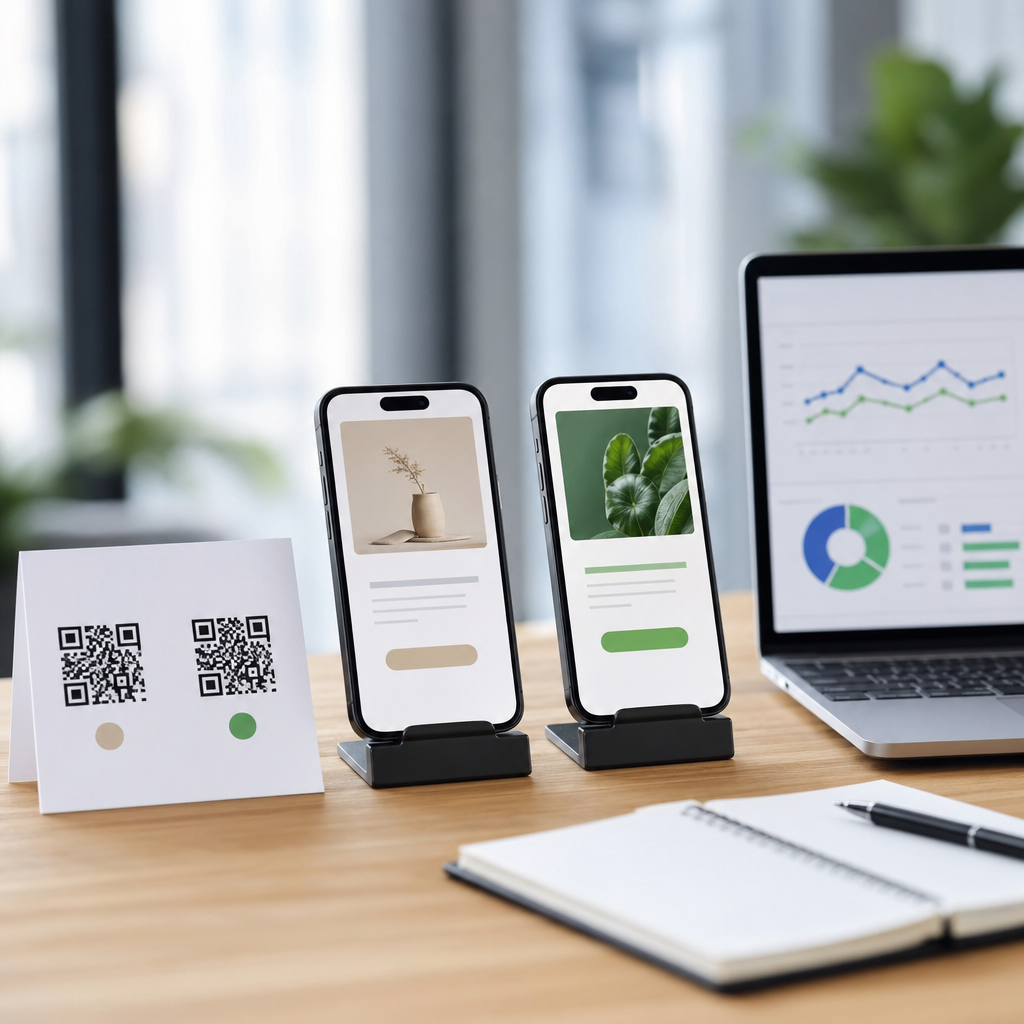
Automated workflows from QR code scans turn a simple camera action into a measurable business process. Instead of treating a scan as a dead-end link click, strong teams connect it to analytics platforms, CRM records, lead routing, follow-up emails, sales alerts, and reporting dashboards. In practice, that means a customer scans a code on packaging, signage, mailers, or receipts, and the business immediately records campaign source, identifies the landing page session, triggers downstream actions, and measures revenue impact. For companies focused on QR code analytics, tracking, and optimization, this capability matters because QR campaigns often bridge offline touchpoints and digital conversion paths.
A few definitions make the topic clearer. A QR code is a machine-readable matrix barcode that usually opens a URL. An automated workflow is a rule-based sequence that starts when a scan occurs or when the visitor completes a related event, such as form submission, purchase, appointment booking, or app download. Google Analytics, especially GA4, captures behavior data like sessions, events, conversions, and attribution signals. A CRM such as HubSpot, Salesforce, Zoho CRM, or Microsoft Dynamics stores contact, company, and deal records. Integration is the connective layer that passes data between these systems, often through URL parameters, webhooks, native connectors, server-side tracking, and middleware tools such as Zapier, Make, Workato, or Segment. When built correctly, the result is not just traffic reporting. It is a traceable operational workflow tied to revenue, retention, and campaign optimization.
I have implemented QR code programs for retail stores, field events, direct mail campaigns, and B2B sales teams, and the biggest mistake I see is assuming the scan itself is the only metric that matters. It is useful, but incomplete. A scan only tells you that someone showed interest. To understand performance, you need the full chain: where the code appeared, what promise it made, which device opened it, whether the landing page loaded quickly, whether the user converted, whether the CRM created or updated a lead, and whether that lead became closed revenue. This article explains how to build automated workflows from QR code scans with Google Analytics and CRM integration at the center, so your QR program becomes an accountable marketing and sales system rather than a disconnected tactic.
Design the QR tracking foundation before you automate
The strongest QR workflows begin with a tracking architecture, not with software. Start by deciding what each QR code represents in your business model. In most programs, every code should map to a campaign, asset, placement, audience, and intended outcome. A code on product packaging has a different purpose than a code on a trade show booth, countertop display, invoice insert, vehicle wrap, or business card. If you skip this naming structure, your analytics and CRM fields become inconsistent, and automation rules break because the source data is messy.
Use dynamic QR codes whenever you need optimization, because they let you update the destination without replacing printed materials. They also provide a redirect layer where first-party data can be attached before the visitor reaches the final landing page. Standardize UTM parameters so Google Analytics can classify traffic consistently. A practical convention is utm_source=qr, utm_medium=offline, utm_campaign=[campaign name], utm_content=[placement], and utm_term=[variant or audience]. For example, a restaurant chain might use utm_campaign=summer_loyalty, utm_content=table_tent, and utm_term=store_214. This makes location-level reporting possible in GA4 and in your CRM.
Landing pages should be purpose-built for the scan context. Mobile speed is critical because most scans happen on phones. Keep forms short, align copy with the printed offer, and ensure consent language is clear if personal data is captured. If the page includes embedded forms from HubSpot or Salesforce Account Engagement, verify hidden fields store the campaign and QR metadata. If you rely on JavaScript to pass values into forms, test on iOS and Android camera apps because redirects and browser handoffs can behave differently. I routinely use browser developer tools, GA4 DebugView, and CRM activity timelines during testing, because a code that looks correct on paper can still fail to preserve attribution across redirects.
Connect QR code scans to Google Analytics for reliable attribution
Google Analytics is the measurement backbone for QR code performance, but only if you configure it deliberately. In GA4, the scan itself is not directly visible unless your QR platform records it and passes a signal. What GA4 does capture reliably is the landing page session and the user behavior that follows. Your first priority is making sure every QR destination URL carries structured campaign parameters. GA4 will then attribute sessions, engaged sessions, key events, and conversions to those parameters. This gives you answers to the most common reporting questions: which QR campaign drove the most visits, which physical placement produced the highest conversion rate, and which audience generated revenue.
For richer visibility, define custom dimensions and events. If your redirect layer can append parameters like qr_id, qr_location, qr_format, or qr_creative, send those into GA4 as event parameters or user properties where appropriate. A retailer, for example, can distinguish scans from window decals versus shelf talkers and compare conversion rates by store format. In GA4, map important actions such as generate_lead, sign_up, purchase, book_demo, or download_menu as key events. If ecommerce is involved, implement recommended ecommerce events so revenue ties back to the originating QR campaign. That is how you move from vanity reporting to performance analysis.
Use Google Tag Manager to manage this cleanly. GTM can read URL parameters, store them in first-party cookies or session storage, and pass them into GA4 events and form submissions. Where privacy rules permit, server-side tagging improves resilience by reducing browser-side data loss and supporting cleaner data governance. It also helps when ad blockers interfere with client-side requests. For businesses that need enterprise-grade pipelines, Segment or a customer data platform can normalize QR attribution and forward it to GA4, BigQuery, and CRM systems at the same time. The principle is simple: capture the campaign context once, preserve it through the session, and attach it to every downstream conversion event.
| Workflow stage | What to capture | Recommended tools | Business outcome |
|---|---|---|---|
| QR redirect | qr_id, campaign, placement, timestamp | Dynamic QR platform, redirect rules | Source identification |
| Landing session | UTM parameters, device, page path | GA4, Google Tag Manager | Attribution and behavior analysis |
| Lead capture | Name, email, consent, hidden campaign fields | HubSpot forms, Salesforce forms | CRM record creation |
| Automation | Lead score, owner, follow-up tasks | HubSpot workflows, Salesforce Flow, Zapier | Faster response time |
| Revenue reporting | Opportunity value, closed date, source mapping | CRM dashboards, BigQuery, Looker Studio | ROI measurement |
Integrate QR campaigns with CRM systems to trigger action
A CRM integration is what turns a tracked scan into an operational workflow. When someone scans a QR code and submits a form, books a meeting, redeems an offer, or starts a trial, the CRM should create or enrich the contact record automatically. At minimum, pass original source, latest source, campaign name, QR identifier, physical placement, and timestamp. In HubSpot, this often means mapping hidden form fields to contact properties and using workflows to branch by campaign or lifecycle stage. In Salesforce, the same logic may run through Web-to-Lead, Flow, Campaigns, and assignment rules. The exact toolset varies, but the design principle does not: preserve the QR context at the point of lead capture.
This matters because sales and service teams act on CRM data, not on analytics dashboards alone. If a medical clinic places QR codes in direct mail to promote consultations, the front desk and sales staff need to know which mailer version generated the inquiry. If a manufacturer uses QR codes on spec sheets at trade shows, the assigned rep should see the event name, booth location, product interest, and scan date on the lead record. That context improves follow-up quality and shortens response time. In my projects, response-time improvements often produce more revenue lift than creative changes to the QR code itself, because speed to contact still strongly influences conversion.
Deduplication and identity resolution deserve close attention. A person may scan multiple times before converting, or scan on mobile and later complete a desktop form. CRMs can create duplicate records if email addresses vary or forms bypass matching rules. Use normalized email fields, lead matching logic, and where possible a persistent first-party identifier stored during the initial visit. If your stack includes HubSpot and Salesforce together, define the source-of-truth fields carefully so sync rules do not overwrite original attribution. Governance is essential here. Without field definitions and ownership, campaign data decays quickly and automated workflows become less trustworthy.
Build end-to-end automated workflows that support marketing and sales
Once analytics and CRM data are connected, build workflows around actual business outcomes. A common pattern starts with a QR scan to a landing page, followed by form completion, CRM record creation, lead scoring, owner assignment, and a timed follow-up sequence. For example, a B2B software company can place QR codes on conference signage that lead to a demo request page. If the visitor submits the form, HubSpot creates a contact, stamps the trade show campaign and QR placement, assigns the lead to the territory rep, sends a confirmation email, creates a sales task due within one hour, and adds the contact to a post-event nurture sequence. GA4 records the session and conversion, while the CRM tracks pipeline progression and eventual deal value.
Another effective workflow supports customer service and retention rather than lead generation. A consumer electronics brand can place QR codes inside packaging for setup help, warranty registration, and accessories. If a customer scans the setup code and watches onboarding content but does not complete registration, the system can trigger a reminder email if consent exists. If the customer registers, the CRM can open a post-purchase onboarding journey, tag the product model, and suppress acquisition messaging that no longer fits. Service teams can also route high-friction scans, such as repeated visits to troubleshooting pages, into support queues. This is where QR automation becomes a customer experience system, not just a campaign mechanism.
Do not automate blindly. Every workflow needs entry conditions, exit conditions, time windows, fallback logic, and measurement. Set service-level expectations, such as lead response within fifteen minutes during business hours. Add suppression rules for existing customers, employees, and spam submissions. Use webhook retries and error logging so failed API calls do not silently drop records. In regulated sectors, confirm consent capture, retention policies, and regional privacy requirements before passing personal data between systems. The right automation feels immediate to the customer and controlled to the business. That balance is what separates scalable QR operations from fragile one-off campaigns.
Measure ROI, troubleshoot data quality, and optimize continuously
To prove the value of QR code workflows, report on more than scans and sessions. The metrics that matter most usually include conversion rate, cost per lead, qualified lead rate, opportunity creation rate, revenue influenced, closed-won revenue, response time, and customer retention outcomes where relevant. GA4 can show campaign traffic quality and on-site behavior. The CRM shows whether those visits became leads, opportunities, and revenue. Looker Studio, Power BI, or CRM-native dashboards can blend these views into one operational report. For offline-heavy businesses, this unified reporting is often the first time leaders can compare physical placements with the same rigor used in paid digital channels.
Optimization follows a disciplined process. Test different calls to action, landing page lengths, incentives, and placements. Compare scan-to-session rates if your QR platform logs scans separately from GA4 sessions; a gap may indicate slow redirects, poor connectivity, or landing page issues. Audit attribution monthly by scanning live codes yourself, checking real-time analytics, confirming hidden form fields, and reviewing CRM record creation. I also recommend maintaining a campaign taxonomy document and a QA checklist for every new code. Most failures come from simple issues: broken UTM naming, redirects stripping parameters, forms missing hidden fields, or CRM workflows keyed to outdated property names.
The main benefit of building automated workflows from QR code scans is clarity. You can see which offline touchpoints create measurable digital behavior, route that behavior into sales and service systems, and improve results with evidence instead of guesswork. Start with a clean tracking framework, connect GA4 and your CRM, map the fields that preserve attribution, and automate only the actions that serve a clear business goal. Then review performance regularly and tighten the weak points. If you are building a broader QR code analytics, tracking, and optimization program, use this hub as your foundation and turn every scan into accountable, actionable data.
Frequently Asked Questions
1. What does it mean to build an automated workflow from a QR code scan?
Building an automated workflow from a QR code scan means turning that scan into the first step of a connected business process rather than treating it as a simple link click. When someone scans a QR code on packaging, a poster, a receipt, direct mail, or an in-store display, the action can send them to a landing page while also passing useful data into the systems your business already uses. That data might include the campaign source, product line, location, date and time of the scan, device type, and the exact destination URL associated with that code.
From there, automation takes over. A scan can create or enrich a CRM contact, log an event in your analytics platform, notify a sales or support team, trigger an email or SMS follow-up, assign a lead to the right rep, update a reporting dashboard, or launch a sequence in your marketing automation platform. For example, if a prospect scans a QR code on a trade show booth, the workflow could route them to a product-specific page, tag them as an event lead, alert the assigned account owner, and add them to a tailored nurture campaign within seconds. The value comes from connecting the physical moment of engagement to measurable digital actions, which helps teams track performance, respond faster, and improve conversion rates.
2. What tools and systems are usually involved in a QR code scan automation setup?
Most QR code automation setups include a few core layers: the QR code itself, a destination or redirect layer, analytics tracking, and one or more downstream business systems. At the front end, you need a QR code that links to either a landing page directly or, more commonly, a trackable short URL or dynamic redirect. Using a dynamic QR code platform is often the smarter choice because it lets you update destinations later without reprinting the code and gives you scan-level reporting.
Behind that, businesses usually connect web analytics tools such as Google Analytics 4, Adobe Analytics, or another event-tracking platform to capture sessions, campaign attribution, and on-page behavior. A CRM such as Salesforce, HubSpot, Zoho, or Microsoft Dynamics may then store or update contact and lead records when a visitor fills out a form or identifies themselves. Marketing automation tools can send follow-up emails, apply lead scoring, or place contacts into segmented nurture flows. Integration platforms like Zapier, Make, Workato, or native APIs often handle the logic that moves information from one system to another.
Many organizations also add sales notifications in Slack or Microsoft Teams, customer support workflows, spreadsheet logging, or BI dashboards for centralized reporting. If the QR code is tied to a specific asset, product, region, or store location, that metadata can also be passed through the URL using UTM parameters or custom query parameters. The best setup depends on your goals, but the general pattern is the same: capture the scan, identify the session, enrich the record, and trigger the next best action automatically.
3. How do you track QR code scans accurately and connect them to analytics and CRM data?
Accurate tracking starts with disciplined URL structure and clear campaign naming. Each QR code should point to a unique destination URL or redirect path that includes UTM parameters and, when useful, custom identifiers for placement, format, audience, or location. For example, a code used on product packaging should not share the exact same tracking link as one used on a retail shelf display if you want reliable attribution. A clean naming system makes it much easier to compare campaign performance later and build reports that people can actually trust.
Once the scan sends a visitor to your landing page, your analytics platform should capture the session source and campaign details immediately. From there, you can measure downstream behavior such as page views, scroll depth, button clicks, form submissions, purchases, coupon redemptions, or appointment bookings. The next step is connecting anonymous behavior to a known contact. This usually happens when the visitor completes a form, signs in, claims an offer, registers for a demo, or otherwise shares identifiable information.
At that point, the data can be written into your CRM and associated with the original QR campaign. Strong implementations also preserve hidden fields on forms so the source, medium, campaign, content, and custom QR identifier are stored with the lead record. That allows marketing and sales teams to see not only that a contact converted, but exactly which physical touchpoint drove the engagement. For more advanced setups, server-side tracking, webhook events, and CRM enrichment rules can improve reliability and reduce data gaps caused by browser limitations or ad blockers. The key is designing the system so scan data, website behavior, and contact creation all connect cleanly into one attribution path.
4. What kinds of automated actions can happen after someone scans a QR code?
The most effective QR code workflows are built around immediate, practical next steps. After a scan, automation can send a user to a personalized landing page, trigger a welcome email, deliver a coupon, register an event response, or start a lead nurturing sequence. If the page includes a form, a successful submission can create a CRM record, assign ownership based on geography or product interest, and alert a sales rep in real time. For service and support use cases, a scan could open a help form, create a ticket, or direct the user to the correct knowledge base content automatically.
Businesses also use QR scan workflows for operational reporting. A code on packaging might trigger post-purchase education, warranty registration, and review requests. A code on a restaurant receipt could launch a feedback survey and route negative responses to a manager. A code on direct mail could identify a campaign audience segment and send performance data to a dashboard for ROI analysis. In retail, in-store signage scans can feed location-level engagement reports. In B2B environments, scans from trade shows or print collateral can notify account teams that a target company has engaged with a specific offer.
The best automated actions are tied to a clear business objective. If the goal is lead generation, focus on form capture, scoring, and routing. If the goal is customer retention, prioritize onboarding content, support resources, and lifecycle messaging. If the goal is measurement, make sure every scan contributes to campaign reporting. Good automation is not about adding as many steps as possible. It is about creating fast, relevant, trackable responses that move the customer journey forward and give internal teams better visibility.
5. What are the biggest mistakes to avoid when creating automated workflows from QR code scans?
One of the most common mistakes is sending users to a generic homepage with no campaign context, no tracking structure, and no clear next step. That approach wastes the scan and makes attribution difficult. Another major issue is failing to use unique tracking parameters or dynamic QR codes, which limits your ability to analyze performance by channel, placement, or audience. If you cannot tell whether packaging, in-store signage, direct mail, or event materials drove the result, it becomes much harder to optimize future campaigns.
Teams also run into trouble when the landing page experience is weak. A QR scan is usually a mobile-first interaction, so pages need to load quickly, display properly on smaller screens, and present a simple action path. Long forms, poor page speed, and unclear messaging can break the workflow before the automation ever has a chance to help. On the back end, another frequent mistake is not passing campaign data into the CRM or marketing automation platform. If attribution data stops at the analytics layer, sales and lifecycle teams lose valuable context.
It is also important to avoid overcomplicated automations that create noise instead of value. Not every scan should trigger multiple alerts, sequences, and internal tasks. Workflows should be intentional, tested, and aligned with actual business goals. Finally, do not overlook privacy, consent, and data governance requirements. If you are collecting personal information after a scan, your forms, disclosures, and data handling practices need to comply with applicable regulations. The strongest QR code workflow strategies combine accurate tracking, a smooth user experience, useful automation, and disciplined measurement so every scan contributes to a more informed and effective process.