
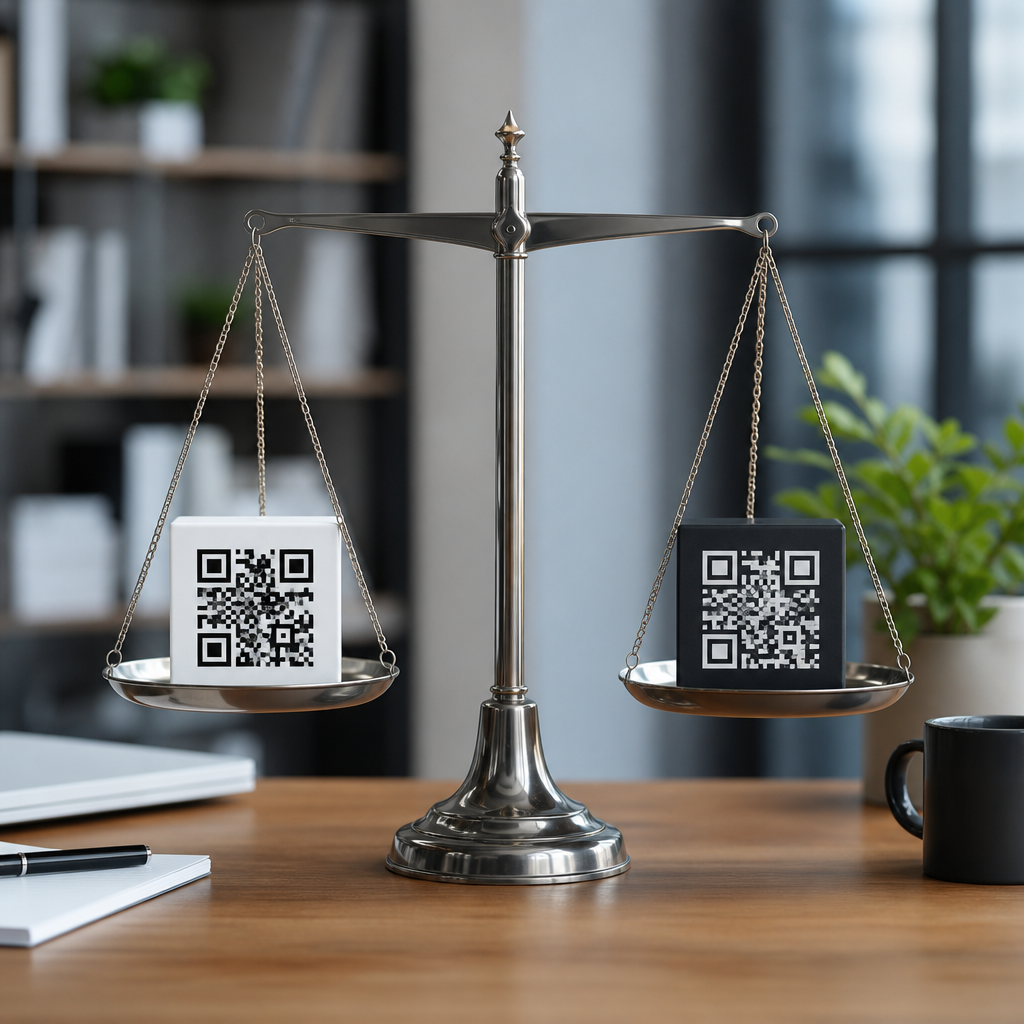
Choosing between free and paid dynamic QR code platforms is not a small software decision; it affects whether your codes stay editable, measurable, secure, and useful after they are printed. Dynamic QR code platforms create scannable codes that point to a short redirect URL rather than directly embedding a final destination, which means you can change the destination later without reprinting the code. That single capability separates dynamic QR codes from static QR codes and explains why marketers, retailers, event teams, restaurants, manufacturers, and nonprofits increasingly rely on them.
In practice, I have seen dynamic QR codes rescue campaigns that would have otherwise failed. A retailer printed shelf talkers linking to a seasonal promotion, then extended the campaign by redirecting the same codes to a clearance page after the original landing page expired. A museum used one set of exhibit codes but updated the linked audio guides in three languages over time. A restaurant changed menu URLs, delivery partners, and holiday hours without replacing table tents. Those are ordinary examples, but they show why the platform behind the code matters as much as the design of the code itself.
When people search for free vs paid dynamic QR code platforms, they usually want direct answers to four questions: what features actually require payment, when is a free plan enough, what risks come with “free” tools, and how do you choose a platform that will not trap your codes later. This article answers those questions in full and serves as a hub for the broader Dynamic QR Code Platforms topic within QR Code Creation & Tools. It covers the core features, common pricing structures, hidden limitations, compliance issues, and selection criteria that matter before you commit to a vendor.
A useful definition helps. A dynamic QR code platform is software that generates QR codes whose scan destination can be edited after publication and whose scans can usually be tracked through analytics. Most platforms also provide campaign management, bulk generation, custom domains, user permissions, downloadable file formats, and integrations with tools such as Google Analytics, Zapier, HubSpot, Canva, or CRM systems. Free and paid offerings may look similar on the surface because both produce scannable codes, but they differ sharply in reliability, branding control, data ownership, support, and long-term cost.
What free dynamic QR code platforms usually include
Free dynamic QR code platforms typically offer a limited version of the core promise: editable destinations for a small number of codes with basic scan tracking. In many trials, you can create one to ten dynamic codes, choose a destination type such as URL, PDF, vCard, or link page, and download the result as PNG. Some vendors also allow color changes, simple logo placement, and a dashboard showing total scans, top countries, device type, and the date of the last scan. For a freelancer testing QR code usage on a personal portfolio, a small community event, or a one-off poster campaign, that can be enough.
However, “free dynamic QR code” often comes with conditions. Some platforms allow creation at no cost but place the code behind a trial redirect that expires after seven or fourteen days. Others keep the code active but limit monthly scans, restrict analytics history, add platform branding to the intermediate page, or block editable destination changes after the first month. In my audits, the most common surprise is not poor scan performance; it is discovering that the code still scans but redirects to a vendor warning page asking the owner to upgrade. If the code is already printed on packaging or signage, that interruption becomes expensive immediately.
There are still legitimate use cases for free plans. Early validation is one. If you are deciding whether QR codes belong on brochures, classroom materials, church bulletins, product inserts, or realtor signs, a constrained free plan can confirm scan demand before budget is allocated. Small internal workflows are another. Teams sometimes use free dynamic codes for temporary inventory labels, short-lived training materials, or pilot events where codes are not tied to mission-critical customer journeys. In those cases, the low stakes justify accepting caps on scans, design options, support, and reporting depth.
What paid dynamic QR code platforms add
Paid dynamic QR code platforms earn their price by reducing operational risk and expanding control. The most important additions are persistent code activity, stronger analytics, higher or unlimited scan volume, more destination types, and the ability to use a custom short domain. A custom domain matters because it improves brand trust and protects continuity. If your code resolves through qrs.brandname.com instead of a vendor-owned short URL, scans remain associated with your identity, and migration planning becomes easier. Established platforms also offer higher-resolution vector exports such as SVG, EPS, or PDF for print production, which reduces rendering issues on packaging and large-format signage.
Analytics also improve sharply at paid tiers. Beyond total scans, many platforms report unique scans, repeated scans, time-based trends, geographic distribution, operating system, browser, campaign tags, and conversion events when integrated with analytics software. For an event organizer, that means distinguishing foot traffic generated by posters from post-event follow-up scans on badges. For a consumer packaged goods brand, it means comparing scan response by region or retailer. For a B2B manufacturer, it means measuring whether QR-linked installation manuals reduce support tickets. Better reporting turns QR codes from decoration into measurable infrastructure.
Administration is another dividing line. Paid plans commonly include folders, tags, role-based access, approval workflows, team seats, audit logs, bulk creation through spreadsheets or APIs, and white-label reporting. These are not luxury features once QR codes are used at scale. A restaurant chain updating menu links across hundreds of locations needs bulk editing and location-level naming standards. A university communications team needs permission controls so a student worker cannot accidentally overwrite admissions campaign codes. A healthcare provider may require formal auditability, data handling controls, and contract terms before any patient-facing deployment.
How pricing models differ and where the real cost appears
Dynamic QR code pricing is rarely just monthly versus yearly. Vendors may price by number of dynamic codes, total scans, users, feature bundles, destination type, API access, or branded domains. Some charge for archived but still active codes; others charge only for editable assets. Typical entry plans in this category often start around the cost of one business lunch per month and rise into enterprise contracts for organizations managing thousands of codes across products, stores, or campaigns. The right comparison is not headline price alone. It is total ownership cost over the expected life of each printed code.
The hidden cost appears when a “cheap” platform creates reprint risk. If a code on product packaging stops resolving because a plan lapses, the direct software savings vanish against printing waste, distributor confusion, and lost customer trust. I have seen organizations spend more replacing postcards, labels, and posters than they would have spent on two years of a reliable paid platform. Another hidden cost is staff time. Manual editing across dozens of codes, weak naming conventions, and missing analytics exports can consume hours every month. A higher subscription price can be justified if it removes repetitive work and prevents campaign mistakes.
| Factor | Free Platform | Paid Platform | Best Fit |
|---|---|---|---|
| Code lifespan | May expire or be trial-limited | Usually persistent while plan is active | Paid for printed or long-term use |
| Analytics depth | Basic scan counts | Detailed, exportable reporting | Paid for campaigns and attribution |
| Brand control | Vendor short URL and branding common | Custom domains and white labeling common | Paid for customer-facing codes |
| Support | Self-service or limited email | Priority support and account help | Paid for operational reliance |
| Scale tools | Few codes, few users | Bulk upload, API, permissions | Paid for multi-location teams |
Annual billing can lower cost significantly, but only if you have confidence in the vendor and your use case. Monthly plans are safer during evaluation because they reveal dashboard quality, reporting accuracy, redirect speed, and support responsiveness under real traffic. Before committing annually, test the full workflow: create a code, print it at intended size, scan it on both iPhone and Android, change the destination, review analytics lag, export data, and contact support with a technical question. That small pilot tells you more than any feature checklist.
Key tradeoffs: reliability, analytics, branding, and compliance
The most important tradeoff between free and paid dynamic QR code platforms is reliability. Dynamic codes depend on an intermediary redirect layer, so platform uptime and redirect speed are not abstract technical details. They directly affect user experience. A static QR code can survive as long as the destination URL survives. A dynamic code adds flexibility but creates dependence on the platform’s infrastructure. That is why vendor reputation, service history, SSL support, and domain management matter. If the platform has weak uptime discipline or unclear ownership policies, every printed code inherits that fragility.
Branding is the next tradeoff. Free platforms often require a vendor shortlink, generic landing pages, or visible branding on QR-linked content types such as digital business cards and PDF viewers. For internal use, that may not matter. For public campaigns, it does. Consumers are more willing to scan a branded short domain they recognize, especially in environments where phishing awareness is high. Paid platforms also support custom frames, logos, and error correction settings with better production guidance. That reduces the chance of overdesigned codes that look attractive but scan poorly under glare, distance, or low-contrast printing.
Compliance and governance become decisive in regulated sectors. If QR-linked content touches customer records, protected data, or age-restricted information, procurement teams should evaluate data processing terms, account security, single sign-on support, and regional hosting. Free tools rarely provide the documentation required by legal or IT review. Even outside regulated industries, data stewardship matters. Ask who owns the scan data, how long logs are retained, whether IP-based geo data is stored, and what happens to historical analytics if you cancel. Paid platforms are not automatically safer, but they are more likely to answer those questions clearly and contractually.
Who should choose free, and who should pay
A free dynamic QR code platform is usually the right choice for testing, learning, and temporary use. If your project has a short life span, low scan volume, no brand sensitivity, and no need for historical reporting, free can be rational. Examples include a school club promoting a one-day fundraiser, a solo consultant testing QR codes on workshop slides, or a volunteer group sharing a seasonal signup form. The rule I use is simple: if failure would be inconvenient rather than costly, free is acceptable during the pilot stage.
Paid dynamic QR code platforms are the correct choice when codes are printed at scale, expected to remain active for months or years, tied to revenue, or distributed through channels you do not fully control after release. Product packaging, direct mail, restaurant menus, outdoor signage, trade show materials, and in-store displays all fall into this category. So do use cases where multiple stakeholders need access or where reporting must feed broader marketing analysis. If a broken redirect could trigger reprints, support tickets, lost conversions, or public embarrassment, paying is the prudent decision.
There is also a middle position: start free on a vendor that offers a clear upgrade path, then move to paid before mass distribution. This works only if you verify whether free codes remain the same after upgrade, whether analytics history carries over, and whether the redirect domain can be customized later without replacing the code. Not all vendors handle that transition cleanly. Read the plan terms carefully before treating a free tier as a safe staging environment.
How to evaluate a dynamic QR code platform before you commit
Evaluate dynamic QR code platforms with a practical checklist rather than marketing claims. First, confirm code persistence rules: do dynamic codes remain active indefinitely, only during a trial, or only while a subscription remains current. Second, test redirect editing speed and scan reliability across devices. Third, review export formats for print, especially SVG or EPS. Fourth, inspect analytics granularity and export options. Fifth, check governance features such as folders, naming, user roles, and audit history. Sixth, assess branding options, including custom domains and landing page control. Seventh, ask about API availability if you expect scale.
Then test the vendor as if you were already a customer. Submit a support question. Read the knowledge base. Look for public documentation on security, uptime, and data handling. Search for signs of long-term product maturity, not just attractive templates. Named platforms in this market often distinguish themselves less by basic QR generation and more by administration, integrations, and service quality. The best platform is the one that fits the life cycle of your codes, from pilot to print to analytics review to future edits, without forcing a redesign halfway through.
Conclusion
Free vs paid dynamic QR code platforms is ultimately a decision about risk, control, and longevity. Free plans can be valuable for learning, short-term campaigns, and low-stakes experiments, especially when you need only a handful of editable codes and basic analytics. Paid platforms become worth the cost when QR codes are customer-facing, long-lived, revenue-linked, brand-sensitive, or managed by multiple people. The major differences are not cosmetic. They show up in code lifespan, analytics depth, custom domain support, governance, compliance readiness, and the likelihood that your codes will keep working exactly as intended after they are printed.
For any organization building a serious QR program under QR Code Creation & Tools, dynamic QR code platforms should be evaluated as operational infrastructure, not novelty software. Start by mapping your real use case: how long the codes must live, how many people will manage them, what data you need, and how expensive failure would be. Then test one or two platforms with a controlled pilot, document the results, and upgrade before broad rollout if the codes will be public or permanent. Make that comparison carefully now, and your QR codes will stay flexible, trackable, and dependable long after launch.
Frequently Asked Questions
What is the real difference between a free dynamic QR code platform and a paid one?
The biggest difference is not simply price; it is reliability, control, and what happens after your QR code is printed and distributed. A free dynamic QR code platform typically gives you the core feature of dynamic behavior, meaning the QR code points to a short redirect URL that can later be updated without changing the printed code itself. That is useful, but many free platforms place limits around scans, editing access, analytics history, campaign volume, branding, export quality, or how long the code remains active.
Paid platforms usually expand that basic functionality into a more stable business tool. In practice, that often means higher or unlimited scan allowances, longer data retention, custom domains, stronger analytics, password protection, team permissions, bulk creation, API access, and better support. It also often means fewer platform ads and less risk that your code will be paused, degraded, or disabled because you exceeded a free-tier threshold.
Another important distinction is ownership and continuity. With free tools, the platform may reserve the right to restrict service, change limits, or retire features with little notice. If you are using QR codes for product packaging, event signage, restaurant menus, direct mail, retail displays, or any campaign that remains in circulation for months or years, those limitations matter. A paid platform is generally better suited for long-term use because it is designed for businesses that depend on editable destinations, reporting, and uptime.
So the real comparison is not “free versus expensive.” It is “basic access versus dependable infrastructure.” If your QR code is temporary and low-risk, free may be enough. If the code supports marketing, operations, customer experience, or measurable ROI, a paid platform is often the safer choice.
Are free dynamic QR code generators safe to use for business campaigns?
They can be safe, but only if you evaluate them carefully. The main issue is that a dynamic QR code depends on the platform’s redirect system. When someone scans your code, they do not go straight to your final page first; they pass through the provider’s short URL infrastructure. That means you are trusting that provider to keep the redirect online, route visitors correctly, protect data, and maintain performance. If the provider is unreliable, your QR code campaign can fail even if your own website is working perfectly.
For business use, safety includes several layers. First, there is technical reliability: will the redirect remain active for as long as your printed materials exist? Second, there is data handling: does the platform collect scan data, device data, location data, or referral data, and if so, how is that data stored and protected? Third, there is brand trust: if users scan a code and see a suspicious-looking redirect or a domain they do not recognize, that can reduce confidence and conversion rates. Fourth, there is account security: does the platform offer secure login practices, access controls, and protection against unauthorized edits?
Free platforms sometimes perform well, but they are more likely to have limited support, weaker service guarantees, fewer compliance signals, and restrictions hidden in terms of service. That does not automatically make them unsafe, but it does mean the burden of due diligence is higher. Before using one in a business campaign, check whether the company is established, whether it documents scan limits clearly, whether it explains data practices, whether it offers HTTPS redirects, and whether there is any risk of code expiration or forced branding.
If your campaign is customer-facing and tied to revenue, reputation, or regulated information, caution is warranted. A paid platform is often the better fit because it usually offers stronger uptime expectations, clearer accountability, better security controls, and support if something goes wrong. For low-stakes internal tests, free can be acceptable. For public campaigns, “safe enough” should be proven, not assumed.
When does it make sense to upgrade from a free dynamic QR code platform to a paid one?
The right time to upgrade is usually earlier than many teams expect. If you are still experimenting, running a short campaign, or learning how dynamic QR codes work, a free plan may be fine. But once a QR code becomes part of printed assets, product packaging, recurring promotions, in-store signage, or any campaign where changing the destination later matters, the cost of platform limitations can become much higher than the subscription fee.
A clear sign it is time to upgrade is when analytics start to matter. If you need to know how many scans came from a flyer versus a poster, which locations drive engagement, what devices people use, or when scan activity spikes, paid plans usually provide deeper reporting and better data retention. Another sign is when your codes need to stay active indefinitely. Free plans often come with scan caps, shortened history, or inactive-code policies that are manageable in testing but risky in production.
You should also consider upgrading if you need branding and trust. Custom short domains, cleaner redirect experiences, and the ability to remove provider logos can make a meaningful difference in professional campaigns. Teams often upgrade when collaboration becomes important as well. If multiple people need access, approval controls, folders, naming systems, export options, or bulk management, a paid platform saves time and reduces operational mistakes.
Finally, upgrade when failure would be expensive. If a QR code appears on thousands of printed items, replacing those materials would cost far more than paying for a dependable service. In that situation, a paid platform is less of a software expense and more of an insurance policy for continuity, editability, and measurement.
Do paid dynamic QR code platforms provide better analytics and marketing value?
In most cases, yes. The value of a dynamic QR code is not just that you can change the destination URL later; it is that the redirect layer can generate performance data. Paid platforms usually treat that layer as a reporting system rather than just a forwarding tool. That means they often provide scan counts over time, approximate location data, device and operating system breakdowns, browser data, campaign tagging support, and sometimes integrations with analytics or automation tools.
Those insights matter because QR code performance is highly context-dependent. A code on a product label may behave very differently from a code on a window display, trade show banner, postcard, or restaurant table. Better analytics help you understand not just whether people scanned, but where, when, and under which conditions. That allows you to improve landing pages, update offers, compare placements, and refine future campaigns without reprinting the code.
Paid platforms also tend to retain data longer and organize it better. Free tools may show only basic scan counts or short reporting windows, which can be enough for a simple test but not enough for trend analysis or ROI reporting. If you are accountable for campaign outcomes, you need analytics you can trust and revisit over time. You may also need exports, dashboard views, filters, and attribution support that free platforms simply do not include.
The marketing value comes from turning QR codes into adjustable, measurable assets instead of one-time graphics. A paid platform helps you test destinations, redirect traffic to seasonal content, pause offers, localize pages, and keep a campaign relevant after distribution. That combination of flexibility and measurement is what makes dynamic QR codes strategically useful, and it is where paid platforms often justify their cost.
Can a free dynamic QR code platform hurt long-term campaign performance?
Yes, it can, especially when the campaign has a long shelf life. The most common risk is instability over time. Because dynamic QR codes rely on the platform’s redirect service, anything that affects that service can affect your campaign. If a free provider changes its pricing model, lowers free-tier allowances, inserts branding, limits edits, or disables older codes, the performance problem may appear months after the code was printed. By then, the real cost is not the software decision; it is the inability to fix materials already in circulation.
Long-term campaigns depend on consistency. You may need the code to remain editable for promotions, product updates, event changes, language switching, page migrations, or broken-link repairs. Free tools can work initially, but some are designed more for trial use than durable deployment. If your code eventually reaches a scan cap, loses analytics visibility, or gets tied to a platform you outgrow, you may end up recreating infrastructure in the middle of an active campaign.
There is also a performance and trust dimension. Redirect speed, branded links, mobile behavior, and user confidence all influence conversion. If scanners encounter unfamiliar domains, delayed redirects, or inconsistent landing experiences, response rates can suffer. Those small frictions add up over time, particularly in high-volume campaigns where even modest conversion loss affects results.
The long-term question is simple: will this platform still serve your needs after the QR code has been printed, distributed, and scanned at scale? If the answer is uncertain, free may be too risky for anything important. For temporary uses, free is often perfectly practical. For campaigns where editability, reporting, and continuity are part of the strategy, investing in a paid platform can protect both performance and future flexibility.