
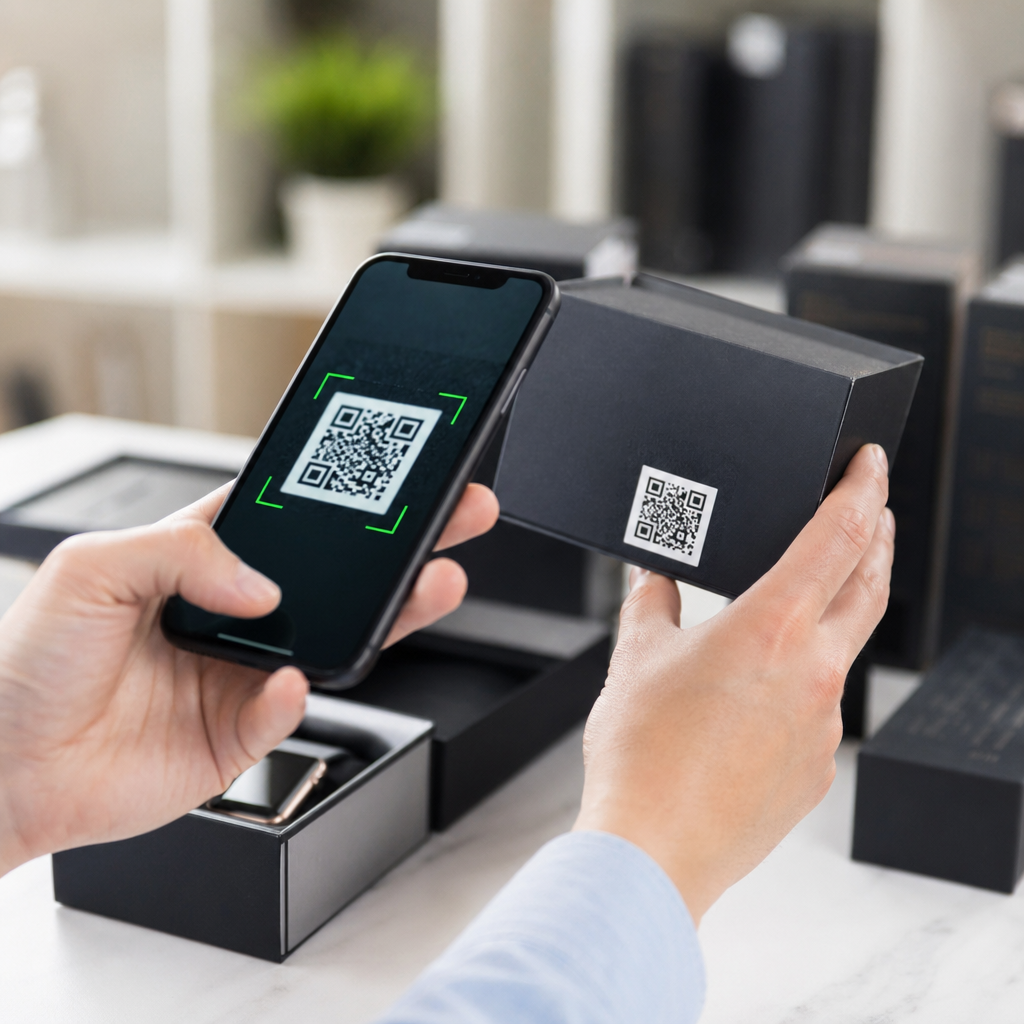
QR codes for product authentication and anti-counterfeiting have moved from a niche packaging feature to a core part of modern brand protection, especially as smart packaging and connected devices reshape how products are verified across the supply chain. In practical terms, product authentication means confirming that an item is genuine, while anti-counterfeiting refers to the methods used to deter, detect, and investigate fake goods before they harm revenue, safety, or trust. A QR code becomes far more powerful in this context when it is serialized, linked to secure cloud records, and connected to packaging sensors, fulfillment systems, and post-purchase verification workflows. I have seen basic static codes fail because they were easy to copy, and I have seen well-designed systems reduce gray-market leakage, improve recall speed, and give customer support teams a reliable proof-of-origin trail. That is why this topic matters: counterfeit trade affects pharmaceuticals, electronics, cosmetics, luxury goods, industrial parts, and food, with direct consequences for compliance, brand equity, and consumer safety.
For companies building a smart packaging program, the QR code is not the entire security strategy; it is the visible access point into a wider authentication architecture. That architecture usually includes unique item identifiers, tamper-evident packaging, secure databases, event logging, mobile scanning interfaces, and sometimes IoT sensors that record temperature, humidity, shock, or seal status. The hub role of this page is to explain how those parts work together, when QR codes are the right tool, where they need reinforcement, and how brands can design a system that serves operations, regulators, retailers, and end users at the same time. If your goal is to stop copied labels, verify chain of custody, power consumer engagement, or prepare packaging for connected product experiences, understanding the interaction between QR codes, smart packaging, and IoT integration is the foundation.
How QR Codes Support Product Authentication
A QR code supports product authentication by linking a physical item to a digital identity that can be checked at multiple points: manufacturing, warehousing, distribution, retail, field service, and consumer scan. The critical distinction is between static and dynamic implementation. A static QR code always resolves to the same content and is easy to duplicate. A secure authentication QR code is usually dynamic or database-backed, tied to a unique serial number, and designed so each scan can be logged with time, location, device fingerprint, and status history. When a consumer scans a genuine serialized code, the server can verify whether that item exists, whether it has already been scanned unusually often, whether the scan geography matches its intended market, and whether the item’s lifecycle events are complete.
In deployment, brands often pair QR codes with standards such as GS1 Digital Link so a single code can carry identification and web-resolvable product data in a structured format. That matters because a code should not only answer “Is this real?” but also support product details, recall notices, instructions, warranty registration, and sustainability disclosures. On a cosmetics carton, for example, the same scan can confirm authenticity, show authorized ingredient information, and flag if a batch was diverted outside approved channels. On industrial machinery spares, the code can validate part legitimacy, show service bulletins, and connect technicians to installation records. This makes the QR code operationally useful, which is important because security tools that add friction without business value are often abandoned.
Why Counterfeit Prevention Requires More Than a Printed Code
A printed code alone does not stop counterfeiting because counterfeiters can copy visible symbols with high fidelity. The real defense comes from the system behind the code and from layered security on the package itself. In audits I have worked on, the weakest programs used one QR design for an entire product line and redirected every scan to a generic landing page. Those programs offered marketing convenience but almost no forensic value. Stronger programs assign each unit a unique identifier, sign or encrypt payload elements where appropriate, validate scans in real time, and trigger exception handling when anomalies appear. For high-risk categories, they also combine overt, covert, and forensic features: holographic elements, microtext, UV inks, tamper seals, secure printing, and laboratory-verifiable taggants.
The threat model matters. A criminal copying luxury handbags operates differently from a gray-market distributor diverting infant formula, and both differ from unauthorized remanufacturing of electronics accessories. Because of that, anti-counterfeiting design should begin with a failure mode review. What happens if codes are photographed in transit? What if factory overrun stock leaks? What if one genuine code is replicated across thousands of fakes? Good systems answer these scenarios with scan velocity rules, geo-fencing, first-scan logic, tamper indicators, and case-level aggregation data. The QR code is the interface, but anti-counterfeiting success depends on data integrity, process discipline, and rapid exception response.
Smart Packaging and IoT Integration Explained
Smart packaging combines physical packaging materials with digital technologies that monitor condition, identify products, or enable interactive services. IoT integration extends that concept by connecting package or shipment data to networked systems that store events and trigger actions. In the context of product authentication, this can include NFC chips, RFID labels, printed sensors, Bluetooth beacons, temperature loggers, and cloud platforms that collect scan and telemetry records. The QR code often acts as the universal human-readable doorway into that environment because any smartphone can scan it without specialized hardware.
Consider a cold-chain pharmaceutical shipment. The outer package may include a serialized QR code linked to a batch record, while embedded temperature sensors report whether storage conditions remained within thresholds defined by the manufacturer and regulators. At receipt, a wholesaler scans the QR code and confirms provenance, serial number status, and excursion history. At the pharmacy, another scan validates that the same item arrived through the expected route and that no unreconciled event suggests tampering or substitution. A consumer can then scan the unit-level code to see safe-use guidance and an authenticity message derived from the same chain-of-custody record. This is where smart packaging and IoT integration become more than convenience features: they create verifiable continuity between the physical item and its digital history.
Core System Components for a Secure Implementation
A workable authentication stack includes six components. First, item serialization assigns every sellable unit a unique identity. Second, a data repository stores master data, lifecycle events, and scan intelligence. Third, packaging execution systems print and verify codes during production, often using vision inspection to reject unreadable or duplicate marks. Fourth, scan interfaces allow internal teams, partners, and consumers to validate items through apps, web flows, or handheld devices. Fifth, analytics detect suspicious patterns such as impossible travel, abnormal scan frequency, and route deviation. Sixth, governance processes define who can commission codes, change records, investigate alerts, and retire identifiers.
Many companies underestimate print quality and verification. QR code performance depends on module size, quiet zone, substrate contrast, curvature, and damage tolerance. ISO/IEC 15415 grading is widely used to assess print quality for two-dimensional symbols, and poor grades directly affect scan success in warehouses and stores. On metalized labels or flexible pouches, I have seen brands improve first-pass readability by adjusting error correction level, ink spread compensation, and placement away from creases and seams. The technical details matter because every failed scan reduces compliance and encourages manual workarounds.
| Component | Purpose | Practical example |
|---|---|---|
| Serialized QR code | Creates a unique identity per unit | Each vitamin bottle receives a distinct code at packaging |
| Cloud verification platform | Checks status and logs scans | Server flags a code scanned in two countries within one day |
| Tamper-evident packaging | Shows visible interference | Seal breaks if a carton is opened and reclosed |
| IoT sensor input | Adds condition or handling evidence | Temperature logger proves a vaccine stayed in range |
| Analytics dashboard | Surfaces anomalies and trends | Brand team sees counterfeit hotspots by region |
Use Cases Across Industries
Pharmaceuticals are one of the clearest use cases because patient safety and regulatory traceability are non-negotiable. In the United States, the Drug Supply Chain Security Act has pushed the industry toward interoperable product tracing, and serialized packaging is now standard for many prescription products. A QR code linked to serial and lot data can help dispensers and patients validate legitimacy, while connected temperature records protect biologics and vaccines. Food and beverage brands use similar methods for premium products vulnerable to refilling, relabeling, or origin fraud. Wine, olive oil, honey, infant formula, and specialty coffee all benefit when an item scan can confirm source, batch, and handling conditions.
Luxury goods and cosmetics focus heavily on customer-facing verification because brand damage from counterfeit products is immediate and visible online. A fashion label can place a secure QR code on the hangtag, inside care labels, or on the box, allowing buyers to confirm authenticity before or after purchase. Cosmetics brands often use codes to verify shades, formulas, expiry windows, and approved markets. In electronics, codes on chargers, batteries, and replacement parts help identify unsafe counterfeit accessories that could overheat or fail. Industrial manufacturers use them to fight fake bearings, valves, filters, and aerospace components, where counterfeit ingress creates warranty costs and serious liability. Across these sectors, the pattern is the same: the code must connect product identity, supply chain events, and user validation in one consistent system.
Implementation Challenges and How to Solve Them
The biggest implementation challenge is not generating QR codes; it is maintaining trustworthy data across many systems and partners. ERP, MES, WMS, packaging lines, third-party logistics providers, and retailer systems often record events differently or at different speeds. If commissioning, shipping, receiving, and decommissioning events are inconsistent, the authentication result becomes unreliable. The solution is disciplined event design, clear ownership, and standards-based identifiers. Companies that map product hierarchies from unit to case to pallet, and reconcile those aggregation relationships at every handoff, are far better at identifying diversion and substitution than companies that only track the consumer-facing unit.
Another challenge is user behavior. Consumers may not understand what a valid result looks like, and field teams may skip scanning if the process feels slow. The interface should therefore be explicit: genuine item confirmed, already scanned, market mismatch, or unable to verify. Do not bury the answer under brand storytelling. For internal operations, scan latency should be low and exception workflows should be simple. If an inspector finds repeated scans from unexpected geographies, there should be a defined process to quarantine stock, pull distribution records, and escalate to legal or channel management. Security also requires privacy discipline. Collecting geolocation and device data can improve detection, but teams must align with GDPR, CCPA, and local notice requirements. Good anti-counterfeiting systems are precise and proportionate, not intrusive by default.
How This Hub Connects the Smart Packaging Subtopic
As a hub within QR code advanced strategies, this page anchors the broader smart packaging and IoT integration subtopic by connecting authentication to adjacent packaging functions. The next layer typically includes item-level serialization strategy, GS1 Digital Link implementation, tamper-evident design, connected cold-chain monitoring, consumer verification UX, and analytics for counterfeit detection. It also extends into packaging sustainability because brands increasingly want one code architecture that can support recycling instructions, digital product passports, and after-sales service without compromising security. Building separate code systems for marketing, compliance, and authentication creates fragmentation; building one governed architecture creates long-term leverage.
The practical takeaway is simple. If you are planning QR codes for product authentication and anti-counterfeiting, start with risk, serialization, and verification logic, then expand into smart packaging and IoT integration where condition monitoring or chain-of-custody evidence adds real value. Choose standards that support interoperability, test print quality under real packaging conditions, and design scan experiences that answer authenticity questions immediately. The brands that succeed are the ones that treat the QR code as a gateway to trusted product data, not as a decorative symbol on the box. Use this hub to map your strategy, prioritize the right supporting technologies, and build an authentication program that protects both customers and the business.
Frequently Asked Questions
How do QR codes help authenticate products and prevent counterfeiting?
QR codes help authenticate products by giving every item, batch, or package a scannable digital identity that can be checked against a secure database. When a manufacturer assigns a unique or serialized QR code to a product, that code can be linked to production records, shipping data, lot numbers, expiration dates, and ownership history. A scan can then confirm whether the code is valid, whether it matches the product being presented, and whether it has already been scanned in ways that suggest duplication or diversion. This is what turns a QR code from a simple label into a practical brand protection tool.
From an anti-counterfeiting perspective, the value comes from verification, traceability, and visibility. Counterfeiters may copy packaging, logos, and even serial numbers, but a properly implemented QR system makes fake goods easier to detect because the code’s status can be checked in real time. If a code appears in the wrong geography, is scanned too many times, or is associated with conflicting supply chain events, the system can flag that activity for investigation. This helps brands identify gray market leakage, unauthorized resellers, cloned labels, and high-risk distribution channels before the damage becomes widespread.
QR codes also improve participation across the supply chain. Inspectors, distributors, retailers, field teams, and consumers can all use the same familiar scan behavior to verify authenticity, which lowers friction compared with specialized hardware. In a strong deployment, the QR code acts as the access point to a broader authentication framework that may include serialization, tamper-evident packaging, mobile verification, cloud-based analytics, and exception monitoring. The result is not just a yes-or-no authenticity check, but an ongoing system for deterrence, detection, and response.
What makes a QR code system secure enough for product authentication?
A secure QR code authentication system depends on much more than the printed code itself. A standard static QR code that simply links to a webpage is easy to copy, so the real security comes from the underlying architecture. Effective systems usually include unique serialized identifiers, encrypted or signed data, protected generation workflows, secure databases, and validation logic that can distinguish normal scans from suspicious ones. In other words, the QR code is the visible layer, but the security resides in how the code is created, managed, and verified throughout the product lifecycle.
Several features make these systems stronger. One is one-to-one serialization, where each product receives its own unique identity rather than sharing a generic code across an entire SKU. Another is dynamic verification, where the backend evaluates scan context such as time, location, scan frequency, channel, and product status. Security can be further improved through tokenization, rotating validation rules, cryptographic signatures, and hidden or layered elements that are difficult to replicate. Some brands also combine visible QR codes with covert or forensic markers, making it harder for counterfeiters to produce convincing copies at scale.
Governance matters just as much as technology. The code issuance process must be tightly controlled so unauthorized parties cannot generate valid identities. Data should be protected against tampering, and scan endpoints should be secured to prevent spoofing or abuse. Brands also need clear rules for what happens when anomalies are detected, including escalation workflows, case management, and coordination with legal, compliance, or channel partners. A secure solution is not defined by whether a code can be scanned, but by whether the entire system can reliably determine authenticity and expose fraudulent activity under real-world conditions.
Can consumers use QR codes to verify whether a product is genuine?
Yes, and that is one of the biggest advantages of QR-based authentication. Consumers already understand how to scan QR codes with their phones, so brands can turn packaging into a direct verification touchpoint without requiring a separate device. After scanning, the customer can be taken to a secure authentication page that confirms whether the item is recognized by the brand and whether the scan pattern appears normal. The experience can be designed to be simple and immediate, which is critical when the goal is building trust at the point of purchase, unboxing, or use.
For consumers, the best verification flows do more than display a generic “valid” message. They often include product-specific details such as model name, color, packaging version, manufacturing date, batch information, or warranty status, allowing the buyer to compare what they see on screen with the item in hand. If the code has already been scanned repeatedly, appears outside its intended market, or fails validation altogether, the system can warn the customer and provide next steps such as contacting support, reporting the seller, or avoiding use of the product. This is especially important in sectors like pharmaceuticals, cosmetics, electronics, automotive parts, and luxury goods, where counterfeit products can create real safety and performance risks.
That said, consumer verification works best when brands educate users on what to expect. People should know where the authentic code is located, what the official verification page looks like, and how to recognize suspicious links or counterfeit packaging tricks. A well-designed authentication page should be mobile friendly, branded, fast, and secure. When implemented thoughtfully, consumer-facing QR verification not only helps identify fake goods, but also strengthens customer confidence, supports post-purchase engagement, and gives brands valuable insight into where and how products are being scanned in the market.
What are the main benefits of using QR codes across the supply chain for anti-counterfeiting?
Using QR codes across the supply chain creates a shared verification framework from manufacturing to distribution to retail and beyond. At the production stage, codes can be assigned to individual products, cartons, or pallets and linked to origin, date, line, and batch data. As goods move through warehouses, logistics hubs, customs checks, retail channels, and service networks, each scan can add a traceable event to the product record. This creates a chain of custody that helps brands confirm that goods are moving through authorized pathways and identify where irregularities begin.
The anti-counterfeiting benefits are substantial. Supply chain scans can reveal missing product, duplicated identities, route deviations, unauthorized redistribution, and market diversion. If the same QR identity appears in multiple places at once, or if a code linked to one product type is found on another, the system can flag a likely cloning or relabeling issue. Brands can also use scan analytics to identify hotspots for suspicious activity, monitor distributor compliance, and focus enforcement resources where counterfeit penetration appears highest. That kind of visibility is difficult to achieve with manual inspection alone.
There are also operational advantages beyond fraud prevention. QR-based traceability can support recalls, inventory accuracy, warranty validation, service history tracking, and regulatory reporting. Because QR codes are relatively inexpensive to print and easy to scan with common devices, they offer a practical bridge between physical products and digital records. In modern smart packaging environments, they can also connect with broader IoT and connected product ecosystems, giving brands a scalable way to combine authentication, traceability, and customer engagement in one infrastructure. For many organizations, that makes QR codes not just a defensive tool, but a strategic asset.
What should brands consider before implementing QR codes for product authentication and anti-counterfeiting?
Brands should begin by defining the specific problem they want to solve, because not all QR code programs are built for the same risk level. Some organizations need consumer-facing authenticity checks for high-value goods, while others need deep supply chain traceability to combat diversion, cloning, or unauthorized resale. The answer affects everything from serialization strategy to packaging design to backend infrastructure. It is important to map product risk, channel complexity, geographic exposure, and regulatory requirements before choosing a solution, because a basic marketing QR code campaign will not provide the protections needed for serious anti-counterfeiting work.
Implementation planning should cover code generation, data management, packaging integration, scanning workflows, and response procedures. Brands need to decide whether codes will be unique per item, batch, or case level; how those identities will be commissioned and stored; and who will be authorized to scan and validate them. Packaging teams must ensure the code is durable, readable, and placed where it supports both usability and tamper resistance. At the same time, legal, compliance, channel operations, customer service, and enforcement teams should be aligned on what happens when suspicious scans are detected. Without that operational follow-through, even a technically sound system can fail to deliver meaningful brand protection outcomes.
Finally, brands should think long term. The most successful authentication programs are designed as scalable platforms rather than one-off packaging projects. That means choosing technology that can integrate with ERP, serialization, warehouse, CRM, and analytics systems; support global volume; and adapt as threats evolve. Measurement is also essential: teams should track scan rates, anomaly patterns, counterfeit incident reduction, consumer engagement, and channel intelligence over time. When implemented strategically, QR codes can become a central component of a broader brand protection ecosystem that improves trust, insight, and control across the full product journey.