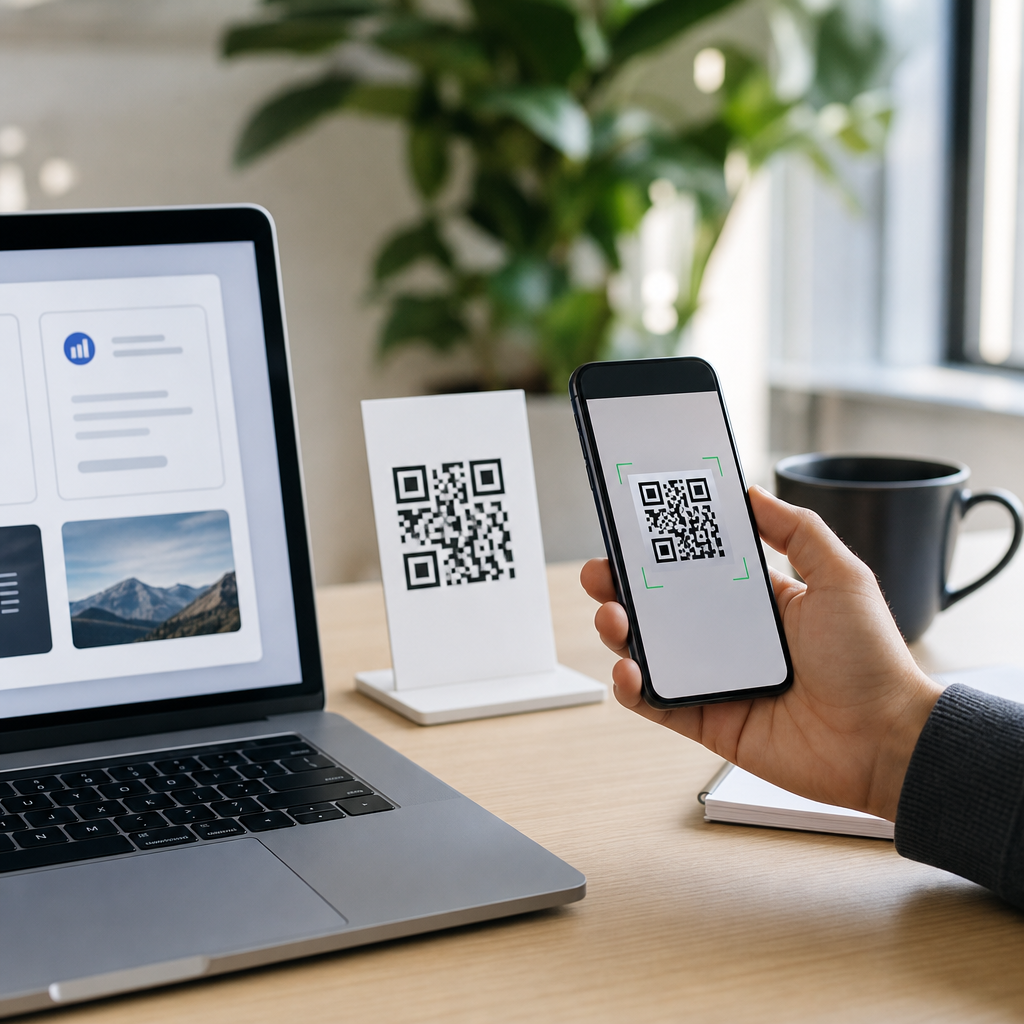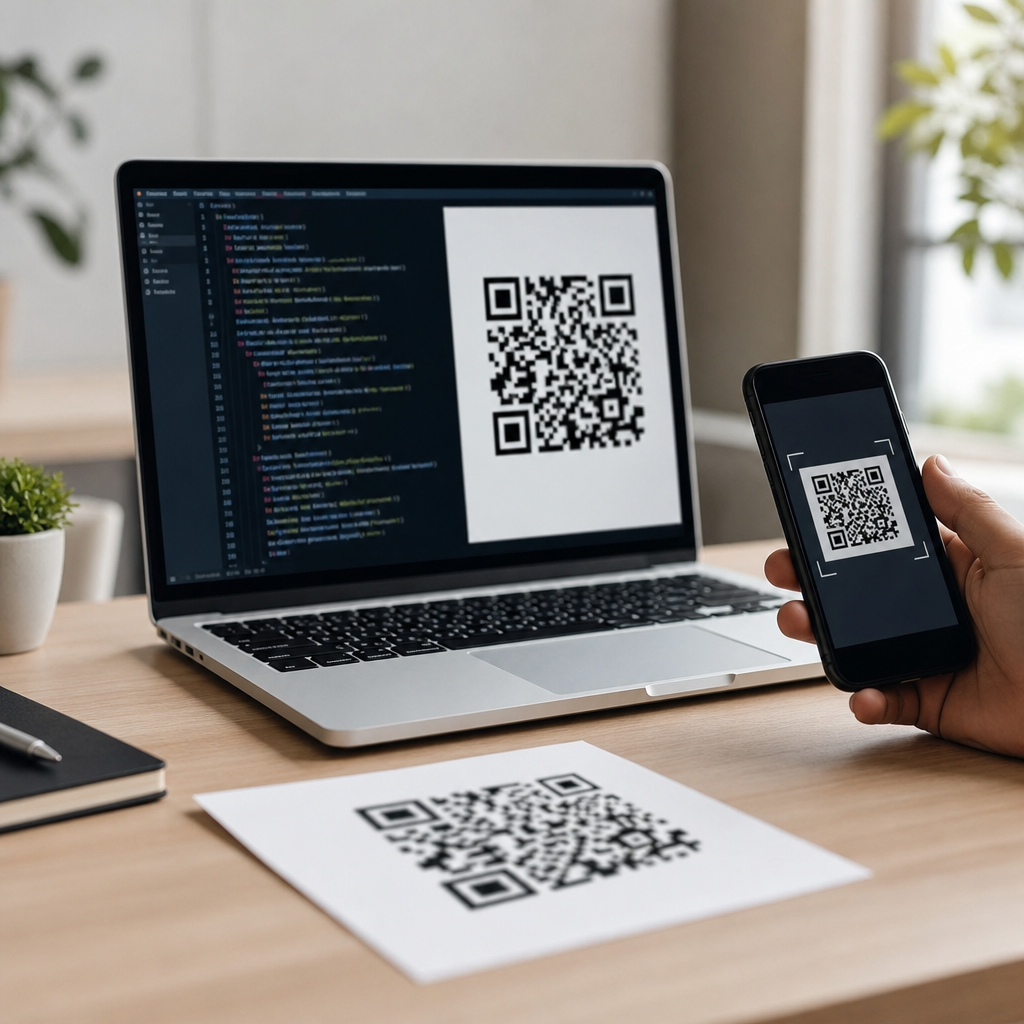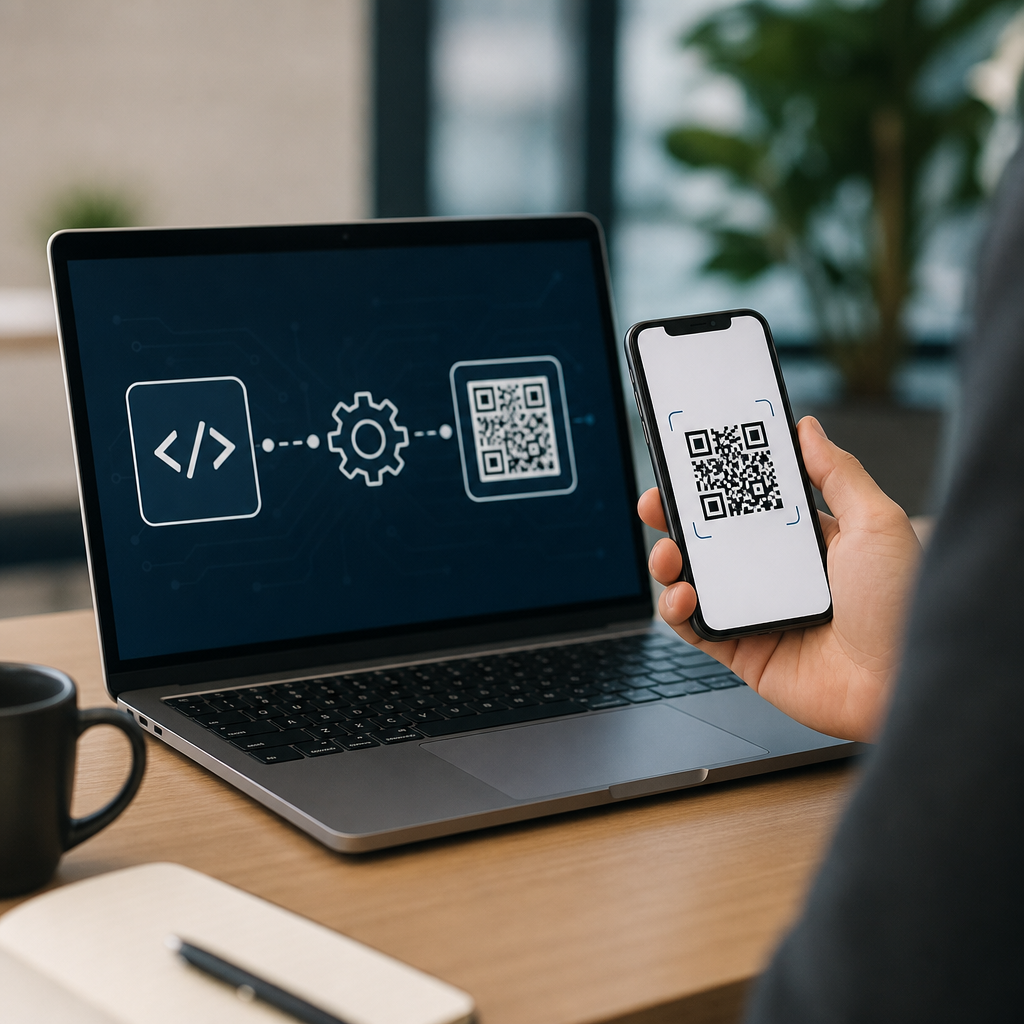

Developers use QR codes in applications to bridge physical and digital experiences with a simple scan, turning URLs, credentials, payments, tickets, and device actions into machine-readable data. In software terms, a QR code is a two-dimensional matrix barcode defined by ISO/IEC 18004, capable of storing text, identifiers, and structured payloads with error correction that lets scanners recover data even when part of the symbol is damaged. I have implemented QR code features in customer portals, event apps, warehouse tools, and device onboarding flows, and the pattern is consistent: when the right payload, image settings, and validation rules are chosen, QR codes reduce friction dramatically. This matters because mobile cameras are now universal, users expect instant handoffs between screens and real-world objects, and businesses need low-cost, interoperable ways to connect apps, people, and devices without custom hardware. For teams working on QR code creation and tools, the developer layer is where strategy becomes product: APIs generate codes at scale, libraries handle encoding and decoding, and operational controls determine whether a QR feature is secure, reliable, and measurable.
API and developer tools sit at the center of modern QR implementations. A QR code API typically creates images or returns vector output from application data, while decoding libraries read codes from uploaded files, live camera streams, or device frames. Developer tools include SDKs, testing utilities, analytics dashboards, image processors, and signing or token services that protect sensitive payloads. The key design question is not simply how to generate a code, but what the scan should do, how the payload should age, and how the app should handle edge cases such as offline devices, poor print quality, localization, and permissioning. Static QR codes contain the final destination or data directly, making them easy to create but hard to change. Dynamic QR codes usually encode a short redirect URL or identifier that points to server-side logic, allowing destination updates, scan tracking, A/B routing, expiration windows, and abuse controls. For developers building reusable QR code creation and tools workflows, understanding those tradeoffs is the difference between a proof of concept and a maintainable platform capability.
Core application use cases for QR codes
Developers use QR codes in applications across four broad patterns: linking, authentication, transactions, and operations. Linking is the most familiar case. An app generates a code that opens a landing page, deep links into a mobile app, downloads a file, or starts a support flow. Retailers place product-specific codes on packaging for manuals and warranty registration. SaaS teams use QR codes on desktop screens to move users into mobile setup. Media companies use them in print ads and livestreams to connect audiences to subscription pages. In each case, the code is not the feature by itself; it is the transport mechanism that reduces typing and copy-paste friction.
Authentication and device pairing are where developer tooling becomes more specialized. Many teams now implement desktop login by showing a session-bound QR code that the mobile app scans. The phone authenticates with biometrics and confirms the session on the server, similar to flows used by WhatsApp Web and Slack device sign-ins. This approach avoids password entry on shared machines and keeps credentials off the browser. In IoT environments, QR codes are often printed on devices or shown during provisioning to embed a serial number, bootstrap token, or setup URL. Matter smart home onboarding, for example, relies on standardized QR payloads to simplify secure device commissioning. In my own implementations, pairing flows improved completion rates most when the QR encoded only a short-lived reference token, not raw secrets.
Transactions and operational workflows are equally important. Payment apps use merchant-presented and customer-presented QR codes to initiate transfers, especially in regions where EMVCo-compatible QR payments are common. Event platforms issue QR tickets and validate them at the gate, often combining encrypted identifiers with server lookups to prevent reuse. Warehouses use codes for pick lists, inventory movements, and asset management because camera-based scanning is cheaper to deploy than dedicated laser hardware in many environments. Healthcare applications use QR codes on wristbands, medication packaging, and lab samples to reduce manual entry errors, though these deployments require careful privacy design and often strict policy controls around what data may be embedded directly in the symbol.
How QR code APIs and libraries fit into an application stack
A typical implementation includes a generation layer, a delivery layer, a scan layer, and a backend decision layer. The generation layer creates PNG, SVG, EPS, or PDF output from validated payloads. Common libraries include ZXing, qrcode.js, QRCode Monkey APIs, python-qrcode, and node-qrcode. On mobile, native frameworks may provide scanning support through camera APIs, while cross-platform apps often use wrappers over ZXing or ML Kit. The delivery layer determines where the image appears: in email, on invoices, inside app screens, or in printed labels. The scan layer captures images, detects finder patterns, decodes the symbol, and passes the payload to app logic. The backend decision layer resolves short links, verifies signatures, checks expiration rules, records analytics, and returns the next action.
Cloud QR code APIs are useful when teams need centralized templates, brand controls, and high-volume generation without managing rendering infrastructure. They can return consistent output sizes, ECC levels, quiet zones, and logo placement. Self-hosted libraries are often preferable when latency, cost predictability, data residency, or payload sensitivity matter. In regulated environments, I usually recommend generating codes inside the application boundary and storing only opaque identifiers in the code. That model reduces exposure if screenshots, printed labels, or cached images leak. It also simplifies revocation because the server can invalidate the mapped resource without changing the printed code if the implementation uses dynamic references.
| Implementation choice | Best for | Main advantage | Primary tradeoff |
|---|---|---|---|
| Static QR code | Permanent public URLs, simple downloads | No backend dependency after creation | Cannot change destination or track scans reliably |
| Dynamic QR code | Campaigns, tickets, onboarding, analytics | Editable destination and measurable scans | Requires redirect service and governance |
| Third-party QR API | Fast rollout, branded templates, noncritical data | Low operational overhead | Vendor dependence and possible data exposure |
| Self-hosted library | Secure apps, custom flows, high-volume generation | Full control over payloads and rendering | More engineering and maintenance effort |
Payload design, format choices, and interoperability
The payload is the most important engineering decision because it determines interoperability, security posture, and future flexibility. For broad compatibility, plain HTTPS URLs remain the safest default. Camera apps and scanners recognize them consistently across iOS, Android, and dedicated devices. Structured payloads are useful when a specific client app will parse them: Wi-Fi network credentials, vCard contact data, calendar events, geolocation, SMS intents, and one-time setup strings. Developers should avoid placing sensitive personal data directly in the QR code unless the use case explicitly requires offline readability and policy allows it. A code can be photographed, copied, forwarded, and decoded by anyone with a scanner, so embedded secrets should be treated as exposed data.
Capacity and readability depend on encoding mode, version, error correction level, and print conditions. QR codes support numeric, alphanumeric, byte, and kanji modes, with four error correction levels: L, M, Q, and H. Higher correction improves resilience to damage or logo overlays but reduces capacity and can increase symbol density, making scans harder on low-quality cameras. In production, I favor shorter payloads and higher contrast over clever compression tricks. A short dynamic URL generally scans faster and survives real-world conditions better than a dense block of embedded JSON. Interoperability also improves when developers preserve the quiet zone around the symbol, avoid low-contrast brand colors, and test both dark-on-light and inverted schemes only when scanner support is confirmed.
When teams need cross-platform reliability, standards should guide implementation. For payments, EMVCo QR specifications define data objects used in many markets. For device onboarding, vendor ecosystems may publish schema requirements and checksum rules. For identity or ticketing, signed tokens are often preferable to raw database IDs because they allow integrity checks before any server call. However, token size matters. JSON Web Tokens can become too large for graceful scanning if overloaded with claims. Compact opaque IDs, PASETO where appropriate, or short signed references often produce better scanning performance and simpler revocation models. The rule is straightforward: keep payloads as small as possible, as standardized as possible, and as disposable as the business process allows.
Security, privacy, and abuse prevention in QR code applications
QR codes introduce specific security risks because users cannot inspect the destination easily before scanning, and malicious actors can replace or overlay codes in physical environments. Developers should assume that every scan entry point is a phishing surface and build defenses accordingly. For web redirects, enforce allowlists, HTTPS-only destinations, HSTS, and safe browsing checks where feasible. For login flows, bind the QR code to a server session, expire it quickly, require explicit confirmation on the trusted device, and record the device, IP, and timestamp for anomaly review. For tickets or coupons, use signed identifiers and one-time redemption logic to block replay attacks. If the code grants access to anything valuable, the scan event must be authenticated or cryptographically verifiable.
Privacy design is just as important. Analytics from dynamic QR codes can reveal location, campaign attribution, device metadata, and time of use. That data may be useful, but collection should align with consent requirements and internal retention policies. In healthcare, education, and employment contexts, embedding names, account numbers, or health data directly in the symbol is usually a poor choice. Use a pointer to secured records instead. Even in less regulated products, public screenshots can spread codes far beyond the intended audience, so the safest pattern is to encode an identifier that has a narrow scope, short lifetime, and revocation path. From experience, the strongest QR features are not the ones with the most data in the symbol; they are the ones that treat the symbol as a temporary key into controlled server logic.
Performance, testing, analytics, and developer workflow
Reliable QR features come from disciplined testing rather than from generation alone. Developers should test scan performance across different camera qualities, screen brightness levels, print sizes, glare conditions, and distances. A code that works perfectly on a flagship phone may fail on an older Android device with a weak autofocus system. Automated image-based tests can verify dimensions, margin, format, and decodability after template changes. Manual test matrices should include dark mode screens, email clients that compress images, PDF exports, and thermal printers that introduce banding. If logos are embedded in the symbol, test at multiple error correction levels instead of assuming the design is safe.
Analytics should measure outcomes, not just scans. The most useful events include code generated, code delivered, first scan, unique scanner count, destination resolved, conversion completed, and failure reason. For operational systems, scan latency and decode success rate matter as much as raw volume. Redirect services can log user agent, timestamp, country, referrer context, and campaign parameters, but these signals should be normalized and governed carefully. In growth use cases, dynamic routing enables experiments such as sending iOS users to the App Store, Android users to Google Play, and desktop users to a fallback page. In support use cases, a QR on hardware can pass serial context into a troubleshooting form, saving several minutes per case. Those are measurable productivity gains, and they justify QR investments far better than vanity metrics.
For teams building a QR code creation and tools hub, the developer workflow should include reusable modules and clear ownership. Define a payload schema registry, centralize generation helpers, standardize image sizes for common placements, and expose a service for short-lived token issuance. Maintain documentation on quiet zones, minimum print dimensions, and approved color ranges. Add observability so developers can trace scan-to-resolution paths when users report failures. If multiple products will use QR features, create internal packages rather than letting each team choose incompatible libraries and formats. Consistency reduces support burden and improves user trust because the scan experience behaves the same way across applications.
How developers use QR codes in applications ultimately comes down to disciplined design choices that connect convenience with control. The strongest implementations start with the user action that should happen after the scan, then work backward to select the smallest safe payload, the right generation method, and the right validation logic. Across login systems, payments, ticketing, packaging, support, and device onboarding, QR codes work best when they are dynamic where change is likely, static only where permanence is acceptable, and always tested in the messy conditions of real devices and real environments. API and developer tools make that possible by turning QR creation, decoding, routing, analytics, and security into reusable application capabilities rather than one-off features. If you are building out a QR Code Creation & Tools program, treat this page as your hub: define standards, choose your libraries deliberately, document your payload patterns, and start with one high-value flow you can measure end to end.
Frequently Asked Questions
How do developers use QR codes in applications?
Developers use QR codes in applications to connect a physical object, printed surface, or on-screen prompt with a digital action that can be completed in seconds. In practical terms, a QR code can encode a URL, login token, payment request, ticket identifier, device pairing string, contact record, or other structured payload that a scanner can interpret immediately. This makes QR codes especially useful in customer portals, mobile apps, web platforms, kiosks, event systems, and support workflows where reducing manual typing improves speed and accuracy.
In modern software design, QR codes often serve as a lightweight bridge between systems. A developer might generate a code that sends a user to a secure onboarding page, links a customer to an invoice, launches app-based authentication, or opens a specific section of a portal with prefilled context. They are also widely used for check-in flows, inventory management, restaurant ordering, passwordless access, Wi-Fi sharing, and device setup. Because nearly every smartphone can scan them, QR codes provide a low-friction interface that does not require custom hardware in many use cases.
From an implementation standpoint, developers usually create the QR code by taking a payload, formatting it correctly, and rendering it through a library or API. The application may also store metadata such as expiration times, user identifiers, scan status, or redirect rules. That is why QR code features are often more than just image generation. In a well-built application, they are tied to backend validation, analytics, permission checks, and lifecycle management. When done properly, they transform a simple scan into a reliable product feature that improves usability and creates a smoother physical-to-digital experience.
What information can a QR code store, and how much data should developers put into it?
A QR code can store plain text, web addresses, numeric values, email data, phone numbers, SMS instructions, geographic coordinates, calendar information, Wi-Fi credentials, and many types of structured application data. Under the ISO/IEC 18004 standard, a QR code is a two-dimensional matrix barcode designed to encode machine-readable content efficiently while using built-in error correction. That means a scanner can still recover the contents even if part of the symbol is smudged, partially blocked, or printed on a surface that is not perfect.
Even though QR codes can hold a surprising amount of data, developers should usually keep the payload as small as possible. The more data encoded directly into the symbol, the denser the pattern becomes, and dense codes are harder to scan quickly, especially on lower-quality screens or in poor lighting. For most application workflows, the best practice is to store a short URL, token, or identifier in the QR code and let the backend resolve that value into the full business logic. This approach improves scanning reliability, makes the code visually cleaner, and gives developers the ability to update behavior server-side without reissuing printed materials.
There are also architectural reasons to avoid overloading the code itself. Embedding sensitive or verbose data directly into a QR code can create security, privacy, and versioning problems. If a payload contains credentials, personal information, or business-critical fields, anyone who scans the code may be able to inspect them unless strong protections are in place. For that reason, many developers generate short-lived references instead of storing the underlying data in raw form. In production environments, the most effective QR codes are usually the ones that encode only what is necessary for the scan to initiate a secure, validated, and controlled application flow.
Are QR codes secure enough for logins, payments, and customer portal features?
QR codes themselves are not inherently secure or insecure; they are simply a method of encoding data. Security depends on what the code contains, how the application validates it, whether the payload expires, and what protections exist after the scan occurs. For example, a QR code used for login might contain a short-lived session challenge rather than a reusable credential. A code for payments may reference a signed transaction request that the server verifies before approval. In customer portals, developers often use QR codes as an entry point to a secure workflow rather than as the final authority for access.
For sensitive use cases, strong implementation practices matter. Developers should prefer time-limited tokens, one-time-use identifiers, signed payloads, HTTPS-only destinations, and server-side validation before any privileged action is completed. If the QR code launches authentication, the application should still confirm the user identity through proper session handling, device trust checks, or multifactor verification where appropriate. If the code is used for payments or account management, audit logging, replay protection, expiration windows, and rate limiting are all important controls. These are the same principles that apply to secure API design, just adapted to a scan-based interaction.
It is also important to protect users from malicious or tampered codes. In many environments, especially printed ones, a bad actor can replace a legitimate QR code with a fraudulent one. Applications can reduce risk by clearly displaying trusted domains, validating destination patterns, warning users about unknown redirects, and designing branded flows that are difficult to spoof. In short, QR codes are absolutely suitable for login, payment, and portal scenarios when they are part of a thoughtfully designed security model. The code should be treated as a transport mechanism, while trust is enforced by the surrounding application architecture.
What are the most important technical considerations when implementing QR code generation and scanning?
When implementing QR code features, developers need to think beyond simply producing an image. The first major consideration is payload design. A clean, compact payload improves scan performance and keeps the symbol readable across devices and print conditions. The second is output quality. QR codes should be rendered at an appropriate size with sufficient contrast, proper quiet zones around the edges, and a format suitable for the target use case, such as SVG for crisp scaling on the web or high-resolution PNG for print materials. Small mistakes in spacing, sizing, or color choice can significantly reduce scan reliability.
Scanning conditions are equally important. A code that works perfectly on a laptop screen may fail when printed on glossy packaging or displayed on a dim mobile device. Developers should test across different screen brightness levels, camera qualities, distances, and environmental lighting. Error correction level also matters. Higher error correction can improve resilience to partial damage or branding overlays, but it increases density, so there is a tradeoff. If the application uses custom-styled QR codes with logos or brand colors, extensive real-world testing is essential to make sure aesthetics do not compromise functionality.
On the backend, developers should design for traceability and control. That includes associating codes with records, managing expiration and revocation, detecting duplicate scans if necessary, and logging scan events for analytics or security review. In customer portals and enterprise applications, developers also need to account for authorization logic, localization of landing pages, accessibility of surrounding instructions, and fallback options for users whose devices cannot scan codes easily. A strong QR code implementation is not just technically correct at the barcode level; it is integrated into the broader product experience, monitored in production, and robust under real user conditions.
Why are QR codes so effective for bridging physical and digital experiences in modern applications?
QR codes are effective because they reduce friction at the exact point where users often abandon a task: manual transfer of information between the physical world and a digital system. Instead of typing a long URL, entering a serial number, rekeying credentials, or searching for a resource, the user scans once and lands directly in the intended workflow. That simplicity is powerful in applications involving printed materials, receipts, packaging, kiosks, event badges, invoices, product labels, support documents, or device screens. Developers value QR codes because they create a fast handoff between contexts without requiring complicated user training.
They are also highly versatile. A single application can use QR codes for onboarding, account recovery, smart links, payment acceptance, ticket validation, device pairing, file sharing, and customer self-service. In customer portals specifically, QR codes can streamline actions like verifying identity, opening support cases tied to a product, jumping from paper correspondence to an authenticated portal page, or letting a desktop session connect smoothly with a mobile experience. Because scanning is now a familiar behavior for users, the interaction feels natural, which increases adoption and lowers the effort needed to complete important tasks.
From a product and engineering perspective, QR codes offer a practical balance of standardization, compatibility, and low implementation overhead. They are based on a well-established specification, supported by mature libraries, and readable by common smartphone cameras without specialized peripherals. That means developers can build high-impact features quickly while still maintaining flexibility in how the underlying application handles the scanned data. In other words, QR codes succeed not because they are flashy, but because they solve a real interface problem elegantly: they turn machine-readable data into an immediate, user-friendly action that connects physical touchpoints with digital functionality.