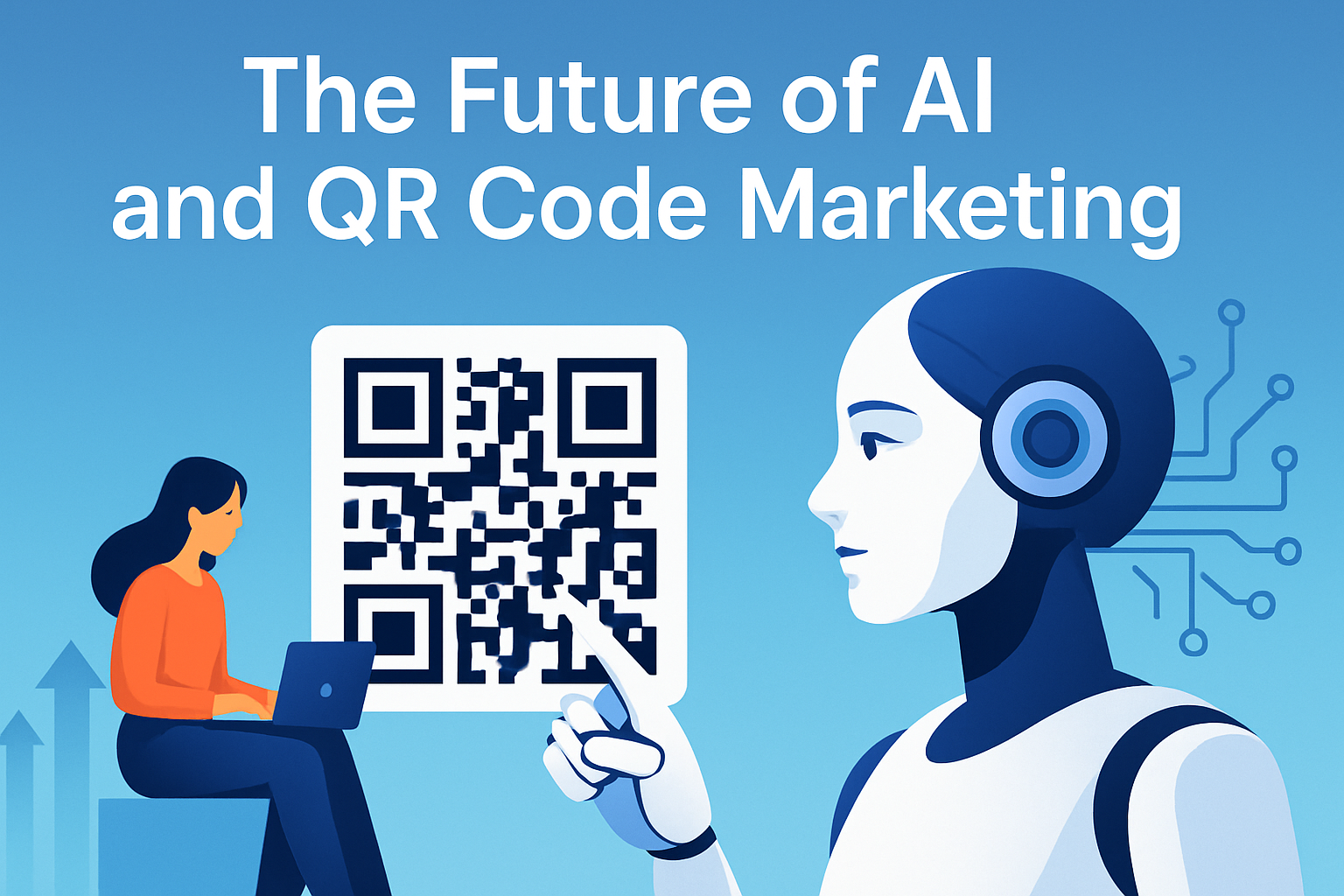
Artificial intelligence is changing QR code marketing from a static shortcut into a responsive, data-driven channel that can personalize offers, measure intent, and adapt experiences in real time. In practical terms, AI refers to software systems that identify patterns, predict outcomes, generate content, and automate decisions from data. QR code marketing refers to the use of scannable codes on packaging, print, signage, direct mail, displays, and products to connect offline attention with digital action. Put together, AI and QR codes create a bridge between physical touchpoints and personalized digital journeys. That matters because customer expectations have changed: people want faster access, relevant content, and less friction, while brands need clearer attribution, lower acquisition costs, and better first-party data. After working on campaigns across retail, events, and local service businesses, I have seen the same pattern repeatedly. Basic QR codes can drive traffic, but intelligent QR experiences drive qualified engagement. A restaurant can route lunchtime scanners to a menu, evening scanners to reservations, and repeat visitors to loyalty rewards. A packaging campaign can identify geography, device type, and historical scan behavior, then serve tailored product education or cross-sell recommendations. The future of AI and QR code marketing is not about novelty. It is about making each scan more useful for the customer and more measurable for the marketer.
Why AI changes the role of QR codes
For years, many brands treated QR codes as fixed links. A code sent every user to the same page, regardless of where the scan happened, who scanned it, or what the business wanted to learn. AI changes that model by adding decision-making between the scan and the destination. Instead of one destination, a dynamic QR code can trigger rules and predictive models that select the most relevant landing page, creative variation, chatbot flow, or offer. This is especially powerful when combined with contextual data such as location, time of day, operating system, referral source, language settings, purchase history, and campaign metadata.
In direct response terms, the biggest benefit is improved conversion efficiency. If a consumer scans a QR code on a retail shelf, the business can use AI to infer likely intent from context. Someone scanning in-store may need a comparison chart, inventory status, or coupon. Someone scanning from a catalog at home may need social proof, shipping details, or a product quiz. AI helps identify which experience is most likely to move the person to the next step. In my own campaign work, this has reduced bounce rates because the scan resolves the user’s immediate question rather than dumping them onto a generic homepage.
AI also improves operational speed. Marketers no longer need to manually build dozens of landing pages for every micro-segment before launch. With the right workflow, AI can help generate copy variants, image suggestions, localization, FAQ content, and testing hypotheses. That shortens production cycles while still allowing human review for brand, legal, and accessibility standards. The code remains the same on the physical asset, but the intelligence behind it evolves continuously.
How personalization works in AI QR campaigns
Personalization in QR code marketing works by combining identity signals, behavioral signals, and context. Identity can include known customer data from a CRM, loyalty program, or email click, though privacy rules require clear consent and lawful handling. Behavioral signals include previous scans, pages viewed, products purchased, and engagement depth. Context includes device, browser language, scan location, timestamp, and campaign source. AI systems score these inputs and choose the best content or next action.
A strong example is packaging. A food brand can place one dynamic QR code on every box, then personalize by market and customer stage. First-time scanners might see ingredient sourcing, how-to-use video content, and retailer links. Returning scanners could see recipes based on prior engagement. Customers in regions with warmer weather might receive grilling ideas, while customers in colder regions might see comfort-food pairings. The packaging does not change, but the experience does. That lowers print complexity while increasing relevance.
Another example is events. A trade show exhibitor can use AI-enhanced QR codes on booth signage, badges, and demo stations. A first scan can ask one qualifying question. Based on the answer, the system can route a prospect to a product explainer, ROI calculator, case study, or booking page. Sales teams then receive higher-quality lead data because scans reflect actual interest patterns, not just badge captures. This is one reason event marketers are shifting from passive brochure downloads to guided post-scan journeys.
Core use cases brands should prioritize now
The most valuable use cases are not the most futuristic ones. They are the ones that improve a specific business metric today. Start with product education, lead qualification, loyalty, customer support, and post-purchase engagement. These are areas where QR codes already fit naturally and AI adds measurable lift.
For product education, AI can tailor content depth. A novice gets a plain-language overview, while an expert sees technical specifications, compatibility details, or implementation notes. For lead qualification, AI can ask adaptive questions after the scan and shorten forms based on likely buying stage. For loyalty, a code on packaging can recognize repeat scans and offer points, streaks, or replenishment reminders. For customer support, AI can route the user to the most relevant troubleshooting guide or conversational assistant rather than forcing a search through a knowledge base. For post-purchase engagement, brands can deliver onboarding, warranty registration, accessories, and referral offers in the right order.
| Use case | How AI improves the QR experience | Primary metric |
|---|---|---|
| Packaging | Adapts content by location, repeat scans, and product interest | Repeat engagement rate |
| Retail signage | Serves comparison pages, stock info, or coupons based on context | Assisted conversion rate |
| Events | Qualifies leads and routes them to tailored follow-up journeys | Sales accepted leads |
| Direct mail | Matches creative and offers to audience segments automatically | Response rate |
| Support | Predicts issue category and surfaces the fastest resolution path | Case deflection rate |
Healthcare, education, hospitality, and real estate can all apply the same principles. A clinic can use QR codes for appointment prep and FAQs, but personalize content by service line. A university can route prospective students to programs based on declared interests. A hotel can use one in-room code for multilingual concierge requests, dining offers, and local recommendations. A real estate team can personalize property follow-up based on the listing scanned, price band, and prior site behavior.
Data, measurement, and first-party insight
One reason QR codes remain strategically important is that they create a direct first-party interaction. When someone scans, the business can measure time, place, device, dwell behavior, completion actions, and downstream conversions. AI turns that raw data into insight by clustering users, predicting intent, and identifying which combinations of context and content produce the best outcomes. This is especially useful as marketers face tighter privacy controls, weaker third-party identifiers, and more fragmented customer journeys.
The right measurement model starts with clear events. At minimum, track scans, unique scanners, landing page views, clicks, scroll depth, form starts, form completions, purchases, bookings, and repeat scans. Then layer in campaign metadata such as placement, creative version, channel, geography, and audience segment. Tools such as Google Analytics 4, Adobe Analytics, Mixpanel, Segment, and customer data platforms can help structure this data. Many dynamic QR platforms also provide native analytics, but serious teams should push key events into their broader measurement stack for attribution and lifecycle analysis.
AI helps answer questions marketers actually care about: Which offline placements generate the highest-value customers? Which scan contexts indicate immediate purchase intent? Which offer should appear for a second scan versus a fifth scan? Which users need education before conversion, and which need urgency? Instead of reporting only total scan volume, AI-supported analysis can reveal which scans matter.
Technology stack and implementation choices
A modern AI QR code marketing stack usually includes five layers: a dynamic QR code platform, a destination experience layer, analytics, customer data, and an AI decision layer. The dynamic QR platform manages redirects and scan tracking. The destination layer can be a landing page builder, ecommerce system, app deep link, chatbot, or mobile web experience. Analytics tracks behavior. Customer data systems unify identities and consent. The AI layer handles recommendations, scoring, segmentation, content generation, and experimentation.
Common tools vary by company size. Smaller teams may use platforms like Bitly, Uniqode, Flowcode, or Beaconstac for dynamic QR management, plus a CMS and GA4. Larger teams often connect Salesforce, HubSpot, Braze, Klaviyo, or Adobe Experience Cloud to personalize follow-up. Recommendation engines, large language models, and testing tools then select the right content. The important point is not to overbuild. Start with one high-intent use case, one dynamic code structure, one destination template, and one feedback loop. Complexity should follow evidence, not enthusiasm.
Implementation quality matters more than tool count. Redirect speed, mobile page performance, accessibility, and link governance are non-negotiable. If the landing page loads slowly or the code points to outdated content, AI will not save the experience. I advise teams to establish naming conventions, UTM standards, version control, and ownership before scaling. A clean operational foundation is what allows AI to improve results consistently.
Privacy, ethics, and trust in personalized QR experiences
Personalization only works when users trust it. That means being clear about what is being collected, why it is used, and how people can control it. Regulations such as GDPR and CCPA require lawful processing, disclosure, and user rights management. Even where regulations are less strict, trust is a commercial requirement. If a QR experience feels intrusive or manipulative, conversion gains will be short lived.
The practical rule is simple: collect what you need, explain it clearly, and avoid making sensitive inferences without consent. Anonymous contextual personalization, such as language-based routing or location-specific store information, is usually lower risk than combining scans with identifiable customer records. If you do connect scans to CRM profiles, the value exchange should be obvious, such as faster support, loyalty benefits, or relevant replenishment reminders.
Bias and hallucination are also real concerns when generative systems create post-scan content. Human review should remain part of the workflow for regulated industries, pricing, health claims, legal statements, and safety information. Trust grows when the experience is accurate, useful, and respectful. Brands that get this right will outperform those that chase personalization without governance.
What the future looks like for AI and QR code marketing
Over the next few years, QR code marketing will become more conversational, predictive, and embedded across the customer lifecycle. The code itself will remain simple, but the destination will act more like an intelligent service layer. More scans will open guided assistants, product advisors, multilingual support flows, and adaptive commerce pages rather than static websites. Computer vision and on-device AI will also improve what happens before and after the scan, from detecting product context to powering faster app experiences.
Expect tighter integration with loyalty systems, digital wallets, retail media, and in-store analytics. A scan on packaging may trigger a personalized refill reminder weeks later. A scan in a store aisle may influence the ad creative someone sees later on a retail network, using consented first-party data. B2B marketers will use QR codes at events and in sales collateral to feed account-based programs with richer intent signals. Small businesses will benefit too, because AI tools are becoming cheaper and easier to deploy through mainstream marketing platforms.
The winning strategy is not to ask whether QR codes or AI matter. They already do. The better question is where intelligent scanning can remove friction, answer customer questions faster, and generate measurable business value. Start with dynamic QR codes, build a useful mobile destination, connect analytics, and test one layer of personalization at a time. Done well, AI and QR code marketing turn every physical touchpoint into a smarter digital moment. Audit your current QR placements, identify one high-intent journey to personalize, and build from there with discipline.
Frequently Asked Questions
1. How is AI changing the role of QR codes in marketing?
AI is transforming QR codes from simple scan-to-link tools into intelligent marketing touchpoints. Traditionally, a QR code sent every user to the same destination, regardless of who scanned it, when they scanned it, or what they were likely to do next. With AI layered into the process, brands can now use scan data, location, device type, time of day, past engagement, and behavioral patterns to deliver more relevant experiences. That could mean showing different landing pages to different audiences, recommending products based on likely intent, or adapting messaging in real time to improve conversions.
Just as importantly, AI helps marketers interpret what scan activity actually means. Instead of only counting total scans, AI can identify patterns such as which placements drive high-intent traffic, which audiences are most likely to purchase after scanning, and which offers are underperforming. This makes QR code marketing far more strategic. Rather than acting as a passive bridge between offline and online channels, the QR code becomes part of a responsive, data-driven system that can continuously learn and improve campaign performance.
2. What are the biggest benefits of combining AI with QR code marketing?
The biggest benefit is relevance. AI allows marketers to move beyond one-size-fits-all campaigns and create scan experiences that reflect user context and likely intent. For example, someone scanning a code on retail packaging may be shown product education, reviews, or replenishment offers, while someone scanning a code from direct mail may be routed to a personalized promotion or lead capture page. That level of targeting can improve engagement, reduce friction, and increase the likelihood of conversion.
Another major advantage is optimization. AI can analyze large volumes of campaign data much faster than manual reporting methods, helping marketers understand which creative assets, placement strategies, and calls to action generate the strongest results. It can also support predictive decision-making, such as forecasting which scans are most likely to become sales or identifying when a campaign needs adjustment before performance drops significantly. In addition, AI can automate content creation, testing, audience segmentation, and follow-up workflows, making QR campaigns more efficient to manage at scale. Together, these benefits make QR code marketing smarter, more measurable, and more adaptable across channels.
3. Can AI-powered QR code campaigns deliver personalized experiences in real time?
Yes, and this is one of the most important developments shaping the future of QR code marketing. When a user scans a QR code, AI systems can evaluate available signals in real time and determine the most appropriate experience to serve. Depending on the campaign setup, this might include tailoring the destination page by geography, language, device, referral source, product category, previous interaction history, or stage in the buyer journey. A single printed QR code can therefore support many different experiences without needing to be reprinted.
Real-time personalization is especially valuable because it connects offline intent with digital responsiveness. A person scanning a code on a store shelf may need different information than someone scanning from event signage or product packaging at home. AI can help match the content to that moment, whether the goal is education, purchase, registration, support, or retention. Over time, machine learning models can improve these decisions by identifying which experiences perform best for specific user segments. The result is a more helpful user journey and a stronger return on marketing investment, provided brands handle data responsibly and make the experience transparent and useful.
4. What data can AI analyze from QR code scans, and how does that improve campaign performance?
AI can analyze a wide range of data points connected to QR code interactions. Common examples include scan volume, time and date of scan, device type, operating system, approximate location, referral source, landing page behavior, repeat scans, conversion events, and post-scan actions such as purchases, sign-ups, downloads, or video views. When integrated with broader marketing platforms, AI may also connect scan behavior to customer segments, CRM records, inventory data, ad exposure, email engagement, and in-store activity. This creates a much more complete picture of how offline media contributes to digital outcomes.
The performance benefit comes from turning raw activity into actionable insight. AI can detect which QR placements attract high-quality traffic, which audiences are most engaged, and where users are dropping off after the scan. It can surface trends that human teams might miss, such as differences in behavior by region, timing, or message format. With that information, marketers can refine creative, adjust offers, improve landing pages, and reallocate budget toward the highest-performing channels. In advanced programs, AI can even recommend next-best actions automatically. This makes QR code marketing not just trackable, but continuously optimizable in a way that aligns with modern performance marketing standards.
5. What should brands consider before investing in the future of AI and QR code marketing?
Brands should start with strategy, not just technology. The most effective AI-powered QR code campaigns are built around clear business goals, such as increasing product education, generating qualified leads, improving in-store conversion, supporting customer retention, or measuring offline-to-online performance. Once those goals are defined, marketers should make sure the full experience is strong: the QR code must be easy to scan, the call to action must be clear, the landing destination must load quickly, and the value to the user must be obvious. AI can improve a campaign, but it cannot fix a weak offer or a poor user experience.
It is also important to think carefully about data governance, privacy, and measurement. AI depends on quality data, so brands need reliable tracking, clean integrations, and a plan for interpreting results. They should also be transparent about data collection and follow applicable privacy regulations and consent requirements. Finally, brands should choose tools that allow flexibility, testing, and real-time updates, because the future of QR code marketing will favor systems that can learn and adapt without forcing teams to rebuild campaigns from scratch. Companies that approach AI and QR codes as part of a connected customer experience strategy, rather than a standalone tactic, will be in the strongest position to benefit as the channel continues to evolve.