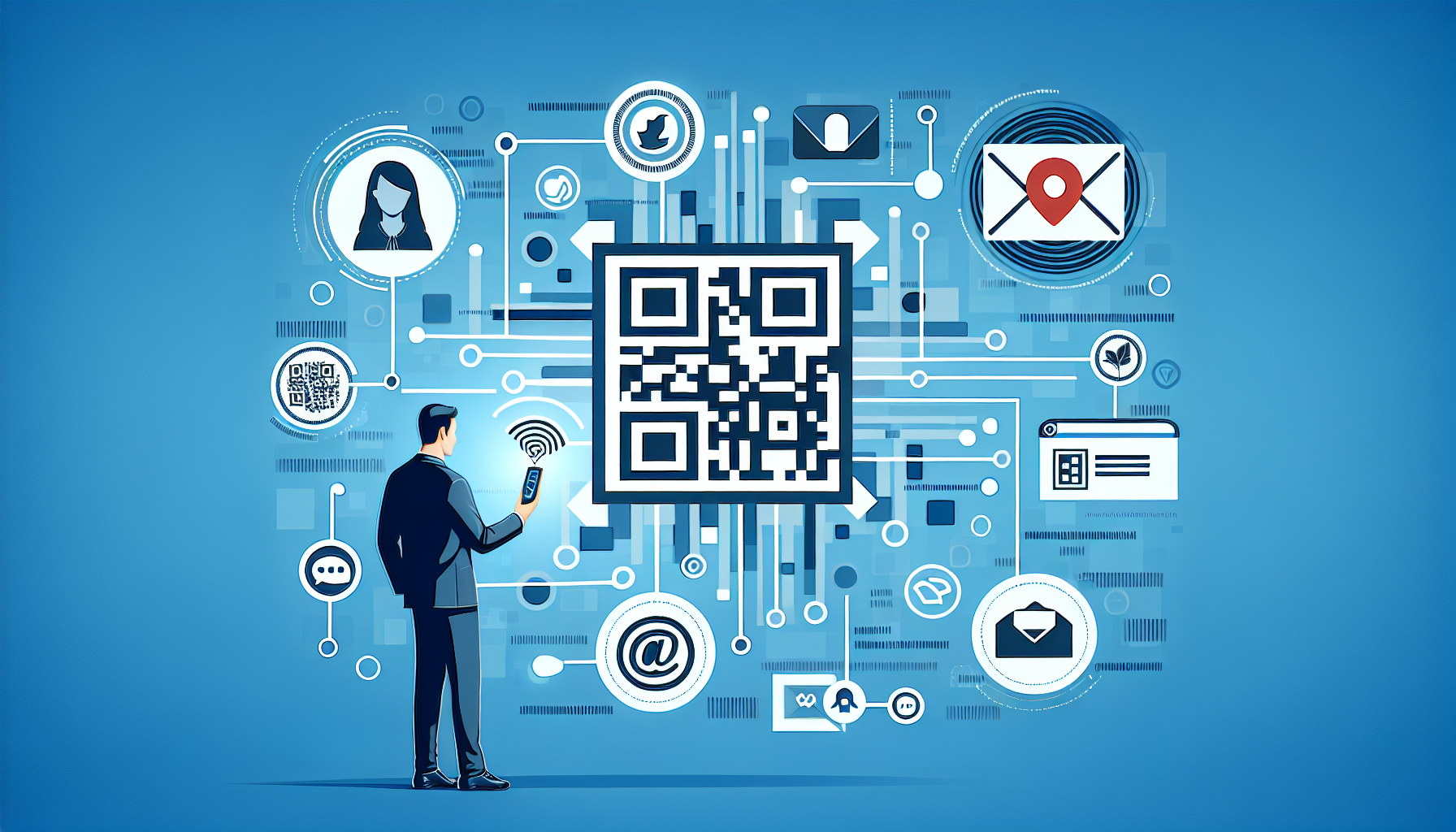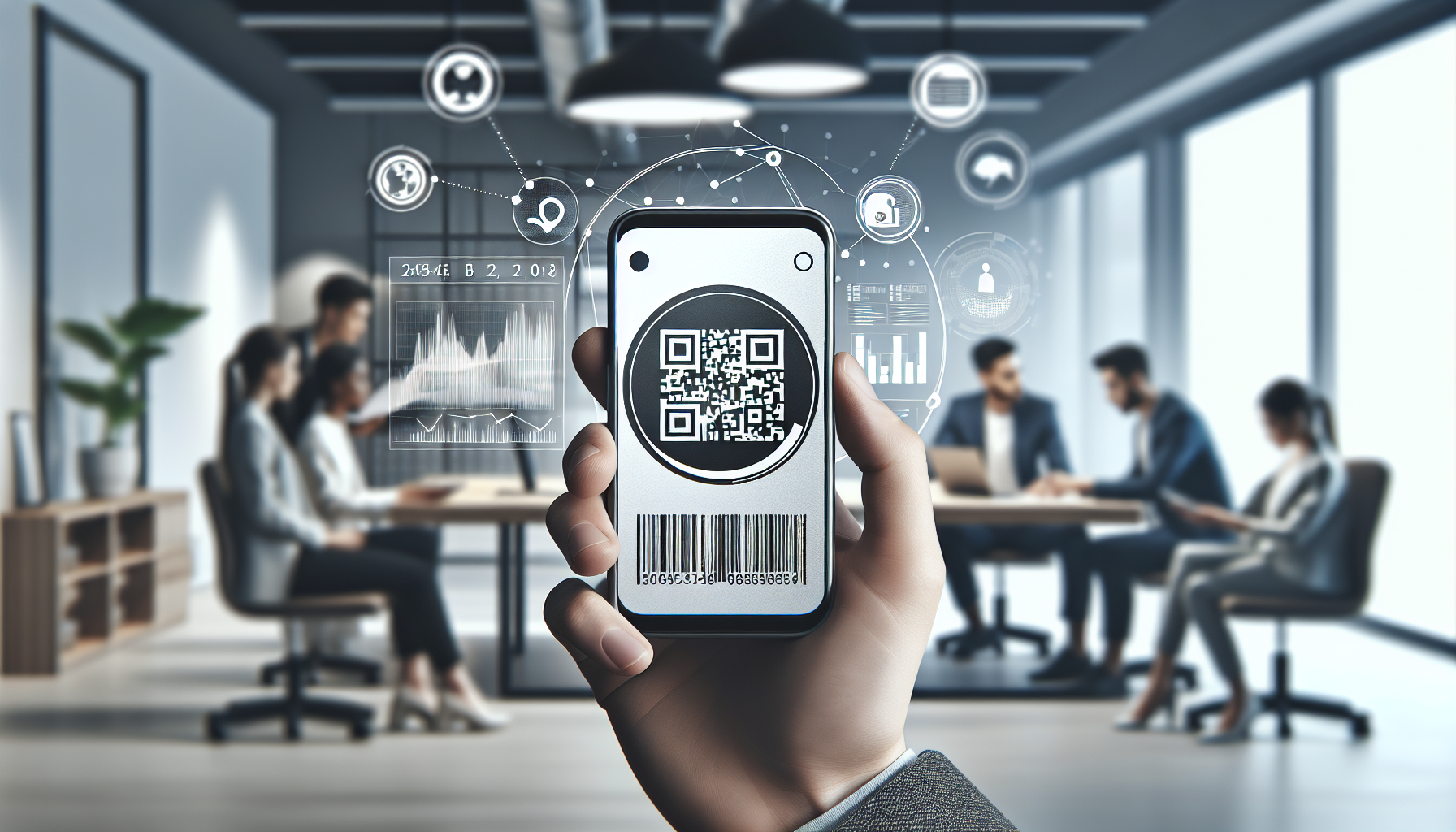
QR codes have become one of the most practical tools in local marketing because they connect physical spaces to measurable digital actions in seconds. In a local context, a QR code is more than a square barcode: it is a location-based response mechanism that lets a storefront, flyer, menu, poster, window cling, package insert, or event sign send a nearby customer to the exact digital experience most likely to convert. When I build neighborhood campaigns, I treat the code as the bridge between foot traffic and intent. Done well, it shortens the path from awareness to action, captures attribution that offline media usually misses, and helps small businesses compete with larger brands through relevance rather than budget.
Location-based QR marketing means using QR codes in places where geography, proximity, timing, and context shape the offer. A code on a café counter can open a loyalty signup page. A code on a real estate sign can launch a property tour. A code at a street fair can deliver a time-limited coupon valid at nearby merchants. The “local” element matters because user motivation is immediate. People scanning in person are often ready to book, buy, call, review, or visit. That makes these campaigns different from broad digital advertising, where audiences are colder and intent is weaker.
Why does this matter now? Smartphone cameras read QR codes natively on iPhone and Android, reducing friction that once hurt adoption. Consumers also became comfortable scanning codes during restaurant ordering, payments, event check-ins, and product authentication. At the same time, local businesses need better ways to attribute print, signage, direct mail, and out-of-home media. QR codes solve a measurement problem. Instead of guessing whether a sidewalk board or postcard worked, marketers can track scans, landing-page views, coupon redemptions, map clicks, calls, and form submissions. For local campaigns, that data is not a luxury; it guides budget decisions by neighborhood, store, and placement.
This article serves as the hub for location-based QR marketing within advanced QR code strategy. It covers how to plan campaigns, choose placements, build landing pages, measure performance, protect the customer experience, and scale across multiple sites. If you manage a single location, a franchise network, a downtown business association, or a regional service area, the principles are the same: match the code to the moment, reduce the steps after the scan, and design every asset for local intent.
How QR Codes Fit Into Local Marketing Strategy
QR codes work best when they support a clear local objective. In practice, I see six common goals: increase store visits, capture leads, drive calls, generate reviews, redeem offers, and improve customer retention. A restaurant may prioritize reservations and repeat visits. A dental office may focus on appointment requests and review generation. A retailer may use one code for window shoppers after hours, another for in-store product details, and another on receipts for loyalty enrollment. The campaign architecture should reflect the customer journey in that specific location.
Placement determines intent. A code on a bus shelter near your shop reaches a different audience than a code beside the register. The first is awareness-driven and should open a simple page with directions, top products, hours, and one featured offer. The second reaches people who already chose you and can ask for a review, referral, or loyalty signup. This is why generic home-page links underperform. Local scans need locally relevant destinations, ideally with neighborhood language, business hours, map embeds, and a single primary action.
Dynamic QR codes are usually the better choice for local campaigns because they let you change the destination without reprinting materials. If a seasonal promotion ends, the same code can route to a new offer. If one landing page converts poorly, you can replace it. Dynamic codes also support UTM tagging, scan analytics, geolocation reporting at a broad level, and campaign segmentation by placement. Static QR codes still have uses when permanence matters, such as linking to Wi-Fi credentials or a fixed app page, but for active marketing they limit optimization.
A strong local QR strategy also respects operational realities. If a code promotes curbside pickup, your team must actually deliver curbside pickup quickly. If a code asks for reviews, your Google Business Profile must be claimed and monitored. If a code on event banners drives to a landing page, the page must load fast on mobile and work over inconsistent cellular connections. The code is only the trigger; the fulfillment experience determines whether local marketing turns into local revenue.
High-Impact Placements for Location-Based QR Marketing
Not every surface deserves a QR code. The best placements pair visibility with a credible reason to scan. Storefront windows are effective because they reach pedestrians before and after hours. A boutique can use a window code labeled “See today’s arrivals” to capture traffic when the door is locked. Table tents, menus, takeout packaging, and receipts perform well in hospitality because the customer already has dwell time. Service businesses often win with vehicle wraps, yard signs, door hangers, and waiting-room signage because these formats meet people where decisions happen.
Direct mail remains underrated. In one local home-services campaign I worked on, postcards with neighborhood-specific codes outperformed generic mailers because each landing page referenced the recipient’s area, highlighted recent jobs nearby, and offered a booking window tied to that route density. Scan rates improved because the message felt relevant and operationally convenient. Real estate agents use the same principle on “For Sale” signs and open-house materials, linking to property videos, school-zone details, and mortgage calculators rather than a brokerage homepage.
Events create some of the strongest local scan behavior because urgency is built in. Farmers markets, chamber mixers, sports tournaments, street festivals, and in-store demos all give marketers a narrow time window with concentrated foot traffic. Codes on booth signage can launch raffles, collect SMS opt-ins, provide exhibitor maps, or unlock day-only offers. Museums and tourism boards also use location-based QR codes for self-guided tours. Each stop can trigger audio, historical context, and nearby partner offers, turning wayfinding into measurable engagement.
| Placement | Best Use | Primary CTA | Key Metric |
|---|---|---|---|
| Storefront window | Capture after-hours interest | Get directions or shop now | Scans to map clicks |
| Receipt | Retention and reviews | Leave a review or join loyalty | Review submissions |
| Direct mail postcard | Neighborhood targeting | Claim local offer | Scan-to-redemption rate |
| Event signage | Lead capture at peak traffic | Enter giveaway | Qualified leads collected |
| Vehicle wrap | Mobile awareness in service area | Book service | Scans by ZIP code |
The rule I use is simple: if the viewer can understand the value of scanning within two seconds, the placement has potential. If the reason is vague, performance drops. Always add a clear call to action, enough white space, and a short fallback URL for people who prefer typing. Local marketing rewards clarity over cleverness.
Designing Landing Pages That Convert Local Scans
A QR code does not convert by itself; the destination does. For local campaigns, the landing page should answer immediate questions first: Where are you? Are you open? What do you offer right now? How do I contact you? On mobile, those answers should appear before the fold through concise copy, tap-to-call buttons, map directions, and one primary call to action. Pages overloaded with navigation, sliders, or multiple competing offers waste the strongest moment of intent.
Local proof matters. Include recognizable signals such as neighborhood references, recent customer reviews, service-area maps, parking details, or photos of the actual location. For a clinic, list accepted insurance plans and same-day availability. For a retailer, show inventory highlights and pickup timing. For a restaurant, display current hours, waitlist access, and the menu section tied to the scan source. If someone scans a code on a lunch board, landing them on a generic homepage instead of the lunch menu is a preventable mistake.
Fast performance is nonnegotiable. Google’s PageSpeed Insights and Lighthouse can identify image bloat, render-blocking scripts, and mobile usability issues that quietly kill scan conversions. Use compressed images, lightweight forms, and click targets large enough for one-handed use. I also recommend server-side redirects for dynamic QR links when possible, because each extra hop can add latency. On poor cellular networks, even small delays reduce completion rates.
Tracking should be built in from the start. Append UTM parameters by location, asset type, and campaign name. Connect analytics to events such as calls, bookings, coupon downloads, and direction requests. If multiple branches use the same creative, each branch still needs its own identifiers. Otherwise, you cannot tell whether performance differences came from the market, the offer, or the placement. Good local QR campaigns create a clean line from physical asset to business outcome.
Measurement, Attribution, and Optimization by Location
The most useful local QR metrics are not raw scans alone. I focus on scan rate by placement, unique scans, landing-page engagement, conversion rate, cost per conversion, and downstream outcomes like in-store redemption or appointment value. A poster with 300 scans may be weaker than a receipt insert with 40 scans if the latter produces more purchases. Local attribution works when every code serves a defined hypothesis and every landing page captures a measurable action.
Segmentation reveals where campaigns truly work. Break reporting out by store, ZIP code, neighborhood, event, and media type. Compare scans during business hours versus after hours. Look at weather, seasonality, and local events that may influence traffic. A fitness studio may find that apartment-lobby flyers drive more trial passes in January, while sidewalk signs convert better in April. A restaurant may learn that menu codes generate more catering inquiries around graduation weekends and office holidays.
Optimization usually comes from small changes. Replace generic calls to action with direct benefits: “Scan for 10% off today” often beats “Learn more.” Test landing pages with shorter forms, stronger local imagery, or better map placement. Move underperforming codes higher on signage or farther from glare. Ensure print contrast is strong enough for low-light conditions. I have seen conversion improve simply by enlarging the quiet zone around a code and reducing surrounding clutter that distracted the camera.
Privacy and data governance matter here. Most QR platforms report approximate location, device type, time, and repeat scans, but marketers should avoid collecting more personal data than needed. If a campaign uses SMS or email capture, obtain explicit consent and explain the value exchange. For regulated sectors such as healthcare and finance, route users to compliant forms and keep protected information off noncompliant tools. A local campaign can be highly measurable without becoming intrusive.
Industry Use Cases and Scalable Campaign Models
Different local industries use QR codes differently, and the highest-performing campaigns reflect those operational details. Restaurants use table, takeout, and window codes for menus, waitlists, loyalty, and reviews. Retailers deploy shelf talkers and fitting-room codes for product details, style guidance, and out-of-stock ordering. Healthcare clinics use waiting-room and checkout codes for intake forms, follow-up instructions, payments, and review requests, with strict attention to compliant workflows. Real estate teams rely on yard signs, brochures, and open-house placards to deliver immersive property information immediately.
Multi-location businesses need governance. Standardize naming conventions, UTM structures, design templates, and destination page components so each branch can move quickly without fragmenting data. Central teams should approve branding, redirects, and analytics while local managers tailor offers, hours, and inventory. Franchise systems often succeed with a shared QR platform, branch-level dashboards, and templated pages that pull in local reviews and map data automatically. This model preserves comparability across markets while keeping each experience locally accurate.
There are limits. QR codes do not fix weak offers, poor signage placement, slow service, or broken mobile pages. Some audiences still prefer short URLs, phone calls, or walk-ins without digital steps. Accessibility also matters: pair every code with human-readable instructions and avoid relying on color alone for contrast. The best campaigns treat QR as one option within a broader local marketing system that includes search visibility, reputation management, in-store experience, and follow-up messaging.
For businesses serious about location-based QR marketing, the path is straightforward: choose one local objective, deploy dynamic codes in high-intent placements, send every scan to a purpose-built mobile page, and measure outcomes by location. Start with a storefront, receipt, direct mailer, or event sign where intent is easiest to understand. Then optimize based on scan quality, not vanity volume. When QR codes are matched to place, timing, and customer need, they turn everyday local touchpoints into trackable revenue channels. Audit your current physical assets, identify the moments where customers need the next step, and build your first location-based QR campaign with that single decision in mind.
Frequently Asked Questions
How do QR codes improve local marketing campaigns compared to traditional print-only promotions?
QR codes make local marketing far more actionable because they turn passive offline materials into immediate digital entry points. A printed flyer, window poster, table tent, package insert, or event sign can only communicate so much on its own, but a QR code adds a direct path to the next step. Instead of asking someone to remember a website, search for a business later, or manually type a long URL, the code removes friction and sends them straight to a landing page, menu, coupon, appointment form, map listing, loyalty signup, review request, or limited-time offer. That speed matters in local marketing, where decisions are often made in the moment and close to the point of sale.
Another major advantage is measurability. Traditional local print advertising has often been difficult to track with precision, but QR codes can reveal how many people scanned, when they scanned, where the scans came from, and which placements generated the strongest response. This allows businesses to compare campaign assets across neighborhoods, store locations, events, or distribution channels. For example, a restaurant can test whether codes on takeout packaging drive more repeat orders than codes on sidewalk signage, or a salon can see whether postcard mailers outperform in-store mirror decals. In practical terms, QR codes help local businesses connect physical visibility with digital attribution, which is one of the biggest reasons they have become so effective in modern neighborhood campaigns.
Where should businesses place QR codes in a local campaign to get the best results?
The best placements are the ones that match customer intent and the environment in which the customer encounters the code. In local marketing, the strongest QR code locations are usually high-visibility, high-relevance touchpoints where people already have some level of interest. Storefront windows work well for after-hours browsing, letting passersby view services, directions, inventory, or booking options even when the business is closed. Printed menus, table cards, and counter displays are effective because customers are already engaged and ready to act. Event signage, booth materials, shopping bags, receipts, direct mail pieces, neighborhood bulletin boards, and package inserts are also strong candidates because they catch people during or immediately after a local interaction.
Placement should also account for context, distance, and clarity. A QR code on a street poster needs to be large enough to scan from a few feet away and paired with a clear call to action such as “View today’s specials,” “Claim your neighborhood discount,” or “Book a free consultation.” A code without instruction usually underperforms because people need to know what they will get before they scan. Good local campaigns avoid generic placement and instead map each code to a specific purpose. A real estate agent might use one code on yard signs for property details and another on mailers for home valuation requests. A local gym might use different codes for window traffic, referral cards, and event sponsorship banners. When placement aligns with customer intent and the offer is specific, scan rates and conversions usually improve significantly.
What should a QR code lead to in order to maximize conversions in a local marketing campaign?
A QR code should lead to a focused, mobile-friendly destination that matches the exact reason the customer scanned it. This is one of the most important principles in QR-based local marketing. If someone scans a code from a sidewalk sign advertising a lunch special, they should land on the lunch offer or ordering page, not the business homepage. If they scan from a postcard promoting a first-visit discount, they should arrive at a redemption page, booking form, or coupon screen designed for that offer. The more closely the destination reflects the message and context of the scan, the more likely the user is to complete the next action.
In most local campaigns, the highest-converting destinations are short, simple, and action-oriented. Effective examples include a reservation page, click-to-call contact screen, directions page, product collection, event registration form, review request page, loyalty program signup, or limited-time local landing page with a clear incentive. The page should load quickly, look excellent on mobile devices, and reduce distractions. It should also include one primary call to action rather than several competing options. Businesses often lose conversions by sending people to cluttered pages that require extra navigation.
It is also smart to tailor the destination based on campaign source. A code on dine-in materials may lead to loyalty enrollment, while a code on delivery packaging may lead to reorder links or review requests. A code on a neighborhood sponsorship banner might lead to a community-specific welcome page with a localized offer. The goal is not just to generate scans, but to create a seamless path from local attention to measurable business outcome.
Can QR codes help local businesses measure campaign performance and return on investment?
Yes, and that is one of their biggest strengths. QR codes allow local businesses to track real engagement from physical marketing materials in a way that older offline tactics often could not. By using unique codes for different placements, campaigns, locations, or offers, a business can identify which assets are driving scans and which are producing actual conversions. This makes it possible to evaluate performance across storefront signage, event materials, direct mail, menus, posters, vehicle wraps, neighborhood partnerships, and other offline channels. Instead of guessing whether a local promotion worked, businesses can review scan volume, engagement timing, conversion rates, and downstream actions such as bookings, purchases, signups, or calls.
To measure ROI effectively, businesses should connect the QR experience to analytics tools, tagged URLs, conversion events, and campaign-specific landing pages. For example, a local retailer can assign one code to a sidewalk display, another to in-bag inserts, and another to a nearby community event booth. If the event code produces fewer scans but more purchases, that insight may justify a stronger event presence. If direct mail generates scans but weak conversion rates, the landing page or offer may need improvement. QR data is especially valuable when combined with geographic targeting, time-based offers, and customer journey analysis.
It is important to remember that measurement should go beyond scan count. A high number of scans is useful, but it does not automatically mean the campaign succeeded. Strong local marketers look at outcomes such as redeemed offers, repeat visits, appointment completions, average order value, review submissions, and customer acquisition cost. QR codes make local marketing more accountable because they bridge real-world exposure with digital reporting, which helps businesses make smarter decisions about budget, placement, and creative strategy.
What are the most common mistakes businesses make when using QR codes in local marketing campaigns?
The most common mistake is treating the QR code as a novelty instead of a strategic conversion tool. Many businesses place a code on a printed item without defining the purpose behind it. If there is no clear customer benefit, no specific destination, and no compelling call to action, the code becomes decorative rather than functional. Another frequent issue is sending users to a generic homepage. In local marketing, relevance is everything. People scanning from a physical environment expect quick access to the exact information promised by the sign, flyer, menu, or package. If they have to search around once they arrive, many will leave.
Design and usability problems are also common. Codes that are too small, placed in poor lighting, distorted by graphics, printed with low contrast, or positioned where scanning is inconvenient tend to underperform. Businesses also hurt results when they fail to test the scan experience across multiple phones and browsers before launching. A working code is not enough; the destination must load fast, display properly on mobile, and make the next action obvious. Another overlooked mistake is failing to differentiate codes by channel. Using the same code everywhere makes tracking less precise and limits the business’s ability to learn which placements are actually effective.
Finally, many local campaigns miss opportunities by not aligning QR codes with real customer intent. A person scanning from a storefront window may want hours, directions, or a booking option, while a person scanning from packaging may be more likely to leave a review or place a repeat order. The most successful local campaigns build around these moments. They use purpose-built landing pages, location-aware offers, clear value propositions, and strong analytics. When businesses avoid generic execution and instead design the full scan-to-conversion journey, QR codes become one of the most practical and measurable tools in local marketing.