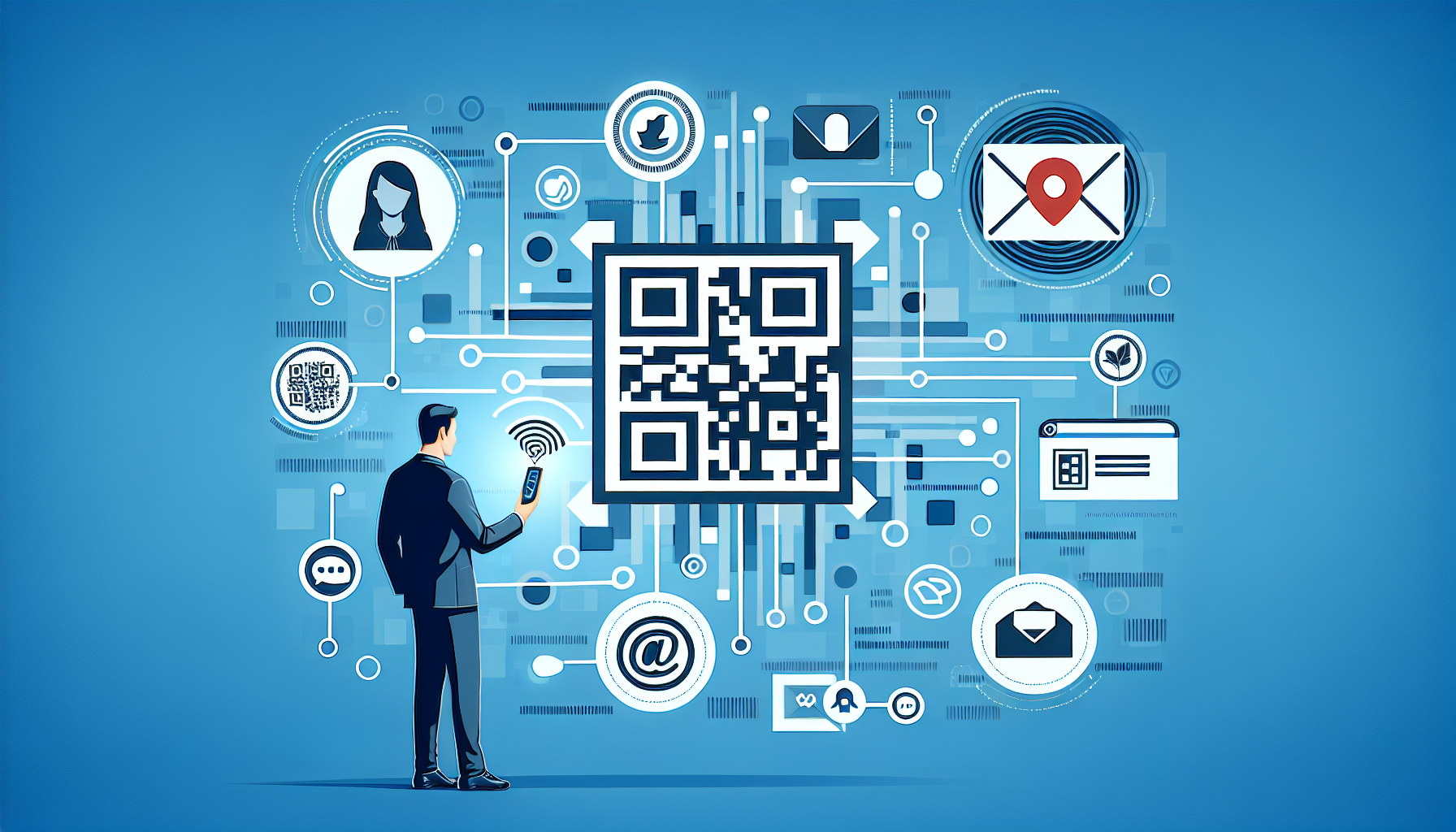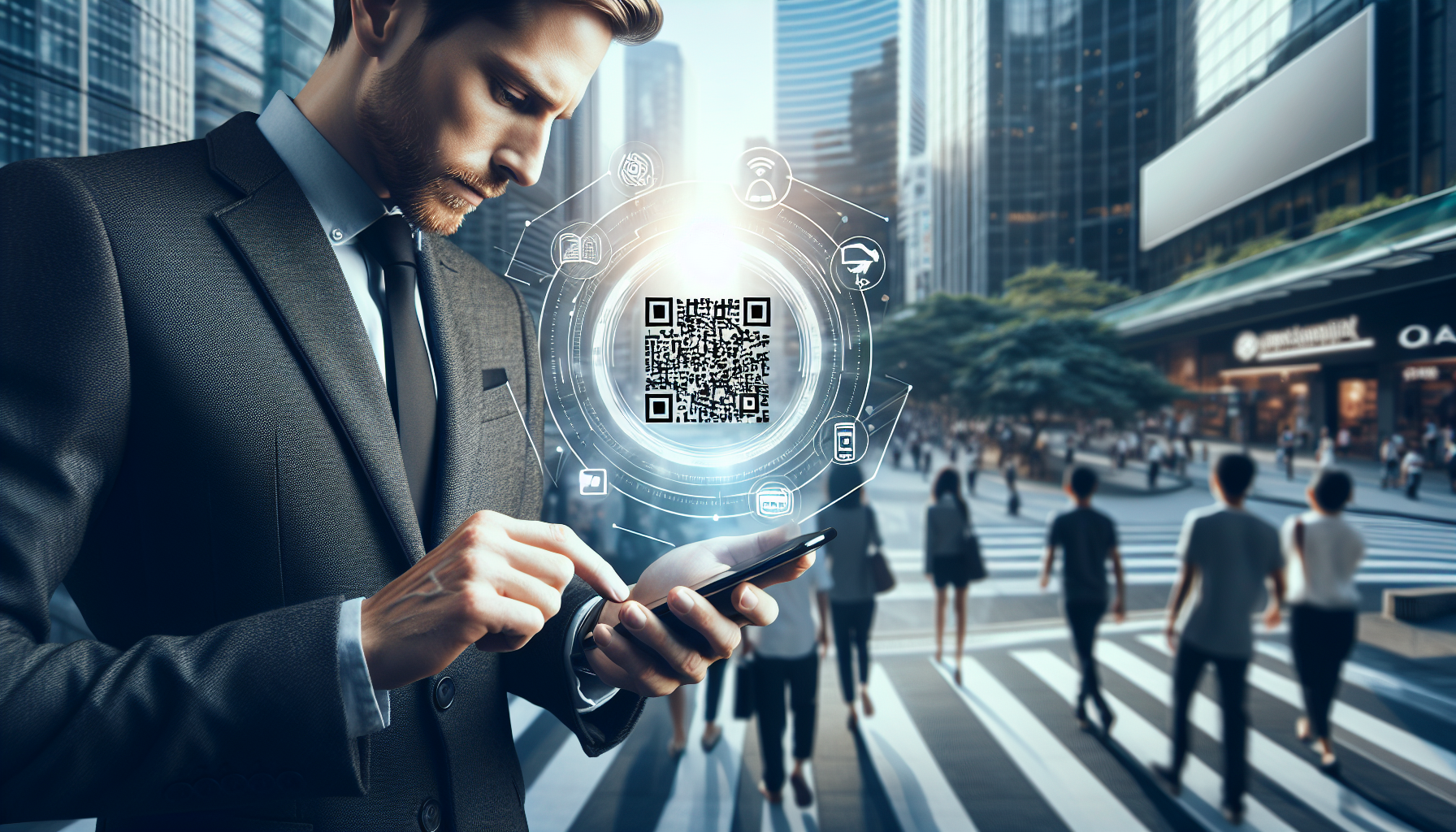
Location-based marketing with QR codes turns a simple scan into a context-aware interaction, connecting where a person is standing with what a brand wants them to do next. In practice, it means placing a QR code in a store, on a window, at a transit stop, inside an event venue, or on packaging tied to a region, then routing the scan to content shaped by that physical context. The code itself may be static or dynamic, but the strategy is always geographic: use place to increase relevance, response, and measurable business outcomes.
For marketers, “location-based QR marketing” sits at the intersection of offline media, mobile behavior, and local intent. A commuter scanning a restaurant poster outside a station has different needs than a shopper scanning shelf signage in an aisle. One may want opening hours and directions; the other may want ingredients, reviews, or a time-limited coupon redeemable at checkout. I have implemented QR campaigns in retail, hospitality, and events, and the pattern is consistent: when the landing experience reflects the user’s immediate environment, scan-to-action rates improve because friction drops and intent is already present.
Understanding the core terms matters. A static QR code points to one fixed destination and cannot be edited after printing. A dynamic QR code uses a short redirect URL, allowing the destination, tracking parameters, and rules to change without replacing the printed code. Geotargeting delivers different content based on a user’s location, usually inferred through GPS permission, IP address, language, or scan-point context. Geofencing defines a virtual perimeter around a location and triggers logic when a user is inside that zone. Attribution is the method used to connect scans to visits, redemptions, orders, leads, or other outcomes.
This matters because offline marketing has long struggled with measurement and personalization. Posters, packaging, direct mail, and point-of-sale signage can generate awareness, but they often leave marketers guessing which placement worked. QR codes close that gap. They provide timestamped scan data, device information, and campaign-level reporting, while also acting as a bridge into mobile landing pages, app deep links, first-party data capture, and store-specific offers. For local businesses, multi-location retailers, tourism brands, and franchise networks, that bridge is especially valuable because customer intent is heavily shaped by proximity and convenience.
How location-based QR marketing works in the real world
At a technical level, the process is straightforward. A user scans a code with their phone camera. The code opens a URL, usually through a dynamic redirect platform such as Bitly, QR Code Generator, Beaconstac, Flowcode, or a custom short domain managed by the brand. That redirect can append UTM parameters, identify the physical asset that was scanned, and send the user to a mobile page tailored to the location, campaign, language, or time of day. The result is a measurable journey from physical placement to digital action.
In execution, there are three common models. First is scan-point personalization: each store, sign, table tent, or display uses a unique code that resolves to the right local page. Second is device-location personalization: one code is reused across many placements, but the landing page asks for location access or infers geography from IP data to show nearby options. Third is hybrid logic: a code identifies the asset, and the platform also uses device signals to refine the destination. Hybrid setups are common in national campaigns because they preserve reporting at the placement level while still adapting the experience to the user.
Retail gives the clearest example. A supermarket places QR shelf talkers in the beverage aisle. Scanning one code opens product details, nutrition facts, and a coupon valid only in that branch. A different code on the freezer endcap sends shoppers to recipes using items stocked in that specific store. Because each asset has its own identifier, the retailer can see which aisle displays drive scans and which scans convert to redemptions. Over time, merchandising teams learn which physical zones produce the strongest engagement and can reallocate signage accordingly.
Hospitality and tourism use the same principle differently. A hotel lobby code may open a guide to nearby attractions within walking distance, while a poolside code promotes food and beverage ordering linked to that venue. A museum can place codes beside exhibits that unlock multilingual audio for visitors standing in a particular gallery. Cities increasingly use QR-enabled wayfinding on street furniture, maps, and visitor centers. The value is not the code itself; it is the precision of the next step. Place gives meaning to the scan, and the destination should honor that context immediately.
Where QR codes perform best across local channels
Not every physical location creates the same scan behavior. The highest-performing placements usually share three traits: dwell time, clear user intent, and easy phone access. That is why QR codes work well on restaurant tables, product packaging, event badges, transit shelters, waiting areas, hotel rooms, and storefront windows. People are stationary long enough to scan, they already want more information, and the code is visible at a comfortable distance. By contrast, roadside billboards aimed at fast-moving drivers are poor candidates because scanning is unsafe and unrealistic.
In-store environments are especially strong because they support high-intent actions close to purchase. Shelf-edge labels can answer product questions before a sales associate arrives. Endcaps can deliver limited-time offers by branch. Fitting rooms can link to size guides, stock availability, or alternate colors. In electronics retail, I have seen QR codes reduce sales-floor friction by routing customers to comparison charts, warranty details, and setup videos that would otherwise require staff intervention. That kind of self-service matters when labor is tight and product complexity is high.
Outdoor placements can work when context is immediate and the call to action is specific. Real estate signs can open listing pages with map directions and financing calculators. Window decals on closed storefronts can capture after-hours demand by sending users to online ordering or booking pages. Transit ads are effective when they focus on nearby action, such as “Scan for the closest clinic” or “Scan for lunch specials at this station.” Generic destination pages underperform in these settings because people are making fast decisions and need local relevance without extra taps.
Events are another high-yield channel. Venue-specific codes on lanyards, booths, screens, and printed agendas can direct attendees to session updates, exhibitor offers, lead forms, or indoor maps. Because attendance is bounded by geography and time, marketers can align landing pages to the exact moment of the scan. A conference sponsor might show one message at the entrance, another near the keynote hall, and a third at the networking reception. That sequencing turns static signage into responsive media and gives event teams measurable insight into visitor movement and interest.
| Placement | Primary user intent | Best landing experience | Key metric |
|---|---|---|---|
| Store shelf | Evaluate before buying | Specs, reviews, coupon, stock | Scan-to-redemption rate |
| Window decal | Act after hours | Order, booking, directions | Leads or orders outside store hours |
| Event badge or booth | Learn and connect | Lead form, schedule, demo page | Qualified leads per scan |
| Restaurant table | Order or explore menu | Menu, allergens, upsell items | Average order value |
| Tourism sign | Navigate nearby options | Map, multilingual guide, tickets | Click-through to directions or bookings |
Building the right local landing experience after the scan
The landing page determines whether a scan becomes a business result. The first rule is continuity: the page must match the physical context that prompted the scan. If a person scans a code in front of Store 214, the page should identify Store 214, confirm its hours, show current inventory or offers, and make the next action obvious. Sending all users to a generic homepage wastes intent. In analytics reviews, generic destinations routinely show lower engagement, higher bounce rates, and weaker conversion because users must reorient themselves after taking the step to scan.
Mobile usability is non-negotiable. The page should load quickly on cellular connections, keep forms short, and put tap targets above the fold. Google’s Core Web Vitals are relevant here because poor mobile performance cuts conversion. Compress images, minimize scripts, and avoid pop-ups that obscure the page immediately after scan. If your page needs location permission, explain why before triggering the browser prompt. Users are far more likely to grant access when the value is explicit, such as “Share location to see products available in this store today.”
Content should answer the practical questions people have in that place. Near a storefront, the essentials are directions, opening hours, parking, click-to-call, and current promotions. In a product aisle, the essentials are benefits, ingredients or specifications, price, stock, and social proof. At an attraction, users want tickets, queue information, languages, amenities, and accessibility details. If the scan is tied to a local offer, include the redemption terms clearly. Ambiguity at checkout or check-in erodes trust and makes frontline staff less willing to support future campaigns.
Strong local pages also support continuity across channels. Include structured location data, consistent name-address-phone information, and links to store pages, appointment systems, or maps. If your broader site has articles on QR code design, dynamic QR code tracking, or retail QR code examples, link to them naturally so users and search engines can move deeper into the topic cluster. For marketers managing a sub-pillar hub, this is where internal linking helps: each local use case can branch into detailed articles on signage design, franchise governance, event lead capture, or coupon measurement.
Measurement, attribution, and operational governance
A location-based QR campaign is only as useful as its measurement design. Start by assigning a unique dynamic code to each placement you want to evaluate: each store entrance, each shelf display, each flyer version, each event zone. Add UTMs or equivalent campaign parameters so analytics platforms can group traffic by source, medium, campaign, content, and term where relevant. In Google Analytics 4, create events for key actions such as directions clicks, coupon views, form submissions, add-to-cart actions, and confirmed purchases. Without this event map, scan counts alone can be misleading.
Attribution should reflect the business model. For a restaurant, the meaningful metric may be scan-to-order rate and average ticket value. For a real estate agency, it may be scans that become scheduled viewings. For a franchise, compare scans by location normalized against foot traffic so large stores do not distort the picture. In retail pilots I have run, the most useful dashboard was not total scans; it was scans per thousand visitors, offer redemptions by branch, and assisted revenue from users who scanned in store and purchased later online. Those measures reveal actual influence.
Governance matters more than many teams expect. Physical codes are hard to recall once printed, which is why dynamic management is so important. Use naming conventions, asset inventories, expiration rules, and redirect ownership. A code on a window decal should not resolve to a broken campaign page six months later because someone archived the destination. Brand and legal teams should review privacy notices, especially when collecting location data, email addresses, or loyalty enrollments. If children may scan, such as in family attractions, data practices require added caution.
There are also limitations. IP-based geolocation is approximate and can misidentify users on mobile networks or corporate Wi-Fi. GPS permissions improve precision but add friction and require a clear value exchange. Scan data does not equal unique people, because one person can scan multiple times. Not every offline sale can be linked back to a code without coupon use, loyalty matching, or point-of-sale integration. The best programs accept these constraints, triangulate across several signals, and treat QR data as a decision tool rather than a perfect representation of all customer behavior.
Best practices, common mistakes, and what to cover next
Successful location-based QR marketing follows a short list of proven rules. Use dynamic codes, not static ones, for any campaign that may need edits. Place codes where users can scan safely and comfortably. Give each code a specific purpose and a clear instruction, such as “Scan for this store’s menu” or “Scan to see stock in aisle 5.” Match the landing page to the scan context. Test under real lighting, distance, and mobile network conditions before rollout. And train frontline staff so they know what the code does, what the offer includes, and how to help if a customer asks.
The most common mistakes are avoidable. Marketers often print one code for every location and then wonder why engagement is hard to interpret. They send all traffic to the homepage. They make the code too small, place it on reflective surfaces, or choose low-contrast colors that reduce scan reliability. They fail to set an expiration plan for seasonal campaigns. They ask for too much information on the first screen. Or they launch without a baseline, making it impossible to tell whether scans added incremental value over existing local traffic and promotions.
As a hub within QR Code Advanced Strategies, this topic naturally leads into several supporting articles. One should cover dynamic versus static QR codes for multi-location campaigns. Another should explain QR code analytics in GA4 and CRM systems. A third should focus on retail shelf signage and in-store conversion measurement. Others can examine event QR lead capture, franchise compliance, local landing page design, coupon attribution, and privacy considerations when using geolocation. Building that cluster helps readers move from strategy to implementation without gaps.
Location-based marketing with QR codes works because it respects intent at the moment it forms. The customer is already somewhere meaningful: in front of a shelf, outside a store, inside a venue, near an attraction, or holding a product. A well-designed QR journey uses that context to shorten the path to information, trust, and action. If you manage local marketing, start with one environment, give each placement a measurable role, and build from real scan and conversion data. That disciplined approach turns QR codes from a novelty into a durable local growth channel.
Frequently Asked Questions
What is location-based marketing with QR codes, and how does it work?
Location-based marketing with QR codes is a strategy that connects a physical place with a digital action. When someone scans a QR code in a specific environment, such as a retail aisle, storefront window, stadium concourse, hotel lobby, trade show booth, transit shelter, or on region-specific packaging, the brand can deliver content that matches the context of that location. Instead of sending every scan to the same generic landing page, the experience is tailored around where the person is, what they are likely doing, and what next step makes the most sense in that moment.
In practical terms, the QR code acts as the bridge between offline attention and online engagement. A code placed inside a store might open a product comparison page, loyalty offer, or in-stock inventory lookup. A code on a restaurant window could lead to a mobile menu, local promotion, or reservation page. A code displayed at an event venue might unlock a schedule, sponsor activation, or venue map. The location creates intent, and the QR code captures that intent instantly.
Brands often use dynamic QR codes for this because they allow the destination URL to be updated without reprinting the code. That makes it easier to change offers by city, venue, campaign period, or foot-traffic pattern. Combined with analytics, dynamic routing, geotargeting, and time-based rules, a single QR placement can support a highly relevant, measurable customer journey. The core idea is simple: the scan is not treated as an isolated click, but as an action shaped by where the person is standing.
Why are QR codes effective for location-based marketing campaigns?
QR codes are effective in location-based marketing because they reduce friction at the exact point of interest. A person sees something relevant in the real world and can act on it immediately using a smartphone they already have in hand. There is no need to type a web address, search for a page, or remember an offer for later. That immediacy matters because local intent is often short-lived. If a shopper is comparing products in an aisle or a commuter is waiting at a transit stop, the easiest next step usually wins.
They also work well because they turn static physical media into flexible digital touchpoints. A poster, shelf talker, receipt, product label, window cling, table tent, or event sign can become interactive without requiring expensive hardware or app downloads. That makes QR codes especially useful for brands trying to activate multiple locations, test local messaging, or adapt campaigns across different markets. The same format can support store-level promotions, neighborhood-specific offers, regional product launches, or venue-based experiences.
Another major advantage is measurability. Brands can track scans by location, time, device type, and campaign asset, then compare performance across stores, cities, or placements. That visibility helps marketers understand which environments create the strongest engagement and which calls to action drive the best outcomes. When paired with strong creative, clear incentive, and a fast mobile experience, QR codes become a practical tool for making local marketing more relevant, responsive, and accountable.
What kinds of content should a location-based QR code send users to?
The best destination depends on what the person is doing at that specific location and what action the brand wants next. In general, the content should be useful, immediate, and clearly tied to the setting. If someone scans a code on packaging in a regional market, they might see a local language page, nearby retailer options, or market-specific product information. If they scan in a store, the landing page could feature pricing, product details, reviews, tutorials, stock availability, or a digital coupon redeemable at that location.
For hospitality, dining, and entertainment, common destinations include menus, booking pages, venue maps, event schedules, loyalty sign-ups, and location-specific promotions. For out-of-home placements like transit stops, shopping districts, airports, and stadiums, brands often use QR codes to lead to limited-time offers, interactive campaigns, click-to-call services, local directions, app download pages, or pages personalized to that venue or neighborhood. The content should feel like a natural extension of the moment, not a generic homepage with too many choices.
Strong landing pages are mobile-first, fast to load, easy to scan visually, and built around one primary action. That action could be redeeming an offer, finding a nearby store, checking inventory, registering for an event, claiming a reward, or learning more about a product on the spot. The most effective location-based QR experiences do not overwhelm users with options. They answer the immediate question the person likely has in that place, then guide them smoothly to the next step.
How can businesses measure the success of location-based marketing with QR codes?
Success should be measured beyond simple scan volume. Scans are the starting point, but the more meaningful question is what happened after the scan and whether the outcome aligned with the objective of that location. A retailer may care about coupon redemptions, add-to-cart actions, or in-store conversions. An event organizer may focus on registrations, sponsor engagement, session check-ins, or downloads. A restaurant may look at menu views, bookings, online orders, or repeat visits. The right metrics should match the job the QR code is meant to do in that environment.
Dynamic QR platforms and analytics tools can reveal where scans happened, when they occurred, which assets performed best, and how users behaved after landing on the page. Useful indicators include scan-through rate by placement, bounce rate, time on page, click-through rate, form completion, redemption rate, and conversion rate by location. Comparing these metrics across stores, venues, cities, or campaign variations can show which local messages are resonating and where the experience needs improvement.
Businesses should also look at operational and strategic signals. For example, does a code in the front window drive visits outside store hours? Does packaging-based QR traffic differ by region? Do event codes perform better near entrances, stages, or concession areas? Testing placement, incentives, landing page content, and calls to action can produce valuable insight over time. The strongest measurement approach combines scan analytics with business outcomes, so marketers can tie local engagement to revenue, foot traffic, customer acquisition, or retention rather than treating scans as a vanity metric.
What are the best practices for creating a successful location-based QR code campaign?
A successful campaign starts with clear alignment between place, audience intent, and desired action. Before generating the QR code, businesses should define exactly why the code exists in that location. Is the goal to educate, convert, collect leads, increase foot traffic, support self-service, or drive immediate redemption? The answer shapes everything else, including the CTA, page design, offer, and analytics setup. A QR code placed in a store aisle should not behave the same way as one on a transit ad or inside a conference venue, because the user mindset is different in each context.
From there, execution matters. The code should be easy to notice, easy to scan, and paired with a strong call to action that tells people what they will get. Phrases like “Scan for today’s in-store offer,” “Scan to see the event schedule,” or “Scan to check local availability” perform better than leaving the code unexplained. The landing page must load quickly on mobile, reflect the context of the scan, and make the next step obvious. Dynamic QR codes are often the better choice because they allow marketers to update destinations, adjust local messaging, and track performance without replacing printed materials.
It is also important to test in real-world conditions. Check scanability at the intended size, distance, lighting, and surface. Make sure the page works across devices and signal conditions. Use unique tracking by location so results are not blurred together. Finally, respect privacy and avoid overcomplicating the experience. The best location-based QR campaigns feel helpful and timely, not intrusive. When the placement is smart, the value is clear, and the destination is highly relevant to that exact place, QR codes can become one of the most efficient tools for turning physical presence into measurable digital engagement.